
We have all felt the sting of throwing away money. You buy that family-pack of steaks or the bulk bag of avocados with the best intentions, only to find them grey, slimy, or freezer-burned a week later. It is a frustrating cycle that drains your wallet and fills your trash can. In the quest to stop this food waste, vacuum sealers have become a kitchen staple. But if you have ever used a traditional flat sealer, you know the struggle—they take up massive amounts of counter space, and trying to seal a bag of soup or marinade often results in a messy disaster as the liquid gets sucked right into the machine.
Enter the InstaSeal Upright Vacuum Sealer. You might have seen the infomercials showing it sealing bags of water without spilling a drop, or noticed its sleek, vertical design that promises to save precious counter real estate. It claims to be the solution to the “liquid problem” while offering a hands-free, double-sealing experience. But does this “As Seen on TV” gadget actually hold up in a real kitchen, or is it just another novelty item destined for the donation pile?
In this comprehensive review, I am going to walk you through my honest, hands-on experience with the InstaSeal. We will dissect its upright design, test its “smart sensor” technology, and see if it can truly replace the heavy-duty incumbents like FoodSaver. From the unboxing to the inevitable cleanup, I will cover every detail so you can decide if this vertical wonder is the right tool to protect your groceries.
My Experience With The InstaSeal Vacuum Sealer
I decided to buy the InstaSeal after a particularly messy incident with my old flat vacuum sealer. I was trying to freeze a batch of homemade chili, and just as the air was being sucked out, the liquid rushed up the bag and flooded the sealing strip. The bag didn’t seal, the machine made a horrible gurgling noise, and I spent the next twenty minutes with a roll of paper towels cleaning chili out of the vacuum channel. When I saw the InstaSeal’s main selling point—its upright design that uses gravity to keep liquids down—I was sold on the concept immediately.

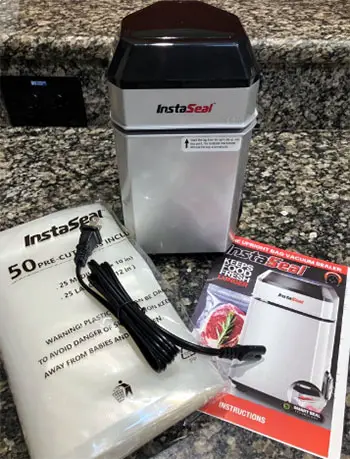
The box arrived, and the first thing I noticed was how incredibly compact it is.
Unlike my old sealer, which required me to clear off the entire kitchen island to set it up, the InstaSeal has a footprint smaller than my toaster.
I placed it in the corner of my counter, and it barely took up any room.
It has suction cups on the bottom, which is a nice touch; you have to press down firmly to engage them, which keeps the tall unit from tipping over when you insert a bag.
Using it for the first time was… different. There is no lid to lock down or latch to click.
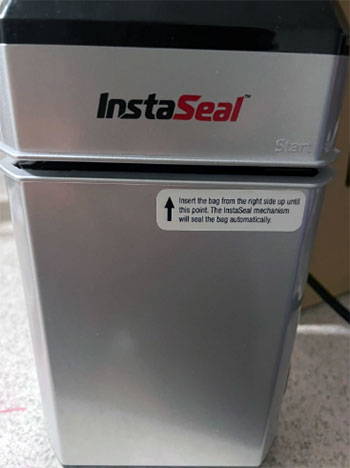
Instead, it has a “feed” slot, similar to a printer or a laminator. You slide the open end of the bag into the slot, and a sensor is supposed to grab it and pull it in. I started with some dry goods—coffee beans—to test the waters. I slid the bag in, but nothing happened. I wiggled it. Still nothing. It took me a few tries to realize you have to insert the bag quite deep and towards the “trigger” on the right side for the motor to catch it. Once it did, the machine pulled the bag in, vacuumed the air, and sealed it automatically.
The “double seal” feature is reassuring. When the bag came out, I inspected the top, and sure enough, there were two distinct heat lines. This is a great feature for long-term freezer storage, as it provides a backup if one seal fails.
Next came the real test: the marinade. I put some chicken breasts and teriyaki sauce into a bag. With a traditional sealer, I would be sweating right now, trying to stop the vacuum before the sauce hit the machine. With the InstaSeal, I just stood the bag upright on the counter and fed the top into the machine. Gravity did its job perfectly. The air was sucked out, the sauce stayed at the bottom with the chicken, and the machine sealed it without any drama. It was genuinely impressive and felt like a problem solved.
However, the “Smart Sensor” isn’t always smart. Sometimes it grabs the bag crookedly, which results in a wrinkled seal that lets air back in. I learned that you have to be very deliberate and hold the bag taut and straight as it feeds in. Also, the process is slower than I expected. It takes its time to pull, vacuum, and seal, so if you are trying to process fifty pounds of venison, you might find the pace frustrating.
After a month of use, my verdict is that it is a specialized tool. It excels at liquids and space-saving, but it lacks the brute force and speed of the larger, industrial-style sealers. It feels a bit more plasticky and lightweight, but for the specific problem of sealing wet foods in a small kitchen, it has earned its spot on my counter.
Read more: My Thoughts on Nesco Deluxe Vacuum Sealer
Pros Of The InstaSeal Vacuum Sealer
When evaluating the InstaSeal against the sea of horizontal sealers on the market, its unique geometry provides several undeniable advantages. Here are the specific benefits that make this machine stand out.
- Vertical Design Prevents Liquid Disasters: The absolute biggest selling point is the upright orientation. By letting the bag stand vertically on the counter while sealing, gravity works in your favor, keeping liquids like soups, marinades, and brines at the bottom of the bag. This virtually eliminates the risk of liquid being sucked into the vacuum pump, which is the number one cause of failure in traditional machines. You can confidently seal juicy steaks, fresh fish, or even leftover stew without having to pre-freeze the liquid first. It turns what used to be a high-stress balancing act into a simple, hands-off process.
- Compact Footprint Saves Counter Space: Most vacuum sealers are wide, bulky rectangles that are a pain to store and annoying to drag out of a cabinet. The InstaSeal is tall and narrow, taking up about as much space as a large coffee mug or a blender base. This means you can leave it out on the counter permanently, which increases the likelihood that you will actually use it. If you live in an apartment, RV, or have a small kitchen, this space-saving design is a game-changer. You don’t have to rearrange your entire kitchen just to seal a few leftovers.
- Hands-Free Automatic Feeding Mechanism: The “feed and go” style is very modern and user-friendly once you get the hang of it. You don’t have to wrestle with locking levers or pressing down hard on a lid to engage the gaskets. You simply guide the bag into the slot, and the machine takes over, pulling it in, vacuuming, and sealing all on its own. This is particularly helpful for people with arthritis or weak hand strength who struggle with the heavy latching mechanisms of older sealers. It creates a seamless workflow where you can be prepping the next bag while the machine finishes the current one.
- Reliable Double Heat Seal: One of the worst feelings is pulling a steak out of the freezer months later only to find the seal popped open and the meat ruined by freezer burn. The InstaSeal automatically creates two parallel seal lines every time it runs a cycle. This redundancy ensures that even if a stray crumb or droplet of oil compromises the first seal, the second one is likely to hold. It adds an extra layer of security for long-term storage without requiring you to manually run the seal cycle twice. This feature is usually reserved for much more expensive, “pro-grade” sealers.
Cons Of The InstaSeal Vacuum Sealer
While the innovation is appreciated, the execution has some flaws. The InstaSeal is not without its frustrations, and there are aspects of its design that might make you miss the simplicity of a standard sealer.
- Steep Learning Curve for Bag Insertion: The “Smart Sensor” can be finicky and frustratingly specific about how you feed the bag. You have to insert the bag quite deep and usually slide it toward a specific trigger point for the motor to engage. If you don’t hold the bag perfectly flat and taut, the machine can grab it unevenly, leading to creases and wrinkles in the seal area. A wrinkled seal is not airtight, meaning you have to cut the bag open and try again, wasting plastic. New users often spend the first few sessions cursing at the machine because it refuses to “eat” the bag or spits it out prematurely.
- Slower Operation Speed: If you are used to the rapid-fire speed of a commercial sealer, the InstaSeal will feel sluggish. The mechanism that pulls the bag in, positions it, vacuums, and then creates two seals takes significantly longer than the “clamp and press” method. The vacuum pump itself feels slightly underpowered compared to larger units, taking longer to evacuate the air from larger bags. For a single bag of leftovers, this is fine, but if you are processing a bulk Costco run, the extra time per bag adds up quickly. It forces you to work at its pace, not yours.
- Difficult to Clean Internally: Despite the “no-leak” design, accidents can still happen if you overfill a bag or if the sensor malfunctions. Since the unit is a sealed tower, you cannot open it up to wipe down the vacuum channel or the sealing heating element. If liquid does get sucked inside, it goes into an internal drip tray that is somewhat accessible, but scrubbing the actual pathway is impossible. This raises concerns about mold or bacteria growth if meat juice gets trapped inside the mechanism where you can’t reach it. Traditional sealers usually flip open, allowing you to disinfect the entire gasket area easily.
- Durability and Build Quality Concerns: The unit feels lightweight and is made primarily of plastic, which raises questions about its long-term longevity. Many user reviews cite issues with the feeding motor burning out or the sensor failing after a few months of heavy use. Because the mechanism involves moving parts (gears and rollers to pull the bag in), there are more points of failure than a simple clamp sealer. It feels more like a consumer gadget than a durable kitchen appliance. If the sensor dies, the entire machine becomes a paperweight because there is no manual override to force a seal.
Maintenance Tips For The InstaSeal Vacuum Sealer
Because you cannot open the unit like a clamshell, maintenance is less about scrubbing and more about prevention and careful handling. Here is how to keep your InstaSeal running smoothly.
- Master the “Three-Inch Rule”: The most common cause of failure and mess is overfilling the bag. You must leave at least three inches of empty space between your food and the top of the bag. This extra headspace is necessary for the machine to grip the plastic and for the vacuum to form without pulling liquid into the sensor. If you are sealing liquids, give yourself even more room—four or five inches—to be safe. Skimping on bags to save a few pennies will cost you more in the long run if it breaks your machine.
- Empty the Overflow Tray Regularly: Although the machine is designed to handle liquids better, it does have a small catch tray for accidents. Check this tray after every sealing session, especially if you were working with moist foods. Remove it, wash it with warm soapy water, and ensure it is bone dry before putting it back. If you leave liquid in there, it can stagnate, smell, and eventually overflow into the motor housing. Treat the overflow tray as an emergency backup, not a storage tank; try to avoid getting liquid in there in the first place.
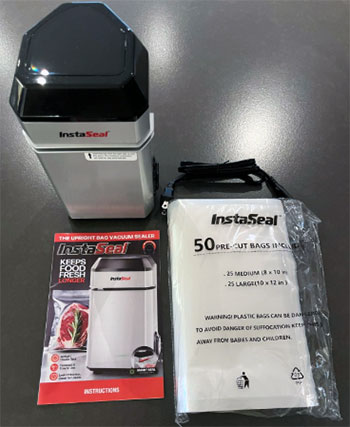
- Use the Right Bags: While the InstaSeal claims to work with universal bags, it works best with the textured bags provided or high-quality equivalents. The rollers need a certain thickness and texture to grip the bag effectively. Cheap, thin generic bags might slip or crinkle in the feed mechanism. If you buy third-party rolls, make sure they are “vacuum sealer” compatible (textured on one side) and not just smooth poly bags. Always cut your bags with a straight edge; a jagged or crooked cut can confuse the sensor and cause the bag to jam.
- Cool Down Between Seals: The double sealing strip generates a lot of heat. If you run ten bags back-to-back without pausing, the heating element can overheat, causing it to melt the plastic bag entirely or trigger a safety shut-off. Wait about 20 seconds between each seal to let the strip cool down. This ensures a crisp, clean seal rather than a melted, gooey mess. If you notice the machine taking longer to start or the seal looking milky/white, it is a sign the bar is too hot and needs a break.
Comparison with Other Brands
The InstaSeal is a niche product, so it is important to see how it stacks up against the heavy hitters in the vacuum sealing world. Here is a comparison with three major competitors.
- FoodSaver (FM2000 or similar basic models): This is the Kleenex of vacuum sealers; the standard everyone knows. Comparison: FoodSaver models are typically horizontal, meaning they take up more counter space but are easier to store in a drawer. FoodSaver uses a manual “lock and latch” system which is faster and allows for more precise control over bag placement than the InstaSeal’s auto-feed. However, FoodSaver is notorious for struggling with liquids; you usually have to freeze soup before sealing it. InstaSeal wins on liquids and footprint; FoodSaver wins on speed, durability, and ease of cleaning since you can open the lid to wipe it out. If you seal mostly dry goods or bulk meat, FoodSaver is the reliable workhorse.
- Nesco VS-12 Deluxe Vacuum Sealer: This is widely considered the best “pro-sumer” sealer on the market right now. Comparison: The Nesco VS-12 is a beast; it has a double vacuum pump, multiple settings for dry/moist, and a handle-lock system. It is significantly larger and heavier than the InstaSeal. The Nesco offers a “pulse” vacuum feature, allowing you to manually control the suction for delicate items like chips or bread, which the InstaSeal lacks. InstaSeal is a “point and shoot” camera, while Nesco is a DSLR with manual controls. The Nesco is more expensive but will last years longer and handle heavier workloads. Choose InstaSeal for convenience; choose Nesco for power and precision.
- Anova Precision Vacuum Sealer: Anova is known for sous vide, and their sealer is designed to be compact and simple. Comparison: The Anova sealer is small, but still horizontal. It is very basic—usually just three buttons (Vacuum, Seal, Pulse). The Anova is much quieter than the InstaSeal, which can be surprisingly loud. However, the Anova struggles with liquids just like the FoodSaver. The InstaSeal’s double seal is superior to Anova’s single seal, offering better protection against freezer burn. If you are strictly doing sous vide prep for steaks and chops, Anova is fine; if you want to store soups and stews, InstaSeal is the better tool.
Also Read: My thoughtsa on EverJar Vacuum Sealer
Frequently Asked Questions (FAQ)
There is a removable overflow tray located at the bottom or side of the unit (depending on the specific model generation). You should remove this tray and wash it with warm, soapy water. However, you cannot access the internal vacuum tubing or the heating chamber. To “flush” the system, some users recommend vacuuming a small amount of warm soapy water into the tray (stop before it overflows) and then emptying it, but this is risky and not officially endorsed.
Technically, yes, as long as the bags are textured (have channels for air removal) and are the correct width (usually up to 11 inches). However, the automatic feeding mechanism works best with slightly stiffer, high-quality bags. Very thin or flimsy generic bags may wrinkle or fail to trigger the sensor. FoodSaver brand bags generally work well with this machine.
This is usually due to a wrinkle in the bag where it enters the machine, creating a tiny air leak. Ensure the bag is pulled flat and inserted straight. Also, check that there is no food debris or liquid in the sealing area of the bag itself. If the bag is too full, the machine cannot get a good grip; remove some contents and try again.
The InstaSeal is fully automatic and typically runs a full vacuum cycle, which will crush delicate items. Some models have a “Seal Only” button that you can press mid-cycle to stop the vacuum and seal immediately, but timing this can be tricky. For delicate items, a machine with a dedicated “Pulse” function (like the Nesco) is generally a better choice.
Conclusion
The InstaSeal Vacuum Sealer is a clever solution to a very specific set of problems. If you have limited counter space and frequently want to seal soups, marinades, or juicy leftovers, its upright, gravity-assisted design is genuinely helpful and superior to standard flat sealers. The convenience of the hands-free, double-seal technology makes it an attractive gadget for the casual meal prepper.
However, it is not a heavy-duty workhorse. The finicky bag feeding mechanism, slower speed, and inability to deep clean the interior prevent it from dethroning the market leaders for serious bulk preservation. If you accept it for what it is—a compact, liquid-friendly sealer for everyday light use—it is worth the investment. But if you are looking to process an entire deer or buy in bulk for a family of six, you might be better served by a more traditional, rugged machine.