
We have all seen the videos while scrolling through social media late at night. You know the ones—a person walks up to a foggy, yellowed headlight, sprays a magical blue or clear liquid onto it, and with a single wipe of a rag, the lens turns crystal clear instantly. It looks like magic. It looks like the solution to the ugly, aged front end of your car that you have been ignoring for years. This is the promise of the Hexibii Headlight Restorer, a product that has been making the rounds on viral feeds, promising to restore your headlights without sanding, drilling, or sweating.
In this comprehensive review, I am going to walk you through the reality of the Hexibii Headlight Restorer (also frequently marketed under various generic names with identical packaging). I will break down the chemistry behind “spray-on” restoration, my personal testing experience with the product, and whether it holds up after the first wash. We will look past the edited viral clips to see if this is a legitimate car care breakthrough or just another dropshipping cash grab designed to take your money and leave you with sticky plastic.
My Experience With Hexibii Headlight Restorer
I decided to buy the Hexibii Headlight Restorer after seeing an ad that made it look effortless. My 2015 sedan had developed that classic cloudy haze, and the idea of spending hours with sandpaper and a drill (like the professional kits require) was not appealing. I wanted the “30-second fix” that Hexibii promised. I clicked the link, which took me to a somewhat generic-looking storefront, and placed my order for a bottle of the repair fluid.
The first red flag was the shipping time. Unlike the Amazon Prime deliveries I am used to, this package took nearly three weeks to arrive, suggesting it was being shipped directly from an overseas warehouse.
When it finally landed on my doorstep, the packaging was underwhelming.
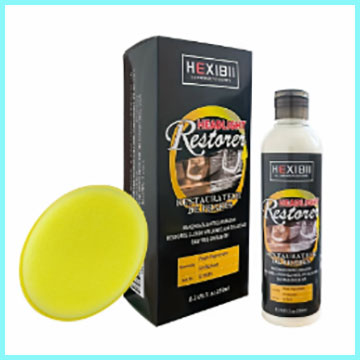
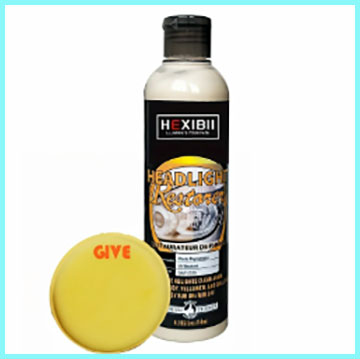
It was a simple plastic bottle with a label that looked printed on a home computer, accompanied by a small, sad-looking sponge and a microfiber cloth that felt thinner than a paper towel.
There were no detailed safety data sheets or complex instructions—just “Clean, Apply, Wipe.”
I washed my headlights thoroughly with soap and water to remove any surface dirt, as I wanted to give the product a fair shot. I shook the bottle and applied a generous amount of the fluid to the sponge. The smell was intense—a sharp, chemical solvent odor that reminded me of nail polish remover or acetone. This was the first sign that this wasn’t a gentle “conditioner” but a harsh solvent.
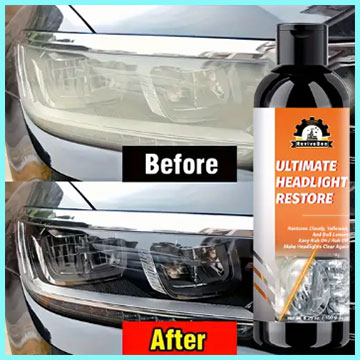
I wiped the fluid across the passenger side headlight. To my initial shock, it actually worked—sort of. As the liquid coated the lens, the white oxidation seemed to disappear instantly, revealing the clear plastic underneath. It looked wet and shiny, just like in the videos. I was momentarily impressed. I did the driver’s side and stood back to admire my work. For about ten minutes, my car looked five years younger.
However, the “magic” faded almost as quickly as it appeared. As the product dried, the headlights didn’t stay crystal clear. They developed a strange, tacky texture, almost like the plastic was melting slightly. Within two days, after driving through a light rain shower, the “restored” look vanished completely. The oxidation wasn’t gone; it had just been temporarily wetted down by the oily heavy solvents in the formula.
Worse, when I tried to wash the residue off, I realized the solvent had actually softened the top layer of my headlight plastic, leaving it stickier and more prone to collecting dust than before. It became clear that Hexibii wasn’t removing the oxidation; it was essentially melting the surface to create a temporary illusion of clarity. The “repair” was purely cosmetic and extremely short-lived, leaving me with a mess that would require actual sanding to fix properly later.
Read More: My Thoughts On Windshield Repair Kit
Pros Of Hexibii Headlight Restorer
Finding positives for a product that underdelivered so heavily is difficult, but if we look at it through the lens of a quick, temporary cosmetic touch-up for a specific scenario (like taking a photo of a car for sale), there are a few angles to consider.
- Extremely Low Barrier to Entry: The primary advantage of Hexibii is that it requires absolutely no skill or physical effort to use. Most headlight restoration kits require you to be comfortable using a power drill, understanding grit levels of sandpaper (400, 1000, 3000), and applying clear coats evenly. Hexibii removes all of that complexity. If you can wipe a table with a sponge, you can apply this product. For elderly car owners or those with physical limitations who cannot scrub or sand for 30 minutes, this wipe-on method offers a way to briefly improve the look of the car without the manual labor.
- Instant Visual Gratification (Temporary): There is no denying that for the first 10 minutes, the results look impressive. The solvents in the formula wet the surface of the oxidized plastic, filling in the microscopic pits and scratches that cause the “foggy” look. This creates an immediate “wet look” clarity that is satisfying to watch. If you needed to make a car look good for a quick Craigslist photo or a video shoot where the car wouldn’t be inspected closely, this product delivers that instant, albeit fleeting, shine.
- Inclusion of Basic Application Tools: Even though the quality is low, the kit does come with everything you need to apply it physically. You get a sponge and a cloth in the box, meaning you don’t have to go hunting for rags in your garage. For a very cheap price point, having an “all-in-one” package is convenient. It saves you from ruining your own good microfiber towels with the chemical smell of the fluid.
- Works on Other Plastics: Because the fluid is essentially a solvent-based dressing, it can temporarily darken other faded black trim pieces on the car. If you accidentally get some on your bumper, it won’t leave a white residue like wax; instead, it might make the faded gray bumper look black again for a few days. This versatility makes it feel like a general “shine” product rather than just a headlight tool, allowing you to use up the bottle on other neglected parts of a beater car.
Cons Of Hexibii Headlight Restorer
The downsides of this product are significant and move beyond just “it didn’t work” into “it might damage your car.” The viral marketing hides the harsh reality of what these solvents do to polycarbonate plastic.
- Results Are Deceptively Temporary: The biggest drawback is that this is not a restoration; it is a mask. Real headlight restoration involves physically removing the layer of dead, yellowed UV coating via sanding. Hexibii merely coats the dead layer in oil or solvent. Once that fluid evaporates or washes off (which happens in the first rain or car wash), the headlights return to their foggy state immediately. You are renting clarity, not buying it. Users expecting a permanent fix will be sorely disappointed when their car looks old again 48 hours later.
- Potential Chemical Damage to Headlights: The chemical smell indicates the presence of strong solvents, likely acetone or something similar. Polycarbonate (the plastic used for headlights) is highly sensitive to solvents. While it clears the fog temporarily by “melting” the surface smoothness, repeated use can cause “crazing”—thousands of microscopic cracks deep inside the lens. Once a lens is crazed, it cannot be fixed even with sanding; the headlight is structurally ruined and must be replaced. Using this product acts like a chemical peel that goes too deep, potentially costing you hundreds of dollars in replacement assemblies later.
- Sticky Residue Attracts Dirt: After application, the headlights often do not cure to a hard, dry finish like a proper clear coat. Instead, they remain slightly tacky or oily. This stickiness becomes a magnet for road dust, pollen, and bugs. Within a week, you might find that your headlights are not yellow, but brown and gritty because debris has embedded itself into the soft chemical layer. This actually reduces light output at night, which is a safety hazard.
- Misleading Viral Marketing: The advertising for this product is borderline predatory. The videos are often edited or show a completely different process (like steam restoration) while selling you this bottle of fluid. They promise a “new” headlight with zero effort, which sets unrealistic expectations. Customers feel scammed when the product arrives and looks nothing like the high-end kit shown in the ads. The lack of a reputable brand name or customer support means if you ruin your lights, you have no one to call for a refund or insurance claim.
Maintenance Tips For Hexibii Headlight Restorer
If you have already bought this product and are determined to use it, or if you want to know how to salvage the situation after using it, here are the best practices to minimize damage and maximize whatever brief results you get.
- Deep Clean Before Application: Since you are not sanding, you must remove as much surface contamination as possible. Use isopropyl alcohol (rubbing alcohol) to wipe down the headlight before applying the Hexibii fluid. This strips away old wax, bug guts, and road grease. If you apply the solvent over dirt, you will just seal the dirt into the plastic, making it look muddy and permanently stained. A clean surface gives the fluid the best chance of adhering evenly without streaks.
- Apply in Thin, Even Coats: The temptation is to soak the headlight to get that super-wet look, but this leads to drips and prolonged stickiness. Put a small amount of fluid on the sponge and wipe in straight, horizontal lines. Do not swirl or scrub circles. One smooth pass ensures the light refracts evenly. If you pile it on too thick, the solvents will pool at the bottom of the lens and could eat into the paint on your bumper. Treat it like nail polish: thin layers dry harder; thick layers stay soft.
- Protect Your Paint: The solvents in Hexibii are aggressive and can damage the clear coat on your car’s bodywork. You absolutely must tape off the painted areas around your headlight using blue painter’s tape. If the fluid drips onto your bumper or hood, wipe it off immediately with a wet cloth. Do not let it sit, or it may etch a permanent mark into your car’s paint, turning a $10 headlight fix into a $500 paint shop bill.
- Follow Up with a UV Sealant: Since Hexibii likely provides zero UV protection, your headlights will yellow even faster after using it because the solvents strip away any remaining factory coating. To make the results last longer than a few days, wait for the Hexibii fluid to dry completely (give it 24 hours), and then spray a legitimate UV clear coat (like Meguiar’s Keep Clear Headlight Coating) over it. This locks in the clarity and provides the UV barrier that the cheap kit lacks. This is the only way to extend the life of this temporary fix to a few months.
Comparison with Other Brands
To understand why Hexibii is considered a “viral gimmick,” we need to stack it up against the legitimate, proven methods of headlight restoration. Here is how it compares to the heavyweights in the industry.
- Cerakote Ceramic Headlight Restoration Kit: This is widely considered the gold standard for DIY restoration. Comparison: Cerakote uses a chemical oxidation remover followed by fine sanding pads and a ceramic clear coat wipe. Unlike Hexibii, Cerakote physically removes the dead plastic rather than hiding it. Cerakote offers a lifetime warranty, whereas Hexibii offers zero guarantees. The Cerakote finish cures hard and dry, providing actual UV protection that lasts for years. Hexibii is a 2-day fix; Cerakote is a permanent fix. Cerakote requires about 30 minutes of elbow grease, but the results are professional-grade.
- 3M Headlight Lens Restoration System: The heavy-duty choice for lights that are severely damaged. Comparison: 3M’s kit attaches to a household drill, using machine power to sand down the lens. Hexibii requires no tools, which is easier, but 3M produces a clarity that looks like factory-new glass. Hexibii cannot fix deep scratches or heavy pitting; 3M can sand those imperfections completely away. The 3M method is messy (creating plastic dust) and intimidating for beginners, but it is the only way to truly “resurface” a lens. If your lights are textured and rough to the touch, Hexibii will do nothing; you need the power of the 3M sanding discs.
- Sylvania Headlight Restoration Kit: Known for having the best UV clear coat in the retail market. Comparison: Sylvania focuses heavily on the final step—a UV-blocking polymer that hardens like clear lacquer. Hexibii is an oily solvent that never truly hardens. Sylvania’s kit includes a softening spray (activator) similar to Hexibii, but it follows it up with sanding and sealing. Sylvania creates a barrier against the sun; Hexibii leaves the plastic naked and vulnerable. While Sylvania costs about $10 more than Hexibii, it saves you from having to do the job again next week.
Also Read: My Thoughts On Shiny Car Stuff
Frequently Asked Questions (FAQ)
No, it does not. The product creates a temporary “wet” look that hides oxidation for a few days or weeks at most. It does not remove the dead, yellowed UV coating, nor does it apply a new protective layer. The yellowing will return once the product washes off or evaporates, and it often comes back worse than before due to the exposure of the plastic.
Yes, it is very possible. The fluid contains strong chemical solvents designed to melt or soften plastic. If these solvents drip onto your car’s painted bumper or hood, they can eat through the clear coat and cause permanent etching or discoloration. You must mask off the area with tape before using it to prevent expensive body shop repairs.
The instructions typically say no sanding is required, which is their main selling point. However, without sanding, you are simply putting a dressing over dead plastic. For any real, lasting result, sanding is mandatory to remove the oxidized layer. Using Hexibii without sanding is like putting clear nail polish over a dirty fingernail—it might shine for a moment, but the underlying problem is still there.
Conclusion
The Hexibii Headlight Restorer is a classic example of “too good to be true.” While the viral videos make it look like a miracle cure for aging cars, the reality is a sticky, solvent-based band-aid that offers only fleeting results. It relies on melting the surface of your lens for a temporary shine rather than actually restoring the integrity of the plastic. The risk of crazing your lenses and the hassle of shipping delays make it a poor investment compared to proven solutions.
If you care about the safety and appearance of your vehicle, skip the viral shortcuts. Invest in a legitimate kit from brands like Cerakote or 3M that utilize sanding and real UV clear coats. It might take 30 minutes of work instead of 30 seconds, but the results will last for years, not days. Your car deserves a real repair, not just a quick, oily cover-up.