
I’ve spent years trying different mattresses, chasing that perfect night’s sleep. After testing both the Helix Midnight and Helix Dusk extensively, I want to share my honest comparison to help you decide which one might suit you better. My goal here is to break down their differences, strengths, and weaknesses so you can pick the mattress that fits your sleep style and needs.
A Brief Comparison Table
| Feature | Helix Midnight | Helix Dusk |
| — | — | — |
| Firmness Level | Medium (around 6/10) | Medium (around 6/10, slightly more responsive) |
| Best For | Side sleepers, combination sleepers | Back sleepers, stomach sleepers, combination |
| Top Comfort Layer | Memory Plus Foam (contouring feel) | Helix Dynamic Foam (bouncier, responsive) |
| Pressure Relief | Excellent, deep cushioning at shoulders/hips | Good, but less hugging than Midnight |
| Bounce/Responsiveness* | Moderate | High, easier to move around |
| Motion Isolation | Very good | Good, but more transfer due to bounce |
| Edge Support | Decent | Strong |
| Cooling | Good airflow from coils | Good, similar hybrid design |
| Height | 12 inches | 12 inches |
| Price (Queen, approx.)* | Around $1,099 | Around $1,099 |
My Experience With Helix Midnight
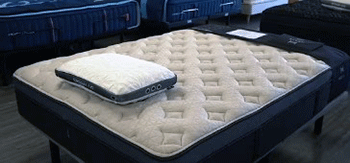
I remember unboxing the Helix Midnight and feeling excited about its reputation for side sleepers like me at the time.
The first night, I sank into that top memory foam layer, and it cradled my shoulders and hips perfectly.
As someone who often wakes up with pressure buildup, this mattress changed things for me.
I noticed how the zoned support kept my spine aligned when I shifted to my back. The coils underneath gave just enough pushback without feeling too springy. Over months of use, it held up well—no sagging in the middle where I sleep most.
One thing that stood out was how quiet it stayed when my partner moved. We barely disturbed each other. On hotter nights, it didn’t trap heat like some all-foam beds I’ve tried before.
That said, if I spent too much time on my stomach, my hips sank a bit too much, leading to some lower back strain in the morning. It wasn’t terrible, but it made me realize it’s truly optimized for side sleeping.
Overall, sleeping on the Midnight felt like a gentle hug—supportive yet plush. It became my go-to for recovery after long days.
Pros Of Helix Midnight
- Excellent pressure relief: The memory foam top layer contours deeply, easing pain at shoulders, hips, and knees—ideal if you carry tension there.
- Great motion isolation: Foam layers absorb movement well, making it suitable for couples where one person shifts a lot.
- Balanced support for side sleepers: Zoned coils provide extra lumbar push while allowing sinkage where needed.
- Comfortable for combination sleepers: It adapts decently when switching from side to back.
- Good cooling for a hybrid: Coils promote airflow, preventing excessive heat buildup.
- Durable feel over time: High-quality foams and coils resist impressions well.
- Versatile for average weights: Works across lightweight to heavier bodies with proper alignment.
- Quiet operation: No noisy springs or creaks during movement.
- Plush yet supportive hug: That memory foam embrace promotes relaxation.
- Strong value: Delivers premium features at a reasonable price point.
Cons Of Helix Midnight
- May feel too soft for strict stomach sleepers: Hips can sink, causing misalignment.
- Less bounce: Harder to change positions quickly compared to responsive foams.
- Moderate edge support: Some compression when sitting on the perimeter.
- Slight memory foam hug: Can feel restrictive if you prefer a neutral surface.
- Potential off-gassing initially: Mild odor that dissipates quickly.
- Not ideal for very heavy sleepers: May need firmer options for optimal support.
- Less responsive for sex: Lower bounce reduces ease.
- Can retain some heat: Though better than all-foam, not the coolest.
- Break-in period: Takes a few weeks to feel fully broken in.
- Limited firmness options: Only one level per model.
My Experience With Helix Dusk
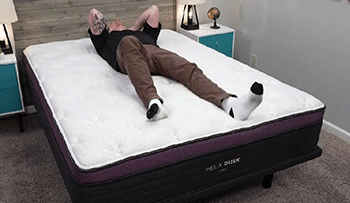
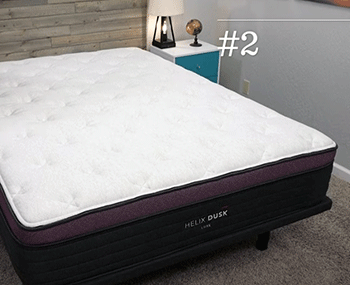
Switching to the Helix Dusk felt different right away. The top layer has that Dynamic Foam, which springs back quickly.
I could roll over without fighting the mattress, perfect for nights when I toss and turn.
As a back sleeper now, I appreciated how it kept everything flat and supported. No dipping in the hips, just even lift from the coils. Stomach sleeping felt natural too—the surface stayed firm enough to prevent any arching in my back.
The bounce made it fun for other activities, if you know what I mean. It responded instantly.
Motion transferred a little more than on the Midnight, so I felt my partner’s shifts occasionally. Edge support was noticeably better—I could sit or lie near the side without sliding off.
Cooling performed similarly, thanks to the hybrid build. After extended use, it maintained its shape well, with no soft spots developing.
Also read: Comparison of Generac And Westinghouse Generator
Pros Of Helix Dusk
- High responsiveness: Dynamic Foam bounces back fast, great for combination sleepers.
- Strong support for back and stomach: Keeps spine neutral without excessive sink.
- Excellent edge support: Reinforced perimeter feels stable all around.
- Easy movement: Low effort to switch positions.
- Good bounce for intimacy: Adds playfulness and traction.
- Solid durability: Coils and foams hold shape long-term.
- Neutral temperature: Airflow keeps it comfortable year-round.
- Versatile for multiple positions: Accommodates changes throughout the night.
- Minimal noise: Quiet coils enhance peaceful sleep.
- Balanced medium feel: Appeals to a broad range of preferences.
Cons Of Helix Dusk
- Less pressure relief for side sleepers: Shoulders and hips get less cushioning.
- Higher motion transfer: Bounce lets movements travel more.
- Firmer top feel: Lacks deep contour some crave.
- May feel too responsive: Less “sink-in” relaxation.
- Potential for slight noise over time: Though rare in hybrids.
- Not plush enough for lightweight side sleepers: Could feel firm.
- Similar break-in needed: Initial firmness softens slightly.
- Standard cooling: No standout features without upgrade.
- One firmness only: No adjustments built-in.
- Edge compression possible under heavy weight: Though better than many.
Maintenance Tips For Helix Midnight
- Rotate regularly: Turn head-to-foot every 3-6 months to even wear.
- Use a protector: Waterproof cover guards against spills and stains.
- Vacuum gently: Remove dust with upholstery attachment.
- Air out occasionally: Let breathe in sunlight if possible.
- Avoid jumping: Prevents coil damage.
- Check foundation: Ensure flat, supportive base.
- Spot clean only: Mild soap for accidents, no soaking.
- Allow full expansion: 24-48 hours after unboxing.
- Monitor for sagging: Address early if noticed.
- Pair with right pillows: Enhances alignment.
Maintenance Tips For Helix Dusk
- Regular rotation: Promotes uniform settling.
- Mattress protector essential: Shields from allergens.
- Gentle cleaning: Vacuum and spot treat.
- Proper support: Sturdy frame or foundation.
- No bending: Handle carefully during moves.
- Ventilate room: Aids moisture control.
- Avoid direct sun long-term: Prevents fabric fade.
- Check edges: Maintain perimeter strength.
- Full decompression time: Patience post-delivery.
- Compatible bedding: Breathable sheets for cooling.
Comparison With Other Brands
- Vs Saatva Classic: Helix Midnight offers more contouring memory feel, while Saatva has innerspring luxury—better for those wanting traditional hotel vibe.
- Vs DreamCloud: Dusk’s bounce rivals DreamCloud’s responsiveness, but Helix has targeted zoning.
- Vs Nectar: Midnight provides hybrid support over Nectar’s all-foam hug—better airflow.
- Vs Purple: Dusk easier to move on than Purple’s grid, less unique cooling.
- Vs Tempur-Pedic: Midnight more affordable alternative to Tempur’s deep memory.
- Vs Casper: Dusk outperforms in edge support compared to Casper’s zoned foam.
- Vs Leesa: Midnight better pressure relief for sides than Leesa’s balanced feel.
- Vs WinkBed: Similar luxury, but Helix more position-specific.
- Vs Bear: Dusk cooler than Bear’s recovery-focused foams.
- Vs Brooklyn Bedding: Comparable value, Helix quiz helps personalization.
Read more: Comparison of AirDoctor 3000 And 3500
Frequently Asked Questions (Faq)
Which Helix mattress is the best?
The Helix Midnight (or its Luxe version) is often considered the best overall due to its versatility, pressure relief, and popularity among a wide range of sleepers.
Is Helix Dusk a good mattress?
Yes, it’s excellent for back and stomach sleepers, offering responsive support and easy movement.
Is Helix Midnight a good mattress?
Yes, particularly for side sleepers—provides outstanding pressure relief and contouring.
What is the difference between Helix sunset and moonlight?
Both are soft, but Sunset uses memory foam top for deeper contouring (better for side sleepers), while Moonlight has responsive polyfoam top for bounce (suited for back/stomach sleepers).
Conclusion: For Helix Midnight And Dusk
I’ve loved experiencing both these mattresses, and honestly, you can’t go wrong with either. If you’re like me and prioritize cushioning for your sides or a cozy hug, go with the Midnight—it might transform your rest. But if you need that lively support for your back or quick position changes, the Dusk will feel invigorating. Whichever you choose, take the quiz on their site and trust the trial. Sweet dreams await—you deserve a bed that fits you perfectly.