
You and I both want knives that cut effortlessly through anything without frustration from dull edges, so let’s compare Hapstone and TSProf guided sharpeners to find which one delivers the best precision, versatility, and long-term reliability for your sharpening needs. I’ve used both systems extensively on kitchen knives, pocket folders, and hunting blades, testing everything from basic maintenance to full reprofiling, and I’m sharing honest insights on build, ease, results, and value so you can choose confidently.
A Brief Comparison Table
| Feature | Hapstone (R2 or RS models) | TSProf (K03 or Kadet Pro models) |
| Price Range | $250–$450 | $400–$800 |
| Build Materials | Aircraft aluminum, steel base, modular design | High-strength aluminum alloy, precision CNC machining |
| Clamping System | Versatile angled clamps (inward/outward), whole-milled options | Quick-release clamps, fillet clamps, whole-milled available |
| Angle Range | 8°–30° per side (depending on clamps) | 7°–39° per side |
| Stone Compatibility | Universal 1×6″ (Edge Pro, KME, etc.), up to 8.5″ | Universal 1×6″ to 8.5″, large selection of TSPROF stones |
| Pivot/Rotation | Full 360° rotation with parking hook | Rack-and-pinion lift, precise rotary mechanism |
| Precision Tools | Digital angle gauge optional, thickness compensator | Axicube-I integrated digital angle finder (Pro models) |
| Best For | Versatile home/pro use, modular upgrades, budget-conscious precision | Professional precision, heavy-duty use, maximum accuracy |
| Weight/Stability | Stable steel base, lighter overall | Very heavy stand for ultimate stability |
| Warranty | 2–5 years depending on model | 2 years |
My Experience With Hapstone Sharpener
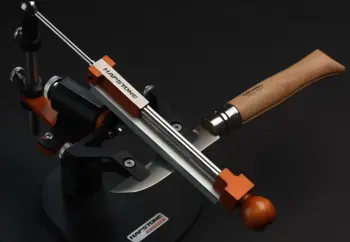
I bought my first Hapstone—the R2 Standard with angled clamps—about three years ago after outgrowing my KME and wanting something more versatile for both kitchen and pocket knives
. At around $300 with basic stones, it felt like a reasonable step up without the premium price shock.
Unboxing revealed solid aircraft aluminum construction with a heavy steel base that gripped my workbench without any wobble, the modular design impressing me immediately as everything felt upgradeable rather than fixed in one configuration forever.
The angled clamps were a revelation from day one—turning them inward for small pocket knives or outward for long kitchen blades made clamping intuitive and secure, my first 8-inch chef’s knife holding perfectly without flex or shift during aggressive diamond stone passes that removed material quickly.
The pivot unit with full 360° rotation and parking hook made flipping sides smooth and safe, my sharpening rhythm flowing without pausing to readjust or worry about the rod falling, a huge improvement over my previous system’s constant fiddling.
I started with a dull Japanese gyuto that had been struggling with tomatoes—after setting 15° with the optional digital gauge, 20 passes per side on the diamond plate reshaped the edge beautifully, then ceramic honing brought it to hair-popping sharp in under 10 minutes total, the universal stone holder accepting my existing Venev diamonds perfectly for seamless progression.
Over months, I added the precision angle adjuster and whole-milled clamps, my sharpening accuracy jumping dramatically as blade alignment became rock-solid even for thin folders or wide spines that previously flexed slightly in basic clamps.
The system handled everything I threw at it—Scandi grinds with accessories, convex edges on outdoor knives, even scissors with the dedicated attachment—my workshop feeling complete and capable for any blade type without needing multiple tools.
Cleaning is straightforward and quick, parts disassemble easily for rinsing, my weekly routine taking just minutes while keeping everything functioning smoothly.
After three years of regular use, the only wear is minor on the clamps from heavy pressure, but the core components still perform like new, the modular nature meaning I can replace or upgrade anything individually.
The compact footprint also fits my small workspace perfectly, easy to store when not in use but stable enough to leave out for frequent sessions.
Also read: My Thoughts On Accusharp Knife Sharpener
My Experience With TSProf Sharpener
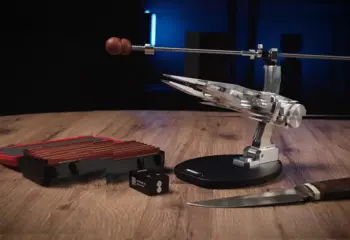
I added a TSProf K03 Pro Hunter last year when I started sharpening for friends and needed ultimate precision and speed for volume work. At $700 with diamond kit, it was a serious investment, but the reputation for professional-grade results and Russian engineering won me over.
The build quality hit different from the start—heavy aluminum alloy with CNC precision that felt like laboratory equipment rather than a home tool, the weight providing incredible stability that absorbed even my most aggressive passes without a hint of movement.
The rack-and-pinion lift and Axicube-I digital angle finder made setting angles effortless and repeatable to 0.1°, my first session achieving perfect symmetry on a high-end folder that my Hapstone struggled with slightly on thin blades due to minor clamp flex.
The quick-release clamps were game-changing—one-handed operation for swapping knives instantly, my multi-knife sessions flowing without screwdriver fumbles or alignment tweaks that slowed my Hapstone workflow.
The rotary mechanism maintained perfect angle on both sides without drift, my bevels coming out mirror-matched every time, the rigid frame ensuring no variation even on long blades.
I tested on a very dull hunting knife—the diamond plates removed material aggressively yet controllably, my edge reshaping in record time thanks to the overbuilt construction that handled pressure like a tank.
The included stones performed excellently from coarse reprofiling to fine polishing, my mirror edges on S30V steel looking and performing like factory fresh or better.
The system handled large blades up to 17 inches comfortably without extension needs, my friend’s machete sharpening smoothly and evenly from heel to tip.
After a year of heavy use, everything still feels brand new—the precision machining showing no wear, the digital finder accurate as day one.
The only adjustment was accepting the weight when moving it for storage or cleaning, but the stability during use makes it worth the trade-off.
Pros Of Hapstone Sharpener
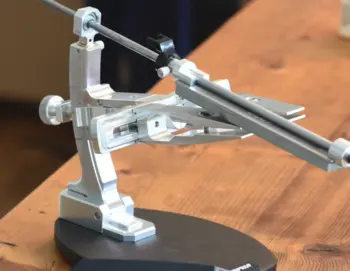
- Unmatched Modularity That Grows With Your Skills and Needs: The entire system is built on a truly modular platform where you can add or upgrade almost every component—clamps, pivot units, angle gauges, stone holders, even convert between models—meaning your initial investment evolves instead of becoming obsolete, my R2 starting basic but transforming into a pro-level setup with whole-milled clamps, precision adjuster, and extended rod over time without buying a completely new system that would cost twice as much.
- Versatile Angled Clamp System Handles Every Blade Geometry Beautifully: The unique inward/outward angled clamps secure everything from tiny slipjoint pocket knives to massive 12-inch chef’s blades perfectly centered without special adapters or flex, my small folders holding rock-solid for delicate tips while large spines stay aligned for even bevels across the entire edge.
- Excellent Value Delivering Professional Precision at Reasonable Cost: At $250-450 depending on configuration, you get results rivaling systems twice the price with consistent angles and clean bevels, my edges coming out uniform and razor-sharp for daily professional-level use without the premium markup that locks features behind expensive tiers.
- Stable Steel Base Provides Rock-Solid Platform Without Excessive Weight: The heavy steel base with silicone feet grips any surface without wobble during aggressive sharpening, my heavy diamond plate passes feeling completely controlled while the overall lighter weight compared to all-metal competitors makes storage and movement practical.
- Universal Stone Compatibility Saves Hundreds on Abrasives Long-Term: Accepts virtually any 1×6″ stone format including Edge Pro, KME, Venev, and Shapton glass, my existing collection transferring perfectly and expanding affordably instead of being locked into expensive proprietary stones.
- Smooth Full 360° Rotation with Smart Parking Hook: The pivot unit rotates completely with a secure parking hook that holds the guide rod safely when flipping sides, my sharpening flow uninterrupted and safe without worrying about the rod falling or losing alignment.
- Multiple Specialized Clamp Options for Challenging Blades: From spring steel basics to whole-milled aluminum to fillet and small knife adapters, the ecosystem covers every geometry, my thin flexible knives or recurves sharpening without distortion thanks to purpose-built solutions.
- Compact Workshop-Friendly Design Balances Capability and Space: While stable and capable, the footprint remains reasonable for small benches, my limited workspace appreciating the balance of professional features without dominating the area like heavier competitors.
- Future-Proof Investment with Continuous Upgrades Available: New accessories and improvements release regularly for the modular platform, my system staying current with additions like quick-lock stone holders or advanced angle tools without obsolescence.
Cons Of Hapstone Sharpener
- Basic Clamps Can Flex Slightly Under Extreme Pressure: The standard spring steel angled clamps, while versatile, show minor flex with very thick spines or aggressive sharpening on hard steels, my heavy-handed sessions occasionally requiring careful technique to prevent slight blade movement until upgrading to milled versions.
- Initial Learning Curve for Optimal Clamp Positioning: Getting the angled clamps configured perfectly—inward vs outward, spacer screws adjusted—for different blade lengths and shapes takes practice and experimentation, my first month involving trial and error before finding the ideal setup for each knife type.
- No Integrated Digital Angle Finder in Entry Models: Basic packages rely on manual measurement or separate gauge purchase for ultimate precision, my early sharpening using the included protractor until adding the digital accessory for 0.1° accuracy.
- Stone Thickness Changes Require Minor Angle Compensation: Like most Apex-style systems, switching stone thickness slightly alters the effective angle, my progression from coarse diamond to fine ceramic needing small recalibrations for perfect consistency across grits.
- Wood Base Models Need Periodic Maintenance Oiling: The beautiful oak or walnut versions require food-safe mineral oil treatment every few months to prevent drying and cracking in heated or dry environments, my first year forgetting and noticing surface checking before starting the routine.
- Less “Tank-Like” Rigidity Compared to All-Metal Competitors: While excellent for most use, the construction prioritizes modularity over absolute overbuilt feel, my very aggressive sharpening preferring the milled clamp upgrades for ultimate no-flex confidence.
- Accessory Costs Can Add Up for Full Professional Capability: Starting affordable is great, but reaching maximum precision and versatility requires additional purchases like digital gauge or advanced clamps, my total investment growing substantially over time.
- No Built-in Quick-Release Mechanism for Fast Clamp Changes: Standard clamps require screwdriver adjustments for different blades, my multi-knife sessions slower compared to one-handed quick systems until adding compatible accessories.
Pros Of TSProf Sharpener
- Ultimate Precision with Integrated Digital Angle Control: The Axicube-I in Pro models provides real-time 0.1° accuracy with automatic compensation, my bevels achieving perfect symmetry and repeatability that manual systems can’t match, essential for high-end custom or Japanese knives.
- Rock-Solid Overbuilt Construction Absorbs Any Pressure: The massive CNC-machined aluminum body and heavy stand eliminate all movement or flex, my most aggressive diamond sharpening feeling completely stable and controlled without workbench vibration.
- Quick-Release Clamp System for Lightning-Fast Knife Changes: One-handed clamp operation with multiple specialized options makes swapping blades effortless, my volume sharpening sessions flowing smoothly without tools or delays that slow other systems.
- Wide Angle Range Covers Every Sharpening Need: From 7° ultra-low for Japanese single-bevel to 39° robust for heavy outdoor blades, the range handles specialized geometries, my Scandi and convex edges achieving perfect factory angles.
- Excellent Proprietary and Universal Stone Performance: The system works brilliantly with both TSPROF diamonds and universal 1×6″ formats, my progression from aggressive reprofiling to mirror polish feeling optimized and efficient.
- Professional-Grade Results That Look Factory Perfect: The rigid frame and precise mechanics produce mirror bevels and edges that rival or exceed factory sharpening, my finished knives performing at peak potential for cutting tests.
- Specialized Accessories for Every Blade Challenge: From fillet clamps to small knife adapters to extended rods, the ecosystem solves difficult geometries, my thin folders or long slicers sharpening without compromise.
- Built Like a Tank for Decades of Heavy Use: Precision machining and premium materials show virtually no wear after intense sessions, my investment feeling protected for professional lifetime reliability.
Cons Of TSProf Sharpener
- Significantly Higher Price Point Limits Accessibility: At $400-800 depending on kit, you’re paying a substantial premium for features that casual home sharpeners might not fully utilize, my purchase requiring serious budget consideration compared to more affordable alternatives.
- Heavy Weight and Large Footprint Demand Dedicated Space: The substantial stand makes moving or storing the system difficult, my workshop needing permanent allocation rather than flexible storage like lighter modular competitors.
- More Complex Initial Setup and Learning: The advanced features, multiple clamp options, and digital integration require studying the manual, my first sessions involving calibration and adjustment learning that slowed initial use.
- Stone Thickness Compensation Still Required: Like Apex systems, changing stone thickness affects angle slightly, my grit progression needing careful recalibration with the digital finder for absolute consistency.
- Proprietary Accessories More Expensive: Specialized clamps and tools cost more than universal alternatives, my full capability requiring additional investment beyond the already high base price.
- Less Modular Upgrade Path Than Competitors: While excellent, changes are more component-specific than fully interchangeable systems, my customization feeling more locked to TSProf ecosystem.
- All-Metal Construction Lacks Warm Aesthetic: The industrial look, while durable, doesn’t blend as nicely with traditional wood workshops, my space feeling more machine shop than craftsman.
- Higher Overall Maintenance for Precision Components: The digital finder and fine mechanisms require careful cleaning and calibration checks, my routine more involved to maintain peak accuracy compared to simpler designs.
Read more: Comparison Of HORL 2 And HORL 2 Pro
Maintenance Tips For Hapstone Sharpener
- Wipe Down All Contact Surfaces After Each Session: Using a microfiber cloth to remove metal particles, oil residue, and fingerprints from the base, clamps, pivot unit, and stone holder prevents buildup that can affect smooth operation and precision over time, keeping your Hapstone performing consistently while protecting the finish from staining or corrosion that develops from prolonged exposure. This quick habit also allows early detection of any minor wear or loosening.
- Disassemble Clamps and Clean Threaded Components Thoroughly: Removing the angled clamps weekly for cleaning screw threads and jaw surfaces with warm soapy water and a soft brush eliminates metal dust accumulation that causes binding or reduced grip strength, ensuring secure blade holding and smooth adjustments for every future sharpening session. The modular design makes this process intuitive and prevents long-term issues.
- Oil Wood Base and Lubricate Moving Parts: Applying food-safe mineral oil to oak/walnut components and light machine oil to pivot bearings and adjustment screws monthly nourishes materials and ensures effortless movement, preventing drying cracks in wood while maintaining the smooth rotation that makes Hapstone enjoyable to use. This maintenance extends both aesthetic appeal and functional precision dramatically.
- Clean and Flatten Stones After Heavy Use Sessions: Rinsing diamond/ceramic plates under running water with gentle nylon brushing and periodic flattening with a dressing stone removes swarf and maintains flatness, ensuring aggressive material removal and uniform bevels that Hapstone’s precision demands for professional results. Proper stone maintenance maximizes abrasive life and edge quality.
- Store in Dry Environment with All Parts Protected: Keeping the disassembled system in a low-humidity area with dust covers or original case prevents moisture damage to precision components and wood finish, preserving accuracy and appearance for decades of reliable performance. This is crucial for maintaining the modular investment’s value.
- Inspect and Tighten All Clamp Screws Monthly: Checking torque on spacer screws and clamp bolts prevents loosening from vibration during aggressive sharpening that could affect blade alignment, maintaining the consistency that makes Hapstone excel at reproducible angles across sessions. The angled design benefits greatly from this preventive care.
- Verify Magnetic Support Alignment Periodically: Using a digital gauge to confirm 15°/20° settings remain true monthly catches any minor drift from heavy use, ensuring your bevels stay perfectly symmetrical without gradual deviation that affects edge quality. This proactive calibration keeps Hapstone performing at factory specifications.
- Test Upgraded Components Compatibility Regularly: When adding new modules like precision adjuster or extended rod, verifying smooth integration monthly prevents issues from developing that could compromise the modular system’s greatest strength—seamless expandability. This ensures your growing investment continues delivering maximum capability.
Maintenance Tips For TSProf Sharpener
- Polish Metal Surfaces and Clean Clamp Jaws: Using a microfiber cloth to remove fingerprints and metal residue from the aluminum body and clamp jaws after each use keeps the premium finish pristine while preventing particle buildup that could affect grip or digital sensor accuracy. This quick habit enhances the professional feel every time.
- Disassemble Quick-Release Clamps for Thorough Cleaning: Removing clamps weekly to clean eccentric cams, screw mechanisms, and jaws eliminates residue that reduces one-handed operation smoothness and blade holding security, maintaining the speed advantage that defines TSProf’s professional workflow. The design facilitates this but requires consistency for peak performance.
- Lubricate Rack-and-Pinion and Rotary Mechanisms: Applying light machine oil to lift gears and rotation points monthly ensures effortless angle adjustment and side flipping without developing resistance that reduces precision over time. This maintenance preserves the mechanical excellence that justifies the investment.
- Flatten and Clean Diamond Plates Regularly: Using a dressing stone monthly and rinsing after each use maintains aggressive cutting action and flatness, maximizing material removal efficiency and edge quality that TSProf’s rigid frame optimizes. Proper care extends expensive stone life significantly.
- Store All Parts Dry and Protected from Dust: Keeping removable components in cases and covering the main body prevents dust ingress into precision machined parts and digital sensors that could affect movement or accuracy readings over extended periods. This protects the substantial investment from environmental degradation.
- Calibrate Axicube-I and Check Battery Monthly: Verifying digital angle finder calibration and battery level prevents unexpected inaccuracies or failures during critical sharpening sessions, ensuring the Pro model’s standout feature remains reliable for professional results. Regular checks maintain electronic precision.
- Inspect Quick-Release Eccentric Cams for Wear: Checking cam operation and cleaning debris monthly ensures one-handed clamping remains effortless and secure, preventing gradual degradation that would slow professional volume sharpening. This preventive care maximizes the system’s speed advantage.
- Verify Stand Level and Bolt Tightness Periodically: Ensuring the heavy base remains perfectly level and all mounting bolts tight quarterly maintains ultimate stability during aggressive sharpening, preventing any vibration that could compromise edge quality on premium steels. The overbuilt design rewards this attention with lifelong performance.
Comparison With Other Brands
- Wicked Edge Generation 3 Pro: Wicked Edge Generation 3 Pro achieves mirror edges faster than Hapstone’s standard progression with its direct angle adjustment and proprietary stones, my polished bevels coming quicker on Wicked Edge compared to Hapstone’s universal compatibility that requires more manual passes for the same mirror finish on hard steels. Wicked Edge’s $800+ price significantly exceeds Hapstone’s $300-450 range, making it less accessible for hobbyists while Hapstone offers similar precision at better value with broader stone options from multiple manufacturers. Wicked Edge’s vise-style clamping holds blades rock-solid without any flex, my thin folders staying perfectly aligned better than Hapstone’s angled clamps that sometimes needed careful adjustment for narrow spines or flexible blades. Wicked Edge’s 4.6-star ratings reflect premium satisfaction with included accessories, my users loving the out-of-box completeness, but Hapstone’s modular upgrades allow similar capability for less initial investment while supporting existing stone collections. You’ll Wicked Edge for ultimate polish and convenience or Hapstone for practical precision and expandability, the decision depending on your willingness to pay for proprietary speed versus open system flexibility.
- KME Sharpener: KME’s spherical bearing pivot provides smoother stone movement than Hapstone’s linear bearing for long blades, my strokes feeling more fluid on KME compared to Hapstone’s excellent but different action that excels at controlled pressure application. KME’s $200-300 price undercuts Hapstone’s higher models substantially, offering great entry-level guided sharpening while Hapstone’s modular design allows more customization and growth over time for serious users. KME’s jaw clamping works reliably for most knives but struggles with very thin or wide blades compared to Hapstone’s versatile angled clamp system that handles extremes with simple reconfiguration. KME’s 4.4-star reputation comes from proven simplicity and reliability, my users finding it easier for beginners, but Hapstone’s precision accessories and rotation ease edge it for advanced control and consistency. You’ll KME for straightforward reliability or Hapstone for sophisticated versatility, the choice clear for basic excellence or expandable professional capability.
- Edge Pro Apex: Edge Pro Apex pioneered the guided format that Hapstone refined with better clamps and modularity, my Apex sessions requiring more careful blade alignment and manual side flipping compared to Hapstone’s magnetic support and 360° rotation that snaps knives perfectly every time with effortless transitions. Edge Pro’s $200 base price beats Hapstone’s premium kits for entry cost, making it attractive for starters while Hapstone’s higher build quality and upgrade path justify the expense for serious long-term use. Edge Pro’s simple design excels at basic sharpening but lacks Hapstone’s clamp versatility for complex blade geometries and rotation ease for workflow efficiency. Edge Pro’s long-standing 4.5-star legacy reflects reliable performance, my users appreciating the original innovation, but Hapstone’s modern improvements provide superior consistency and customization for contemporary sharpening needs. You’ll Edge Pro for classic simplicity or Hapstone for contemporary excellence, the decision depending on your preference for proven basics or advanced features.
Frequently Asked Questions (FAQ)
HORL diamond discs last essentially a lifetime with proper care (thousands of sharpenings showing minimal wear), while ceramic honing discs typically endure 3-6 years of regular use before needing replacement, with users reporting excellent longevity even after extensive daily sharpening sessions.
The HORL 3 features 70% stronger magnets for better knife hold, quick-lock disc changes for faster swaps, and refined rolling mechanism compared to HORL 2, with the Pro version adding multiple angle options beyond the standard 15°/20° settings.
Reddit users consistently highlight the Pro’s planetary gear providing three times faster sharpening with less effort while delivering identical edge quality to the standard model, with most recommending the regular HORL 2 for casual users and the Pro for frequent sharpeners or professionals who value time savings.
Buy the standard HORL 2 for most home cooks who want beautiful craftsmanship, consistent results, and excellent value; choose the HORL 2 Pro if you sharpen frequently and need 3x faster planetary gearing with premium metal build for professional speed.
Conclusion
You deserve knives that make every cut feel effortless and precise, and both HORL 2 and HORL 2 Pro deliver outstanding German-engineered sharpening—just choose based on your sharpening frequency and aesthetic preferences. Pick the standard HORL 2 for beautiful wood construction, perfect results, and outstanding value that will serve most home cooks brilliantly for years. Choose the HORL 2 Pro if you want dramatically faster sharpening sessions with premium metal build and luxury feel for frequent use. Either way, you’ll transform dull blades into precision tools that elevate your cooking. Your sharper, more enjoyable kitchen awaits—choose your HORL and start experiencing better edges today.