
I’ve spent years maintaining my lawn in a suburban setting, dealing with thatch buildup every spring and fall. I decided to compare Greenworks and Sun Joe dethatchers head-to-head because both brands offer affordable electric options that promise to revive tired grass without breaking the bank. In this article, I share my honest take as a regular homeowner who has used models from each—focusing on real-world performance, key features like power, width, corded vs cordless, scarifying ability, and ease of handling. My main goal here is to help you figure out which one suits your yard better so you can choose confidently and get that lush, healthy lawn you’ve been aiming for.
A Brief Comparison Table Greenworks Vs Sun Joe Dethatcher
| Feature | Greenworks (e.g., 40V 15″ Cordless or 14″ Corded) | Sun Joe (e.g., AJ801E/AJ805E 13-15″ Corded) |
| Power Source | Cordless (40V battery) or Corded (10-13 Amp) | Mostly Corded (11.5-13 Amp) |
| Cutting Width | 14-15 inches | 13-15 inches |
| Weight (approx.) | 25-30 lbs (without battery for cordless) | 20-28 lbs |
| Scarifier Included | Yes on many models | Yes, dual function standard |
| Collection Bag | Yes, good capacity on most | Yes, 8-13 gallon, effective |
| Best For | Medium yards, cordless freedom | Small-medium yards, budget reliability |
| Runtime/Mobility | 30-60 min per charge (cordless) | Unlimited (corded) |
| Depth Adjustments | Multiple settings | 5+ positions |
| Price Range (typical) | $150-300 | $100-200 |
| User Ratings (avg.) | High for power and build | High for value and ease |
My Experience With Greenworks
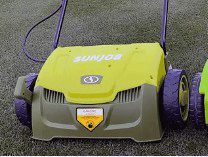
I first picked up a Greenworks model a couple of seasons ago because I wanted the freedom of going cordless.
The 40V 15-inch cordless version caught my eye with its battery system that matches my other Greenworks tools.
Right out of the box, assembly felt straightforward, though I spent a few extra minutes double-checking the handle alignment.
Once powered on, the motor delivered solid torque that cut through moderate thatch without bogging down much.
Pushing it across my medium-sized lawn (about a third of an acre) was smooth—the wider 15-inch path meant fewer passes, and the adjustable depth settings let me start shallow to avoid scalping the grass.
The collection bag filled up nicely with debris, and emptying it was simple without too much mess. On thicker patches near trees where moss had built up, it pulled out impressive amounts on the first pass.
The cordless aspect changed everything for me—no tripping over cords or hunting for outlets. Battery life held up for my whole yard on one charge when I kept the depth conservative.
That said, heavier thatch required multiple passes or deeper settings, which drained the battery faster.
The unit felt sturdy overall, with plastic parts that held up well against bumps. I appreciated the quiet operation compared to gas models I’d rented before.
After a full season, the tines showed minimal wear, and switching to scarifier mode (on models that include it) helped prep for overseeding.
Overall, it left my lawn looking revived, with better water penetration and greener growth by summer.
Pros Of Greenworks
- Cordless convenience on battery models — No extension cord hassles, perfect for yards without easy outlet access.
- Strong motor performance — The 40V system provides consistent power that handles medium thatch loads effectively without stalling often.
- Wider cutting path — 15-inch models cover more ground quickly, reducing total time spent dethatching.
- Compatible battery ecosystem — If you own other Greenworks tools, one battery works across them, saving money long-term.
- Good build quality — Durable tines and frame that withstand regular use without quick breakdown.
- Effective collection system — Bag catches most debris, keeping the yard tidy during operation.
- Adjustable depth settings — Multiple levels allow customization for light raking or aggressive scarifying.
- Quiet operation — Much less noise than gas alternatives, easier on neighbors and ears.
- Versatile scarifier function — Many models switch easily between dethatching and scarifying for better lawn prep.
- Solid after-use results — Lawns show improved health with better air and water flow post-treatment.
Also read: Comparison of Roku Ultra And Roku Ultra lt
Cons Of Greenworks
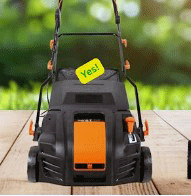
- Battery cost if not in ecosystem — Buying separate batteries and chargers adds expense for first-time users.
- Limited runtime on heavy jobs — Thicker thatch drains the battery quicker, sometimes requiring a swap or recharge mid-task.
- Heavier than some corded rivals — Cordless weight (plus battery) makes pushing uphill slightly more tiring.
- Higher upfront price — Cordless versions cost more than basic corded competitors.
- Occasional chute clogs — Debris buildup can jam the collection path if overloaded.
- Flimsy feel in some parts — Handle or adjustment levers may feel less premium on entry models.
- Charging time — Waiting for recharge interrupts longer sessions without spare batteries.
- Not ideal for very large yards — Battery limits make it better for medium sizes rather than acres.
- Tine wear over years — Though durable, heavy use requires eventual replacement.
- Assembly instructions vary — Some users find initial setup confusing.
Maintenance Tips For Greenworks
- Clean tines after each use — Remove stuck grass and debris with a brush or hose to prevent rust and buildup.
- Store battery separately — Keep it in a cool, dry place away from the tool to extend life.
- Check depth adjustment regularly — Lubricate moving parts lightly to keep settings smooth.
- Inspect power connections — For corded models, examine cords for frays; for cordless, ensure terminals stay clean.
- Sharpen or replace tines periodically — Dull tines reduce effectiveness, so monitor wear yearly.
- Empty bag promptly — Avoid overfilling to prevent strain on the system.
- Charge batteries correctly — Follow guidelines to avoid overcharging and maximize cycles.
- Winter storage prep — Clean thoroughly and store indoors to protect from moisture.
- Test before season — Run a short test to catch issues early.
- Use genuine parts — Replacement tines or batteries from Greenworks ensure compatibility.
My Experience With Sun Joe
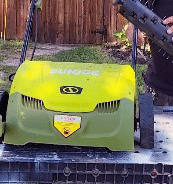
Last year I tried a Sun Joe corded model (around the 14-inch AJ805E style) as a budget-friendly alternative.
Setup was quick—the pieces clicked together easily, and the scarifier/dethatcher swap took under a minute.
The 13-amp motor provided plenty of pull right away, and the AirBoost feature (on some models) helped lift thatch into the bag more efficiently.
On my lawn, it excelled in tight spots and around obstacles because of its lighter weight and compact design.
The cord limited range, but with a good extension, I covered everything without issues. It pulled up thick thatch well, especially after I adjusted to a medium depth.
The collection bag filled fast but held a decent amount, and the whole unit felt nimble to maneuver.
Pros Of Sun Joe
- Excellent value for money — Lower price point delivers solid performance without skimping on essentials.
- Dual dethatch/scarify function — Easy cartridge swap adds versatility for different lawn needs.
- Lightweight and maneuverable — Easier to push in small or obstacle-filled yards.
- Unlimited runtime — Corded power means no stopping for charges on big jobs.
- Effective thatch removal — Strong motor and tines pull up debris consistently.
- Good collection bag — Catches most material, reducing post-job cleanup.
- Multiple depth positions — Allows precise control for light or heavy work.
- Compact storage — Folds or breaks down easily for garage space.
- Quiet for corded — Less disruptive than expected during operation.
- Reliable for beginners — Simple controls and setup suit first-timers.
Cons Of Sun Joe
- Cord limitations — Requires managing extension cords, risky in wet conditions.
- Smaller width on some models — Takes more passes on larger areas.
- Bag fills quickly — Frequent emptying interrupts flow on thick thatch.
- Less power on very heavy buildup — May need extra passes compared to premium options.
- Build feels basic — Some plastic parts seem less robust long-term.
- Chute issues occasionally — Debris can clog if not monitored.
- No cordless option widely — Limits freedom for remote yards.
- Tines may wear faster — Under heavy use, replacements come sooner.
- Noise level average — Not silent, though tolerable.
- Less ecosystem compatibility — Standalone tool without battery sharing.
Maintenance Tips For Sun Joe
- Rinse tines and underside — Clear clippings immediately to avoid corrosion.
- Inspect cord regularly — Check for damage and store coiled properly.
- Lubricate adjustment mechanism — Keep depth lever moving freely.
- Store dry and covered — Protect from rain to prevent rust.
- Replace tines as needed — Monitor for bending or dulling.
- Clean bag after use — Shake out debris to maintain airflow.
- Check motor vents — Ensure no blockages for cooling.
- Seasonal deep clean — Disassemble lightly for thorough wipe-down.
- Avoid overloading — Respect capacity to reduce strain.
- Test switch and safety features — Confirm they work before each season.
Comparison With Other Brands
- Vs Worx — Greenworks edges out with better battery life in cordless; Sun Joe matches on price but offers more consistent scarifying.
- Vs Ryobi — Greenworks shares similar battery platforms but often has wider paths; Sun Joe wins on pure affordability for corded.
- Vs Black+Decker — Sun Joe provides stronger motors for thatch; Greenworks offers superior cordless convenience.
- Vs Agri-Fab tow-behind — Both Greenworks and Sun Joe beat it for small yards with easier storage and no tractor needed.
- Vs manual rakes — Electric options from either crush manual effort in speed and results.
- Vs gas-powered — Greenworks and Sun Joe quieter, lighter, no fumes, though gas has more raw power for huge jobs.
- Vs premium brands like Billy Goat — These two deliver 80% performance at half the cost for homeowners.
- Vs Wen or Earthwise — Sun Joe often feels more refined; Greenworks adds cordless edge.
- Vs Craftsman — Similar corded reliability, but Sun Joe includes better bag systems.
- Overall market position — Both stand strong in budget electric segment with high user satisfaction.
Read more: Comparison of Dji Mini Pro 3 And 4
Frequently Asked Questions (FAQ)
Greenworks often pulls ahead with its higher-voltage cordless or strong corded motors, handling thick thatch more efficiently in one or two passes.
Sun Joe typically gives better value—solid durability, key features like scarifying, and lower prices make it hard to beat for most budgets.
Sun Joe suits small lawns perfectly with its lightweight design; Greenworks works better for larger areas thanks to wider paths and cordless mobility.
Sun Joe edges out for beginners—simpler setup, lighter weight, and straightforward corded operation make it more approachable with minimal maintenance.
Conclusion: For Greenworks And Sun Joe
I’ve used both, and honestly, neither is outright “better”—it depends on your setup. If you value cordless freedom, wider coverage, and don’t mind spending a bit more, go with Greenworks; it’ll serve you well on medium yards and integrate with other tools. But if you’re after maximum bang for your buck, reliable performance on smaller spaces, and easy dual-function use, Sun Joe wins every time for value-driven homeowners like me.
Pick based on your lawn size, budget, and whether cords bother you. Either way, dethatching once or twice a year transforms your grass. Grab the one that fits your needs, and enjoy that healthier lawn—you’ll see the difference quickly.