
We have all walked down the aisle of a warehouse store or browsed online during a kitchen refresh and stopped dead in our tracks at a set of cookware that just looks expensive. The GreenPan Jewel Pro set, with its matte hard-anodized finish and those striking champagne gold handles, does exactly that. It promises the holy grail of modern cooking: the professional durability of hard-anodized aluminum mixed with the health-conscious safety of ceramic nonstick.
But if you have been burned by “healthy” pans before—the ones that work like magic for two weeks and then turn into a sticky nightmare—you are right to be skeptical. Is the “Diamond Advanced” coating actually stronger, or is it just marketing glitter? In this comprehensive review, I am going to break down the GreenPan Jewel Pro collection piece by piece. We will look at how it handles the morning egg test, how it survives a dishwasher cycle (spoiler: don’t do it), and whether those gold handles stay gold. By the end of this guide, you will know if this set is a kitchen jewel or just costume jewelry.
My Experience With GreenPan Jewel Pro
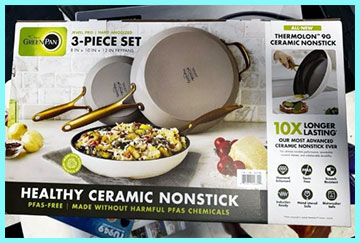
I picked up the GreenPan Jewel Pro set during a kitchen reorganization phase where I was determined to toss out my scratched-up Teflon pans. I had read about the dangers of PFAS and “forever chemicals,” and GreenPan is essentially the poster child for the alternative movement. The “Jewel” line specifically caught my eye because, frankly, it is beautiful. Most hard-anodized pans look industrial and boring—dark grey on dark grey. The Jewel Pro adds a touch of elegance with those gold-tone handles that makes you want to leave them out on the stove.

Out of the box, the weight was the first thing I noticed.
These aren’t flimsy aluminum pans that warp when you look at them wrong.
The “Pro” in the name likely refers to the hard-anodized body, and it feels substantial in the hand.
I washed them with warm soapy water and set up for the inaugural test: a sunny-side-up egg with no oil.
I placed the 8-inch skillet on my induction burner.
The Magneto base (GreenPan’s induction technology) connected immediately without that annoying buzzing sound some cheaper pans make.
I cracked the egg, and it danced around the pan like it was on an ice rink. The release was flawless. The “Thermolon Minerals Pro” coating felt smoother and harder than the older white ceramic pans I used years ago. It has a slight shimmer to it, likely the “diamond” infusion they advertise.
Over the next few months, I put the set through the wringer. I seared steaks, simmered acidic tomato sauces, and made countless stir-frys. The heat distribution is excellent; I didn’t get those annoying hot spots where one piece of chicken burns while the other is raw. The pan heats up fast—almost too fast. I learned quickly that “Medium” on my stove is “High” for these pans.
However, the honeymoon phase had a few hiccups. The champagne gold handles are gorgeous, but they are stainless steel. After boiling pasta in the stockpot for 20 minutes, those handles got hot. Not blistering, but enough to make me reach for a towel. Also, despite the “scratch-resistant” claims, I noticed a tiny hairline mark after my partner accidentally used a metal spoon to stir chili. It didn’t peel, but it was a reminder that ceramic is still glass-adjacent.
Cleaning has been the highlight. Even after accidentally burning a cheese sauce (I got distracted), the mess wiped out with a soft sponge and warm water. No soaking required. But I have been militant about hand washing; I refuse to let the dishwasher detergents dull that gold finish or eat away at the nonstick. Six months in, they are still performing at about 90% of their day-one slickness, which is better than most ceramic pans I have tried.
Read More: My Thoughts On Red Chef Ceramic Cookware
Pros Of GreenPan Jewel Pro
When you invest in the Jewel Pro line, you are paying for more than just a brand name. You are paying for a specific combination of materials that offers tangible benefits over standard aluminum cookware. Here are the specific advantages that make this set stand out.
- Thermolon Minerals Pro Coating: The standout feature of this specific line is the upgraded nonstick layer. Unlike the entry-level “Rio” collection which uses a basic ceramic, the Jewel Pro uses the “Minerals Pro” or “Diamond Advanced” version. This coating is infused with industrial diamond dust, which serves two purposes: it makes the surface significantly harder and improves heat transfer. In practice, this means the pan is more resistant to the friction of spatulas and food movement. It provides a slicker release for longer than traditional sol-gel ceramic coatings, which often degrade after a few months of use.
- Duo-Forged Hard Anodized Body: Most cheap nonstick pans are made of stamped aluminum, which is soft and prone to warping under thermal shock. The Jewel Pro features a hard-anodized aluminum body, which is chemically treated to be twice as hard as stainless steel. This construction makes the pan incredibly durable and resistant to dents and warping. If you accidentally run cold water over a hot Jewel Pro pan (though you shouldn’t), it is much less likely to warp into an oval shape than a standard aluminum pan. This rigidity also helps maintain a flat cooking surface, ensuring oil doesn’t pool in the corners.
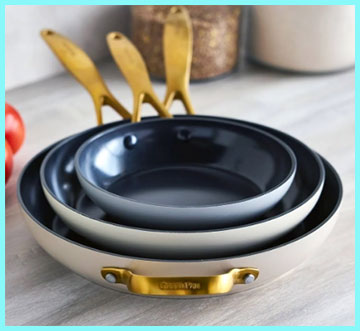
- Aesthetic and Ergonomic Design: Let’s be honest, we buy with our eyes first, and this set is designed to be displayed. The matte black exterior contrasted with the champagne gold stainless steel handles gives it a high-end, luxury aesthetic that matches modern kitchen hardware. The handles aren’t just pretty; they are riveted securely for safety (no loose screws over time) and are designed with a V-shape connection to the pan. This V-shape helps minimize heat transfer from the body to the handle, keeping the grip cooler for longer during stovetop cooking.
- Magneto Induction Technology: Finding decent induction-compatible hard-anodized cookware can be a challenge because aluminum is not naturally magnetic. GreenPan uses a technology called “Magneto,” where magnetic iron and copper particles are sprayed directly onto the base of the pan. This ensures that the pan works on every stovetop: gas, electric, and induction. Unlike pans that have a separate steel disc bonded to the bottom (which can fall off), the Magneto base is integrated and cannot detach. It guarantees that the pan will never delaminate and provides consistent heating performance across all heat sources.
Cons Of GreenPan Jewel Pro
Despite the “Pro” label, ceramic cookware has inherent limitations that physics simply won’t allow it to overcome. It is important to understand these drawbacks so you aren’t disappointed when the pan behaves differently than cast iron or Teflon.
- The Inevitable Loss of Nonstick: This is the dirty secret of the entire ceramic cookware industry, not just GreenPan. Ceramic coatings are essentially a layer of sand-derived silica that releases food easily when new, but this “slickness” degrades over time. Every time you heat the pan, microscopic food particles and oils can carbonize on the surface, creating invisible friction. While the Jewel Pro lasts longer than cheaper lines, it will eventually lose its egg-sliding ability, usually within 12 to 24 months of daily use. You will eventually need to use more oil or butter to get the same results, whereas PTFE (Teflon) pans often maintain their release properties for years.
- Sensitivity to High Heat: If you love to get a pan smoking hot to sear a steak, this is not the tool for the job. Ceramic coatings generally cannot handle high heat as well as stainless steel or cast iron. Using high heat on the Jewel Pro can cause the coating to break down or lose its nonstick properties rapidly. GreenPan explicitly recommends low to medium heat for everything. This can be frustrating for cooks who are used to cranking the burner to “High” to boil water faster or get a hard crust on a burger.
- Handle Heat Retention: While the V-shape design helps, the fact remains that the handles are metal. If you are cooking on a gas stove where the flames lick up the sides of the pan, or if you have the pan in the oven, those gold handles will get extremely hot. Unlike silicone-wrapped or Bakelite handles that stay cool to the touch, you need to be vigilant with these. You will likely need to keep a pot holder or kitchen towel nearby whenever you are handling the lids or the stockpot handles after they have been on the heat for a while.
- Hand Wash Recommendation: The box says “Dishwasher Safe,” but you should treat that as a lie for the sake of longevity. Dishwasher detergents contain abrasive agents that act like sandblasters on ceramic coatings. Additionally, the harsh chemicals can tarnish the beautiful champagne gold finish on the handles, turning them dull or spotty. To protect your investment, you are effectively forced to hand wash these pans every single time. For a “Pro” set meant for daily use, this adds a layer of maintenance that busy families might find annoying.
Maintenance Tips For GreenPan Jewel Pro
If you treat these pans like cheap throwaways, they will become trash in six months. If you treat them like the specialized tools they are, they can last for years. Here is the strict protocol you need to follow to keep that Jewel coating shining.
- The “Low and Slow” Heat Rule: You must retrain your brain to use lower heat settings than you are used to. Because the aluminum core conducts heat so efficiently, “Medium” on your dial is actually “High” for the food. Never preheat the pan on high; start on low and let it come up to temperature gradually for a minute. Overheating causes oil to carbonize (turn into a sticky gum) on the surface, which is the number one reason people claim the nonstick “stopped working.” If you see smoke coming from your oil, you have already gone too hot and are damaging the coating.
- Oil Selection Matters: Never, under any circumstances, use aerosol cooking sprays (like Pam) on these pans. The propellants in those sprays contain soy lecithin, which burns at very low temperatures and leaves a gummy residue that is impossible to scrub off without ruining the ceramic. Stick to high smoke point oils like avocado oil, grapeseed oil, or standard butter. If you want the convenience of a spray, buy a refillable oil mister that uses pure oil and air pressure, not chemical propellants.
- The Melamine Sponge Hack: If you notice your pan is starting to stick, it might not be worn out; it might just be dirty with invisible carbon buildup. GreenPan actually recommends using a melamine sponge (like a Magic Eraser) and a little water to gently scrub the surface. Unlike abrasive scouring pads which scratch the coating, the melamine sponge is soft enough to polish away the carbonized oil without stripping the nonstick layer. Do this deep clean once a month to restore the slick surface performance.
- Protective Storage: The hard-anodized exterior is tough, but the interior ceramic coating is brittle. If you stack your pans inside each other in the cupboard, the metal bottom of the top pan will scratch the coating of the bottom pan. You must use pan protectors—felt or silicone dividers—between each pan. If you don’t have those, even a paper towel or a cheap paper plate placed inside the pan before stacking will do the trick. This simple step prevents the micro-scratches that eventually lead to peeling and chipping.
Comparison with Other Brands
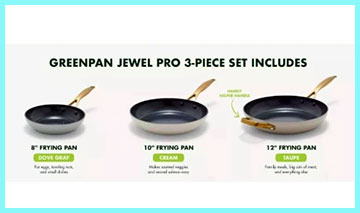
The GreenPan Jewel Pro occupies a specific niche: premium aesthetics with ceramic performance. Here is how it compares to other heavy hitters in the aisle.
- GreenPan Valencia Pro: This is the direct internal competitor and often considered the “workhorse” of the GreenPan lineup. Comparison: The Valencia Pro uses a very similar hard-anodized body and Magneto base, meaning cooking performance is nearly identical. The main difference is the handle and the finish. Valencia has standard grey handles and a grey body, while Jewel has the gold handles and black/dark body. Valencia is often slightly cheaper because it lacks the “fashion” element. If you don’t care about the gold handles, buy the Valencia Pro and save the money; if you want the look, Jewel is the upgrade.
- Caraway Cookware: Caraway is the viral Instagram darling known for its bright colors and storage rack. Comparison: Caraway pans are essentially standard aluminum with a ceramic coating, similar to GreenPan but often less durable than the hard-anodized Jewel Pro. GreenPan’s “Diamond Advanced” coating is generally considered more robust and longer-lasting than Caraway’s proprietary coating. Caraway handles are also stainless steel but can be uncomfortable due to their shape. Caraway wins on “unboxing experience” and color variety, but GreenPan Jewel Pro wins on actual durability and longevity of the nonstick surface.
- T-fal Unlimited (Platinum): This is the budget king of the nonstick world, using traditional PTFE (Teflon). Comparison: T-fal uses PTFE, which is chemically more durable and nonstick than any ceramic pan, period. A T-fal pan will stay slippery for years with abuse, whereas the GreenPan requires babying. However, T-fal is not “toxin-free” in the same way; if you overheat it (above 500F), it can release fumes. GreenPan is safer if you are paranoid about overheating or chemicals. T-fal looks cheap and feels light; GreenPan Jewel Pro feels heavy and premium. Buy T-fal for performance/value; buy GreenPan for health/safety.
- Scanpan CTX: Scanpan is the high-end Danish rival in the ceramic/nonstick space. Comparison: Scanpan uses a unique “Stratanium” coating that is genuinely metal-utensil safe and incredibly tough. Scanpan CTX is fully clad stainless steel, meaning it cooks more like All-Clad than GreenPan. However, a single Scanpan skillet can cost as much as half the GreenPan Jewel set. GreenPan Jewel Pro offers 80% of the Scanpan performance for 30% of the price. If budget is no object, Scanpan is the better pan; for most households, GreenPan is the better value.
Also Read: My Thoughts On Bobby Flay Cookware
Frequently Asked Questions (FAQ)
Technically, yes, the manufacturer labels it as dishwasher safe. However, I strongly advise against it. The harsh caustic detergents in dishwasher tablets can degrade the ceramic coating over time, causing it to lose its nonstick properties much faster. Additionally, the gold-tone handles may tarnish or spot due to the high heat and humidity of the drying cycle. Hand washing with a soft sponge takes 30 seconds and will double the life of your pan.
You can, but you should be careful. Extra Virgin Olive Oil (EVOO) has a relatively low smoke point and can carbonize quickly if the pan gets too hot. Regular or “Light” olive oil is better for cooking as it has a higher heat tolerance. It is better to use oils with high smoke points like avocado, grapeseed, or peanut oil for searing or frying. Avoid letting the oil smoke, as that residue ruins the pan.
Often these names are used interchangeably depending on the retailer (e.g., Costco vs. Amazon). Usually, the “Jewel” line refers to the color/aesthetic (gold handles), while “Pro” indicates the hard-anodized aluminum body. Cheaper lines (like Rio) use standard aluminum. Always check the specs: if it says “Hard Anodized,” you are getting the durable “Pro” version, regardless of the exact name on the box.
Yes, they are made of stainless steel and will conduct heat. While the “V” shape connection helps dissipate some heat, they will eventually get hot during long cooking sessions or if used in the oven. Always have a pot holder nearby when handling the lids or the short helper handles on the stockpots.
Conclusion
The GreenPan Jewel Pro is a stunning example of how far nonstick cookware has come. It successfully bridges the gap between the flimsy, cheap eco-pans of the past and the heavy-duty performance of professional gear. The combination of the hard-anodized body and the reinforced diamond ceramic coating makes it one of the most durable “healthy” options on the market today.
If you are looking to purge your kitchen of Teflon and want a set that looks beautiful on your stove while offering excellent performance for eggs, sautés, and soups, this is a fantastic investment. Just remember: it is not a cast iron skillet. Treat it with the respect ceramic deserves—lower heat, hand washing, and no metal utensils—and it will remain the jewel of your kitchen for years to come. If you want a pan you can abuse and throw in the dishwasher, look elsewhere, but for the conscious cook, the Jewel Pro shines bright.