
As an electrician who’s spent years troubleshooting panels, motors, and residential wiring, I’ve relied on both the Fluke T5-1000 and T6-1000 in my daily work. These compact testers are staples in many tool pouches, but choosing between them can make a real difference on the job. In this article, I’ll share my hands-on insights to help you decide which one fits your needs best—whether you’re prioritizing simplicity and reliability or advanced safety features.
A Brief Comparison Table
| Feature | Fluke T5-1000 | Fluke T6-1000 |
| Voltage Rating (AC/DC) | 1000V | 1000V |
| AC Current (Open Fork) | Up to 100A | Up to 200A |
| Wire Size Compatibility | Up to AWG 1/0 | Up to AWG 4/0 (120 mm²) |
| FieldSense (No-Contact Voltage/Current) | No | Yes (simultaneous V & A display) |
| Resistance Range | Up to 1000 Ω | Up to 100 kΩ |
| True RMS | No (average responding) | Yes |
| Backlit Display | No | Yes |
| Frequency Measurement | No | Yes (45-66 Hz) |
| Size/Weight | Compact, lighter | Larger, bulkier |
| Drop Rating | 10 ft (3 m) | 10 ft (3 m) |
My Experience With Fluke T5-1000
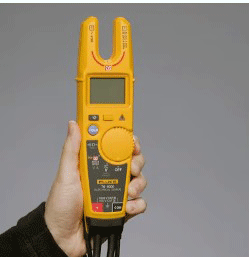
I picked up my first Fluke T5-1000 over a decade ago, and it quickly became my go-to for everyday tasks.
Its slim design slips easily into my pocket, and the OpenJaw fork makes grabbing current readings on smaller wires a breeze without breaking the circuit.
On one residential job, I used it to check loads on branch circuits—slide the wire in, switch to amps, and get a quick reading.
The automatic AC/DC voltage selection saved me time when verifying if a circuit was truly dead before starting work.
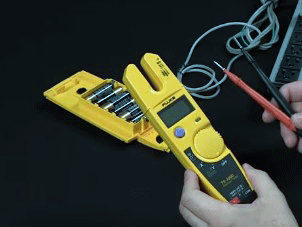
The continuity beeper is loud enough to hear in noisy environments, and the probes store neatly on the back.
What stands out is its toughness. I’ve dropped mine from ladders multiple times, and it keeps working. The battery life is solid too, thanks to auto-off.
For basic troubleshooting—voltage checks, continuity, and current up to 100A—it’s hard to beat the simplicity.
That said, in tighter panels with bigger conductors, the smaller jaw limited me. And without a backlight, working in dark cabinets meant pulling out my phone for light. It’s not True RMS, so on variable loads like LEDs, readings could be off a bit, but for most straight AC work, it was fine.
Also read: Comparison of Ryobi And DeWalt Pressure Washer
Pros Of Fluke T5-1000
- Compact and Lightweight: Fits perfectly in a pocket or pouch without adding bulk; easier to carry all day compared to larger testers.
- Reliable OpenJaw Current Measurement: Quickly measures up to 100A without contact; ideal for fast checks on smaller wires like in residential panels.
- Automatic Voltage Detection: Switches between AC and DC volts seamlessly; no fumbling with settings when you’re in a hurry.
- Rugged Build: Survives 10-foot drops and daily abuse; mine has lasted years with minimal issues.
- Simple Operation: One-handed use is straightforward; select volts, ohms, or amps, and it does the rest.
- Continuity Beeper: Loud and responsive for quick circuit tracing.
- Probe Storage: Leads tuck away neatly on the back; keeps everything organized.
- Battery Conservation: Auto-off feature extends life; uses standard AA batteries.
- Affordable Reliability: Proven track record for basic electrical work without unnecessary extras.
- Detachable Probes: Compatible with Fluke accessories like clips for versatile testing.
Cons Of Fluke T5-1000
- Limited Current Range: Only up to 100A; struggles with higher loads common in commercial or industrial settings.
- Smaller Jaw Opening: Fits smaller wires well but not larger ones like 4/0; often requires switching tools.
- No Backlight: Hard to read in low-light areas like basements or enclosed panels.
- No True RMS: Can give inaccurate readings on non-linear loads like electronics or VFDs.
- Lower Resistance Range: Stops at 1000 Ω; misses higher resistances in some control circuits.
- No Frequency Measurement: Lacks this for troubleshooting variable speed drives or harmonics.
- No Simultaneous Readings: Can’t show voltage and current at once; requires switching modes.
- Average Responding Only: Less precise on distorted waveforms compared to modern testers.
- Fixed Leads: While durable, replacements can be pricey if damaged.
- No Non-Contact Voltage Beyond Probes: Relies on traditional probing for all voltage work.
Maintenance Tips For Fluke T5-1000
- Clean Regularly: Wipe the jaw and probes with a dry cloth after use; prevents buildup from dust or grease affecting readings.
- Store Properly: Keep leads tucked in the back slots; avoids damage and tangling in your pouch.
- Battery Check: Replace AAs promptly when low; carry spares to avoid downtime.
- Inspect Leads: Look for nicks or wear; tape temporarily but replace for safety.
- Avoid Overloads: Stay within 100A and 1000V limits; prevents internal damage.
- Drop Protection: Use the optional holster to clip on your belt; cushions falls.
- Calibration Check: Test against known sources periodically; ensures accuracy.
- Dry Storage: Keep away from moisture; use a case if in humid environments.
- Probe Care: Detach and clean tips; maintains good contact.
- Auto-Off Reliance: Let it shut down naturally; saves batteries without manual effort.
Comparison With Other Brands
- Vs Klein Tools: Klein’s similar open-jaw testers are cheaper and often backlit; but Fluke’s build quality feels tougher and more accurate long-term.
- Vs Ideal: Ideal models offer replaceable leads and sometimes wider jaws; Fluke wins on reliability and drop resistance.
- Vs Extech: Extech provides more features at lower prices; but lacks Fluke’s ruggedness and warranty support.
- Vs Amprobe: Similar performance in some clamps; Fluke’s OpenJaw is smoother and more precise for quick current grabs.
- Vs Milwaukee: Milwaukee has bright displays and magnets; Fluke excels in electrical-specific accuracy and CAT ratings.
- Vs Greenlee: Greenlee focuses on bending tools; their testers are solid but not as compact as Fluke’s.
- Vs Southwire: Budget-friendly with good basics; Fluke’s longevity justifies the higher cost.
- Vs UEi: UEi offers HVAC-focused options; Fluke is better for general electrical durability.
- Vs Fieldpiece: Great for HVAC with extras like temp; Fluke T5 is simpler and tougher for pure electrical.
- Vs Snap-On: Premium pricing like Fluke; but Fluke has broader electrician trust.
My Experience With Fluke T6-1000
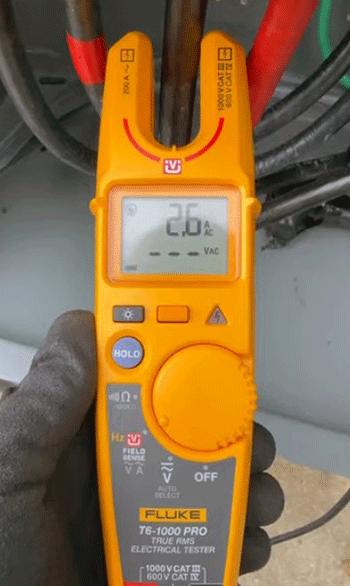
Switching to the T6-1000 felt like an upgrade for safety and speed.
The FieldSense technology lets me measure voltage and current simultaneously through the fork—no probes needed for basic checks.
On industrial jobs, clamping a larger wire and seeing both volts and amps at once helped diagnose loaded circuits fast.
The wider jaw handled 4/0 cables easily, and the backlight was a game-changer in dark switchgear.
True RMS gave better readings on variable loads, and the higher resistance range caught issues the T5 missed. Frequency display helped with motor checks.
It’s bulkier, though, and FieldSense needs proper grounding for accuracy—sometimes I’d still use probes. But for non-contact work, it reduced arc flash risks significantly.
Read more: Comparison of Leatherman Surge And Wave Plus
Pros Of Fluke T6-1000
- FieldSense Technology: Measures voltage and current without contact; enhances safety on live wires.
- Simultaneous Display: Shows volts and amps together; speeds up troubleshooting.
- Wider Jaw: Accommodates up to 4/0 wires and 200A; versatile for bigger conductors.
- True RMS Accuracy: Better on non-sinusoidal waveforms like modern lighting.
- Backlit Screen: Easy reading in dark or enclosed spaces.
- Higher Resistance: Up to 100 kΩ; catches more continuity issues.
- Frequency Measurement: Useful for drives and harmonics.
- Visual Continuity: Screen lights green for easy confirmation.
- Rugged Like T5: Same drop rating with reliable build.
- Hold Function: Freezes readings for note-taking.
Cons Of Fluke T6-1000
- Bulkier Design: Larger size doesn’t pocket as easily.
- FieldSense Limitations: Needs grounding reference; not always spot-on without it.
- Higher Cost: More expensive than the T5 for similar core functions.
- Heavier Feel: Noticeable during all-day carry.
- Battery Drain: Backlight and extras may use more power.
- Learning Curve for FieldSense: Takes practice for consistent results.
- Overkill for Basics: Extra features unused in simple jobs.
- Probe Reliance Still: For precise DC or some volts.
- No DC Current Clamp: Like T5, limited there.
- Potential Inaccuracy: On very distorted signals without leads.
Maintenance Tips For Fluke T6-1000
- Clean Fork Thoroughly: Wipe inside jaw after use; ensures accurate FieldSense.
- Backlight Management: Turn off when not needed; conserves battery.
- Ground Reference Check: Clean contact pad on back.
- Store with Care: Use holster for protection.
- Battery Monitoring: Replace AAs regularly.
- Probe Inspection: Same as T5 for leads.
- Avoid Extreme Temps: Though rated wide, store properly.
- Firmware N/A: But test functions periodically.
- Case Use: Protects display from scratches.
- Calibration: Verify with known sources.
Comparison With Other Brands
- Vs Klein: Klein has non-contact but narrower jaws; Fluke T6 safer with simultaneous readings.
- Vs Ideal: Ideal cheaper with backlight; Fluke superior FieldSense.
- Vs Extech: More affordable extras; Fluke tougher.
- Vs Milwaukee: Strong magnets; Fluke better electrical precision.
- Vs Amprobe: Similar tech; Fluke trusted more.
- Vs Greenlee: Good clamps; Fluke innovative no-contact.
- Vs Southwire: Basic and cheap; Fluke premium safety.
- Vs UEi: HVAC strong; Fluke general electrical.
- Vs Fieldpiece: Temp features; Fluke voltage/current focus.
- Vs Snap-On: High-end; Fluke better value in testers.
Frequently Asked Questions (FAQ)
No, the Fluke T5 series uses average responding, not True RMS.
Many electricians prefer the Fluke 87V for its advanced features and accuracy, though the 117 or 179 are popular for everyday use.
Extremely durable—rated for 10-foot drops, and many users report theirs lasting 10-20 years with heavy use.
Conclusion: For Fluke T5-1000 And Fluke T6-1000
If you’re like me and handle mostly basic to mid-level electrical work, the T5-1000 remains a solid, no-nonsense choice that won’t let you down. But if you want safer, faster readings on larger wires and modern loads, go with the T6-1000—you’ll appreciate the upgrades on tougher jobs. Whichever you pick, both are Fluke-quality tools that make your workday easier and safer.