
If you have just bought an electric vehicle (EV), you are likely currently relying on the “Level 1” mobile charger that came with the car—or worse, you didn’t get one at all. Plugging your high-tech car into a standard 120V wall outlet feels a bit like trying to fill a swimming pool with a garden hose. It works, but it takes forever.
This is where the EV Level 2 Charger comes in. It is the single most important accessory for any EV owner, promising to turn “range anxiety” into “range confidence” by filling your battery overnight. But with options ranging from “dumb” metal boxes to Wi-Fi-enabled smart devices, which one should you choose?
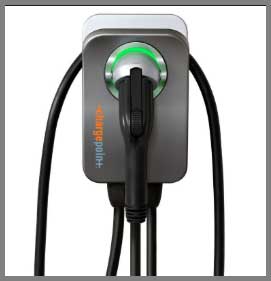
For this review, I focused on the “gold standard” of the category—the ChargePoint Home Flex—while comparing it to other top contenders like Grizzl-E and Emporia to help you decide if a dedicated home station is worth the investment.
My Experience With The EV Level 2 Charger (ChargePoint Home Flex)
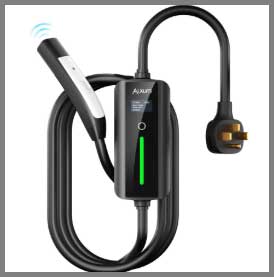
I spent the first three months of EV ownership using a standard wall outlet.
I would plug in at 6:00 PM, and by 8:00 AM the next morning, I had only gained about 40 miles of range.
If I had a long drive two days in a row, I was in trouble. I finally bit the bullet and ordered a Level 2 Charger (the ChargePoint Home Flex) and hired an electrician to install a NEMA 14-50 outlet in my garage.
The difference was immediate and transformative.
The first time I plugged it in, the car’s dashboard estimated a full charge in 4 hours instead of the usual 14. It felt like magic. The hardware itself (specifically the ChargePoint model) feels premium. The cable is the highlight—it is surprisingly thin and flexible. I live in an area that gets freezing winters, and unlike cheap extension cords that turn into stiff plastic pipes in the cold, this cable remained pliable and easy to coil even at 20°F (-6°C).
The “smart” features, which I initially thought were gimmicky, turned out to be essential. My utility company offers cheaper electricity rates between midnight and 6:00 AM. Instead of staying up late to plug in the car, I simply set a schedule in the app. I plug the car in when I get home at 5:00 PM, but the charger waits until midnight to start drawing power. This feature alone has saved me about $15-$20 a month.
However, the installation process was a reality check. The charger cost around $550, but the electrician charged another $600 to run the heavy-duty wiring from my breaker panel to the garage. It is a significant upfront cost. But the convenience of waking up to a 100% battery every single morning, regardless of how much I drove the day before, is a luxury that is hard to put a price on. It completely eliminated the mental math I used to do every time I looked at my dashboard.
Also Read: My Thoughts On OCPTY Auto Parts
Pros Of Owning A Level 2 Home Charger
- Speed and Convenience:This is the obvious one. A Level 2 charger runs on 240 volts (similar to a clothes dryer) and can add 25 to 37 miles of range per hour, compared to just 3 to 4 miles with a standard outlet. This means you can arrive home with a near-empty battery and be fully charged by morning. It changes your car from a “city commuter” into a vehicle that is always ready for a road trip.
- Cost Savings via Smart Scheduling:Smart Level 2 chargers (like ChargePoint, Emporia, or Wallbox) connect to Wi-Fi and allow you to schedule charging. If you are on a “Time of Use” (TOU) plan with your electric utility, you can program the charger to only dispense power during off-peak hours when electricity is cheapest. Over the lifespan of the car, this can save you hundreds, if not thousands, of dollars.
- Cable Flexibility and Durability:High-quality Level 2 units come with commercial-grade cables designed for daily abuse. The best ones (like ChargePoint’s) remain flexible in freezing temperatures, making them easy to handle in winter. They also use standard J1772 or NACS connectors that are rated for thousands of plug-in cycles, unlike the flimsy mobile connectors included with cars, which are really meant for occasional emergency use.
- Future-Proofing Your Home:Many modern Level 2 chargers are adjustable. For example, the ChargePoint Home Flex can be set to charge at anywhere from 16 amps to 50 amps. If you have an older EV that charges slowly today, you can set the charger lower. If you buy a massive electric truck in five years, you can adjust the charger (and breaker) to deliver maximum power. It is a one-time infrastructure upgrade for your garage.
- App Integration and Tracking:For data nerds, the accompanying apps are fantastic. They track exactly how many kWh you have used, estimate the cost based on your local utility rates, and can even integrate with Amazon Alexa or Google Home. This allows you to say, “Alexa, ask ChargePoint how many miles I added,” or easily split the electricity bill if you share a house with roommates.
Cons Of Owning A Level 2 Home Charger
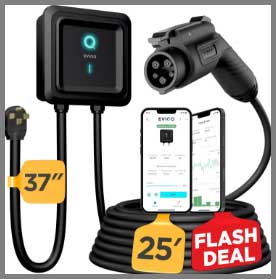
- High Upfront Investment:It is not cheap. Between the cost of the unit ($400–$700) and the electrician ($400–$1,500 depending on your home’s wiring), you are looking at a $1,000+ project. While it pays off in convenience and gas savings, it is a “sticker shock” moment for many new EV buyers who thought they just needed to plug it into the wall.
- Wi-Fi Dependency (Smart Units):If you buy a smart charger, its best features rely on a Wi-Fi connection. If your garage has a weak signal (which is common for detached garages), the smart features like remote starting or scheduling might not work reliably. You might end up with a “dumb” charger that you paid a premium price for.
- Installation Logistics:Not every home can easily handle a Level 2 charger. If you live in an older house with a 100-amp electrical panel, adding a 50-amp circuit for a car charger might require a “service upgrade” to your entire electrical panel, which can cost thousands of dollars. You need to verify your panel’s capacity before buying the charger.
- Bulky Aesthetics:Unlike the sleek, hidden gas cap on a car, a home charger is a large appliance mounted on your wall with a 25-foot thick black cable. If you don’t have a dedicated spot to coil the cable, it can look messy and clutter your garage. Some units have holsters, but cable management is a daily chore.
- Connector Compatibility Confusion:The industry is currently shifting from the J1772 plug (standard for most non-Teslas) to the NACS plug (Tesla standard). While adapters exist, buying a charger today feels a bit risky—you might buy a J1772 charger only to trade your car for a NACS vehicle in two years. (Tip: Look for chargers with replaceable cables or just use an adapter).
Read More: My Thoughts On CCIYU Auto Parts
Maintenance Tips For Home EV Chargers
- The “Loop and Holster” Rule:The most common point of failure is the cable. Never leave it lying on the garage floor where it can be driven over, stepped on, or sit in a puddle. Always loop the cable properly (over-under coiling prevents kinks) and holster the plug when not in use. This protects the copper pins inside the connector from dust and moisture.
- Clean the Contact Pins:Every few months, take a look inside the charging gun. If you see dust or debris, use a can of compressed air (like for a computer keyboard) to blow it out. Do not stick cotton swabs or metal objects inside the pinholes. If you see green corrosion, you may need to use electrical contact cleaner, but consult the manual first.
- Check the Breaker:EV chargers draw a continuous high load, which can generate heat at the connection points. Once a year, go to your electrical panel and feel the plastic face of the breaker while the car is charging. It should be warm, but not hot to the touch. If it smells like burning plastic or is too hot to touch, stop charging immediately and call an electrician—a wire connection may have loosened over time.
- Update the Firmware:If you have a smart charger, check the app periodically for firmware updates. These updates often fix bugs, improve Wi-Fi stability, or update the internal database of utility rates. Keeping the software fresh ensures the charger communicates correctly with your car’s onboard computer.
- Inspect the NEMA Outlet (If Plug-In):If your charger is plugged into a wall outlet (NEMA 14-50) rather than hardwired, check the plug occasionally. It should fit very tightly. If the plug feels loose or sags in the outlet, the outlet is worn out and needs to be replaced. A loose connection causes arcing and can melt the receptacle.
Comparison With Other Brands
- ChargePoint Home Flex vs. Grizzl-E Classic:The Grizzl-E is the “tank” of EV chargers. It is a simple, metal box made in Canada, designed to survive blizzards and abuse. It is a “dumb” charger—no app, no Wi-Fi, just plug and charge. It is significantly cheaper than the ChargePoint (often $100-$150 less). If you don’t care about tracking data or your car already has built-in scheduling, the Grizzl-E is the better value and more durable choice. If you want the app features and a flexible cable, ChargePoint wins.
- ChargePoint Home Flex vs. Emporia EV Charger:Emporia is the “value king.” It offers almost all the smart features of the ChargePoint (scheduling, app control, solar integration) for a much lower price (often around $400). The trade-off is the build quality; the Emporia feels a bit more plasticky, and the cable becomes stiffer in the cold compared to ChargePoint’s. However, for budget-conscious buyers who still want smart features, Emporia is the top recommendation.
- ChargePoint Home Flex vs. Tesla Wall Connector:If you own a Tesla, the Tesla Wall Connector is generally the best choice. It integrates seamlessly with the Tesla app, looks sleek, and can “power share” (two chargers sharing one circuit). However, the ChargePoint is a better “universal” choice if your household has one Tesla and one non-Tesla (like a Ford or Hyundai), as it is easier to adapt or find with the universal J1772 connector.
- ChargePoint Home Flex vs. Mobile Connectors (Level 1):There is no comparison in performance. A Level 1 charger is an emergency spare tire; a Level 2 charger is a set of performance wheels. If you drive more than 30 miles a day, the Level 1 charger will eventually leave you stranded or waiting. The Level 2 charger provides freedom.
Frequently Asked Questions (FAQ)
A plug-in charger (NEMA 14-50) is easier to remove if you move houses, but it is limited to 40 amps. A hardwired charger (connected directly to the wires in the wall) is safer, looks cleaner, and can charge faster (up to 48 or 50 amps). For most people, hardwiring is the better long-term solution as it eliminates a potential failure point (the outlet).
Yes. In North America, AC charging is universal. Your car either has a NACS port (Tesla) or a J1772 port (everyone else). Most chargers are J1772 but come with adapters, or vice versa. The electricity delivery protocol is standard across all brands, from Rivian to Chevy to BMW.
Yes, most high-quality chargers like the ChargePoint Home Flex and Grizzl-E are NEMA 4 or NEMA 3R rated, meaning they are weather-sealed against rain and snow. However, you should try to install it under an overhang or partial cover if possible to protect the plastic from long-term UV sun damage.
This depends on your local electricity rate. The national average is about 16 cents per kWh. If you have a 60 kWh battery (standard sedan), a full charge costs about $9.60 and yields 250 miles of range. Compare that to gas: 250 miles in a 25mpg gas car would require 10 gallons of gas, costing roughly $35.00.
Conclusion
To summarize, investing in a high-quality EV Level 2 Charger like the ChargePoint Home Flex (or the rugged Grizzl-E) is the best upgrade you can make for your electric vehicle. It fundamentally changes the ownership experience from one of management and scarcity to one of abundance and convenience.
While the upfront cost of the unit and installation is high, the daily time savings and the ability to maximize off-peak electricity rates make it a purchase that pays for itself over the life of the car. Stop struggling with the wall outlet; get a real charger and enjoy the drive.