
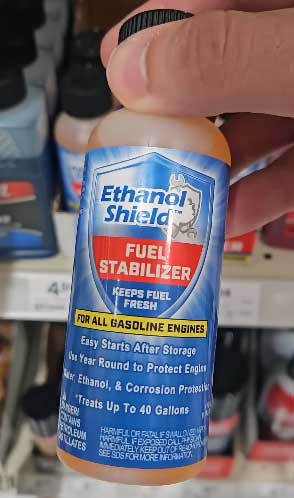
This is the most common debate in the small engine world. On one side, you have Sea Foam, the legendary white bottle that your grandfather used in everything from his tractor to his truck. It is known as a universal cleaner that can fix a rough idle in minutes.1 On the other side, you have Ethanol Shield, a modern chemical engineered specifically to fight the specific problems caused by today’s E10 (10% ethanol) pump gas.
The core difference is simple: Sea Foam is primarily a cleaner that also stabilizes.2 Ethanol Shield is primarily a conditioner that fights the chemical effects of alcohol. Below, I’ll help you decide if you need a cleaner for a dirty engine or a shield for a clean one.
A Brief Comparison Table
| Feature | Ethanol Shield (B3C) | Sea Foam (Motor Treatment) |
| Primary Role | Preventative (Fuel Conditioner) | Curative (System Cleaner) |
| Action on Water | “Bonds” (Emulsifies) water to burn it off safely | Solubilizes small amounts; mostly adds lubricity |
| Rubber Protection | High (Contains plastic/rubber conditioners) | Moderate (Lubricates, but is solvent-based) |
| Best For | Daily protection for 2-cycle handhelds (blowers, saws) | Waking up rough engines, cleaning injectors, general use |
| Storage Life | Up to 1 year (Standard) | Up to 2 years (Claimed) |
| Chemistry | Antioxidants & rubber conditioners | Petroleum-based solvents (Naphtha, Pale Oil) |
| Versatility | Fuel system only | Fuel system, Crankcase (Oil), and Intake Spray |
| Price | Moderate (Concentrated) | Higher (You use more per tank) |
My Experience With Ethanol Shield
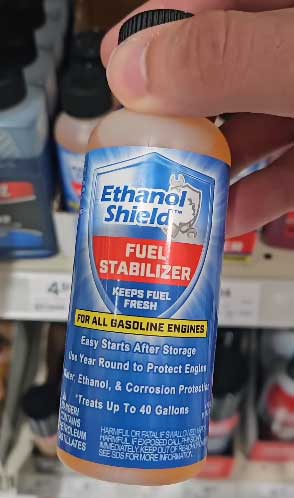
I covered my experience with Ethanol Shield in the previous article, but it bears repeating in this specific comparison.
I started using it specifically because I was tired of replacing “crunchy” fuel lines on my weed eater.
Sea Foam is great, but it never seemed to stop the plastic fuel lines from hardening over time.
When I switched my 2-cycle fleet to Ethanol Shield, the difference wasn’t in how the engines ran (they ran fine with both), but in how the parts aged.
After two seasons, the primer bulbs were still soft, and the fuel lines were still flexible.
It feels less like a harsh chemical and more like a preservative.
I also noticed that it prevents that “white slime” buildup you sometimes see in carburetor bowls when aluminum reacts with ethanol water.3
It handles the specific chemistry of modern bad gas better than the old-school remedies do.
Read more: Comparison Of Kendall Oil And Mobil 1
Pros Of Ethanol Shield
- Targeted Ethanol Defense: It is designed explicitly for the chemistry of E10 and E15 gas. It works to prevent the bond between ethanol and water, which stops phase separation (the layer of water at the bottom of the tank) before it starts.
- Rubber Conditioning: As mentioned, this is the “killer app” for Ethanol Shield. If you own expensive Stihl or Husqvarna handheld equipment, this additive acts as a moisturizer for the delicate internal diaphragms.
- Vapor Technology: Similar to STA-BIL 360, it claims to release a vapor that protects the metal inside the fuel tank above the fuel line, preventing rust in partially filled tanks.
- Concentration: You use very little. A small bottle goes a long way compared to the “glug-glug” heavy pouring required with Sea Foam.
Cons Of Ethanol Shield
- Not a Deep Cleaner: If your pilot jet is already clogged and your mower is surging, Ethanol Shield probably won’t fix it. It is designed to keep a clean engine clean, not to scrub a dirty one.
- Availability: You often have to go to a specialized mower shop or order it online. You can’t just grab it at a gas station at 8 PM like you can with Sea Foam.
- Storage Limit: It is generally rated for 1 year of storage. If you are parking a classic car for 3 years, this isn’t the strongest preservative available.
Maintenance Tips For Ethanol Shield
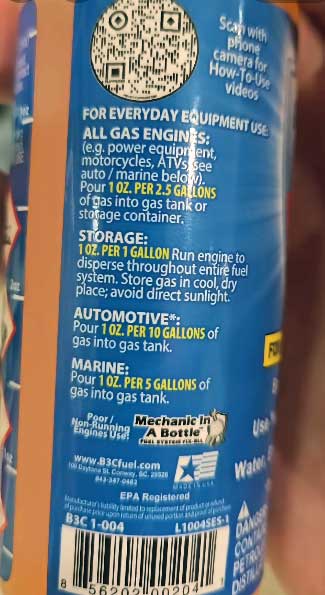
- Use it in the Gas Can: Don’t try to measure tiny amounts for the weed eater tank. Add the correct amount to your 1-gallon or 2.5-gallon gas can immediately after filling up at the pump.
- Visual Check: Ethanol Shield is often blue (or clear). It helps you visually identify that your fuel is treated, which prevents you from accidentally using untreated gas.
- Double Dose for Winter: The bottle usually advises doubling the ratio for storage. This ensures the antioxidants are strong enough to last the winter.
Comparison with other brands
- Ethanol Shield vs. STA-BIL: (Covered previously) STA-BIL is better for long-term storage (2 years); Ethanol Shield is better for daily rubber protection.
- Ethanol Shield vs. Star Tron: These are the closest rivals. Both fight ethanol. Star Tron uses enzymes; Ethanol Shield uses chemical antioxidants. I find Ethanol Shield better for rubber, while Star Tron is slightly better at cleaning up old sludge.
My Experience With Sea Foam
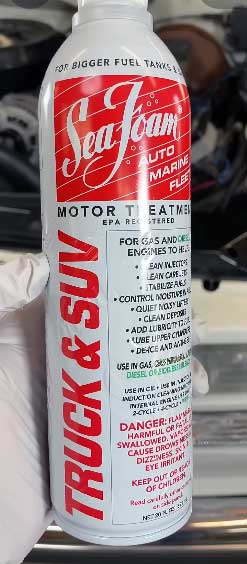
Sea Foam is the “duct tape” of the mechanic world. I keep a gallon jug of it in my garage at all times.
My experience with Sea Foam is usually reactive: something is running poorly, so I grab the white can.
A perfect example: My neighbor’s generator was running “rough”—it would hunt for idle and sputter.
We drained the old gas, put in fresh gas with a heavy dose of Sea Foam (about 50/50 mix for the first cup of fuel), and let it run.
Within 15 minutes, the white smoke cleared, and the idle smoothed out completely.
Sea Foam is a solvent; it dissolves the varnish that clogs jets.4 It worked where a simple stabilizer wouldn’t have done anything.
I also use it in the crankcase (oil) of my older trucks before an oil change to liquefy sludge, something you absolutely cannot do with Ethanol Shield.
Pros Of Sea Foam
- Excellent Cleaner: It contains naphtha and pale oil, which are fantastic at dissolving petroleum varnish. If your engine is on the verge of needing a carburetor rebuild, Sea Foam can often save it.
- Multi-System Use: You can pour it in the gas tank to clean injectors, pour it in the oil to clean sludge, or suck it through a vacuum line to clean carbon off the valves.5 It is the most versatile fluid in the shop.
- Availability: It is everywhere. Walmart, AutoZone, gas stations, grocery stores. You can always find it.
- Safe for High Concentrations: You can run an engine on almost pure Sea Foam without hurting it (though it will smoke).6 This makes it great for “shock treatment” cleaning.
- Stabilizes Fuel (Up to 2 Years): While I prefer it as a cleaner, it does work as a stabilizer.7 It is certainly better than nothing.
Cons Of Sea Foam
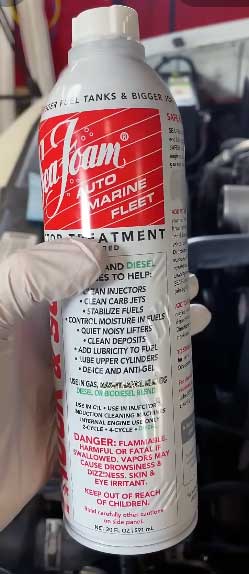
- Petroleum Based (Not an “Ethanol” Fighter): Sea Foam is old-school technology. It doesn’t contain the specific conditioners to fight the hygroscopic (water-absorbing) nature of ethanol. Some critics argue that because Sea Foam contains alcohol (Isopropanol), adding it to ethanol fuel is just adding more alcohol, though Sea Foam maintains it is safe.
- Cost: You have to use a lot of it. The recommended dose is 1 oz per gallon, but for cleaning, you often use 2-4 oz per gallon. A $10 can disappears quickly.
- Less Rubber Protection: It is a solvent. While it has oil in it, it doesn’t actively condition rubber the way Ethanol Shield does. Long-term use in 2-strokes is fine, but it won’t save your fuel lines from drying out eventually.
Maintenance Tips For Sea Foam
- The “Hot Soak”: If you have a car with carbon buildup, you can pour Sea Foam into a vacuum line while the engine is running, then shut it off and let it sit for 20 minutes. When you start it back up, it burns off the carbon (lots of smoke!).
- Pre-Oil Change Flush: Add 1.5 oz per quart of oil to your crankcase about 100 miles before you change your oil.8 It helps liquefy sludge so it drains out with the old oil.
- The “Heavy Dose”: For a lawnmower that won’t start, don’t be afraid to pour a few ounces directly into the fuel line or carb bowl. It acts like a starting fluid that cleans as it burns.
Read more: Comparison Of Free All And Kroil
Frequently Asked Questions (FAQ)
Yes. Many people do. They use Ethanol Shield in the gas can for daily protection and add a splash of Sea Foam occasionally to keep the jets clean. There is no adverse chemical reaction.
Sort of. It contains a small amount of isopropyl alcohol which helps solubilize small amounts of moisture so it can pass through the system. However, for large amounts of water (phase separation), neither product will save the gas—you need to drain the tank.
If the equipment is working perfectly: Ethanol Shield (or STA-BIL).
Yes. It is 100% safe to use in mixed gas.9 It does not interfere with the lubrication of the 2-stroke oil.
Conclusion
Think of your engine like your teeth.
Ethanol Shield is the toothpaste. You use it every day to prevent decay, keep the gums (rubber gaskets) healthy, and stop problems before they start. It is the best choice for daily maintenance and preserving the life of your expensive handheld power equipment.
Sea Foam is the dentist’s drill. You use it when you already have a cavity (a clog) or plaque buildup (varnish). It is the best choice for fixing a problem, waking up a neglected engine, or performing a deep clean on a high-mileage vehicle.
My Verdict: I keep Ethanol Shield in my gas can so I never have to worry about my tools starting. I keep Sea Foam on the shelf for when my neighbor comes over with a mower that “just stopped running.”