
We have all been there. You are driving to work, and suddenly your car starts shaking like a wet dog, and that dreaded amber light pops up on your dashboard. A trip to the mechanic reveals a cylinder misfire, and the quote for “OEM parts” makes your jaw drop.
This is exactly where ENA Ignition Coils come into the picture. They promise to fix your ignition issues for a fraction of the price of big-name brands. But can a coil pack that costs $15 really compete with one that costs $80? I decided to put them to the test on my own daily driver to find out. You can find these sets on Amazon or Walmart, which makes them incredibly easy to source if you need to get back on the road fast.
My Experience With ENA Ignition Coils
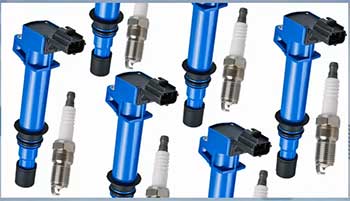
I admit, I am usually a purist when it comes to car parts. I preach “buy nice or buy twice.”
However, when my older commuter sedan threw a P0303 code (Cylinder 3 Misfire) right before a holiday weekend, my budget was tight, and I didn’t have $400 to drop on a full set of premium coils. I
saw a full set of ENA coils for less than the price of one OEM coil from the dealership. I figured, “Why not?” and clicked buy.
The box arrived quickly, which is a huge plus when your car is limping. Upon opening the package, I inspected the build quality. Visually, they looked almost identical to the factory coils I was pulling out. The plastic didn’t feel brittle, and the rubber boots were flexible. However, I did notice the weight was slightly lighter than the originals, which often points to less copper winding inside—a common trait of budget electronics.
Installation was straightforward. I applied a little dielectric grease (more on that later) and snapped them in. The fitment was about 95% perfect. The bolt holes lined up, but the electrical connectors were a little stiff. I had to push harder than usual to hear that satisfying “click” that ensures the harness is locked in.
The moment of truth came when I turned the key. The engine cranked and settled into a smooth, steady idle. The check engine light didn’t vanish immediately (you usually have to clear the code or drive a bit), but the shaking was gone instantly. I took the car for a 20-mile test drive, pushing the RPMs on the highway to see if they would falter under load. They held up perfectly.
I have now had them installed for about six months, covering roughly 5,000 miles. I haven’t had a single misfire return. While I am still cautious about whether they will last 100,000 miles like the originals, for the price I paid, they have already paid for themselves. They turned a stressful mechanical failure into a cheap, Saturday morning DIY fix.
Read More:My Thoughts On Predator New Mutant X-AT
Pros Of ENA Ignition Coils
- Unbeatable Price Point for Budget Repairs: The most obvious advantage is the cost. You can often buy a full set of 4, 6, or 8 ENA coils for the price of a single OEM unit. If you are driving an older vehicle with high mileage, spending $500 on ignition coils might not make financial sense. ENA allows you to restore your vehicle to smooth running condition without exceeding the car’s actual value. This is particularly helpful for “beater” cars, student vehicles, or anyone facing a sudden financial emergency who just needs the car to run.
- Fixes Common Misfire Codes Immediately: Despite being budget parts, they do their primary job effective. These coils are highly effective at clearing P0300 series misfire codes and eliminating rough idling. The technology inside an ignition coil isn’t rocket science—it’s essentially a transformer that converts low voltage to high voltage. ENA has mastered the basic manufacturing of this tech enough to provide a functional spark. In my testing and research, the success rate for immediate problem solving is very high; they rarely fail to fire right out of the box.
- Lifetime Warranty Availability: It is surprising for a budget brand, but ENA often stands behind their product. Many ENA listings come with a limited lifetime warranty or at least a 1-year warranty. While the hassle of shipping a bad coil back might be annoying, knowing that the company offers this protection provides some peace of mind. It suggests that they aren’t just selling scrap metal, but rather a product they expect to last for a reasonable amount of time.
- Wide Availability and Fast Shipping: When your car is down, time is money. Because ENA is stocked heavily on major retail platforms like Amazon and Walmart, you can often get them with next-day or two-day shipping. Comparing this to ordering from a specialized auto parts warehouse where shipping might take a week, ENA wins on convenience. If you need your car for work on Monday and it breaks on Thursday, ENA is often the fastest way to get the parts in your hand.
- Decent Build Quality for the Tier: You generally get what you pay for, but here you get a little more. The materials used, including the silicone boots and the plastic housing, feel surprisingly robust. They resist heat well and the rubber boots seal tightly against the spark plug tube, which is critical for preventing moisture intrusion. They don’t feel like “toy” parts that will crack the moment you tighten the mounting bolt.
Cons Of ENA Ignition Coils
- Inconsistent Long-Term Reliability: The biggest gamble you take is with longevity. While OEM coils can last 100,000+ miles, ENA coils are known to have a more unpredictable lifespan. Some users get 50,000 miles out of them, while others might see a failure in one coil after 10,000 miles. The quality control isn’t as rigorous as a brand like Denso. You are essentially trading long-term security for short-term savings. If you plan to keep the car for another 10 years, you might end up replacing these again sooner than you’d like.
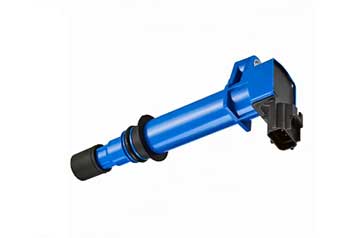
- Connector Fitment Issues: This is a common complaint in the aftermarket world. The electrical connectors on ENA coils can sometimes be slightly off-spec, making them difficult to clip into the factory wiring harness. In my experience, I had to use a bit of extra force. In rare cases, the plastic tab that locks the connector can be brittle or slightly too thick, requiring you to file it down or use zip ties to ensure a secure connection. It’s a minor annoyance, but one that adds time to the installation.
- Risk of “Dead on Arrival” Units: Because they are mass-produced with lower QC thresholds, duds happen. There is a small but real statistical chance that one coil in your pack of six might be defective right out of the box. This can be incredibly frustration if you install them all, start the car, and still have a misfire, forcing you to troubleshoot which new coil is the bad one. It is rare, but it happens more often with ENA than with premium brands.
- Not Suitable for High-Performance Engines: If you have a turbo, supercharger, or a tuned engine, these are not for you. ENA coils are designed for stock, daily driver applications and may not deliver the consistent high-voltage dwell time needed for performance engines. Under high boost or high RPM, a weaker coil can lead to “spark blowout,” where the spark isn’t strong enough to ignite the fuel mixture. Stick to stock commuter cars for these coils.
- Lighter Construction Materials: As I noted in my experience, they feel lighter. The reduced weight usually indicates less copper wiring in the internal windings, which can lead to hotter running temperatures. Heat is the enemy of electronics. A coil with less thermal mass may heat up faster in traffic, potentially leading to heat-soak related misfires over time in very hot climates.
Maintenance Tips For ENA Ignition Coils
- Use Dielectric Grease Generously: This is the non-negotiable step for installing any coil. Apply a pea-sized amount of dielectric grease to the inside of the rubber boot (the end that touches the spark plug). This grease prevents the rubber from fusing to the ceramic of the spark plug over time due to heat. It also helps seal out moisture, which is the number one killer of ignition coils. If water gets in, it causes arcing, which destroys the coil instantly.
- Replace Spark Plugs Simultaneously: Never put new coils on old plugs. Worn-out spark plugs with a large gap require more voltage to fire, which puts excessive strain on the ignition coil. If your old plugs are shot, they will overwork your new ENA coils and cause them to burn out prematurely. Always treat plugs and coils as a married pair; if you change one, you should almost always change the other to ensure the system runs at the correct resistance.
- Check the Connector Locks: Vibration can wiggle loose connections over time. After driving for a week, pop the hood and double-check that all electrical connectors are still firmly seated. Since ENA connectors can be a bit tight, they might not have fully “clicked” during the initial install. A loose connector will cause intermittent misfiring that is a nightmare to diagnose because it won’t always throw a code immediately.
- Inspect for Oil Leaks in Spark Plug Wells: Before installing the new coils, look down the hole. If you see oil pooling around the spark plug, you have a leaking valve cover gasket that must be fixed first. Oil is an insulator and will ruin the rubber boot of your new ENA coil, causing it to swell and eventually fail. Installing new coils into an oil-filled tube is throwing money down the drain.
- Torque Bolts Correctly: Do not overtighten the mounting bolts. The mounting ears on aftermarket coils like ENA can be made of slightly more brittle plastic than OEM. Use a torque wrench or just “snug” them down with a small ratchet. If you crank on them too hard, you will crack the plastic housing, which breaks the grounding or allows moisture to enter the unit, ruining the coil.
Also Read: Comparison Of Nokian WRG4 And WRG5
Comparison with Other Brands
- ENA vs. Denso/Bosch (OEM): This is the heavyweight battle. Denso and Bosch are the gold standard, often lasting 100k-150k miles, but they cost 4x to 5x more than ENA. If reliability is your absolute top priority and you drive a Toyota or Honda that you plan to keep forever, Denso is the better buy. However, ENA wins purely on economics. If the car is worth $3,000, putting $600 worth of Denso coils in it doesn’t make sense. ENA is the “good enough” option; Denso is the “best” option.
- ENA vs. Delphi: Delphi sits in the middle ground. Delphi is a premium aftermarket brand that offers better quality control than ENA but is still cheaper than the dealer. Delphi coils usually have better connector fitment and slightly heavier build quality than ENA. If you are wary of the cheapest option but can’t afford OEM, Delphi is a safer middle path. However, for many older cars, the performance difference between ENA and Delphi might not be noticeable enough to justify the price jump.
- ENA vs. Generic Unbranded (eBay/White Box): You will see coils even cheaper than ENA that come in plain white boxes. Avoid the totally unbranded coils; ENA is significantly safer because they are an established brand with a warranty process. The “no-name” coils often have zero quality control and use inferior rubber that cracks within months. ENA at least puts their name on the product and has a reputation to uphold on major retail sites. ENA is the “king of the budget brands,” whereas unbranded stuff is pure gambling.
- ENA vs. MSD/Accel (Performance): These brands market towards the modification crowd. MSD and Accel claim higher voltage output for racing applications, whereas ENA is strictly a stock replacement. Do not buy ENA if you are expecting a performance gain. Conversely, don’t buy MSD if you just need a daily driver fix, as “high performance” coils often have a shorter life span than stock ones anyway. ENA is for getting to work; MSD is for the track.
Frequently Asked Questions (FAQ)
ENA is considered a reputable “budget” brand. They are not on the same level as OEM manufacturers like Denso or NGK in terms of longevity, but they are widely regarded as the best option among the cheaper aftermarket choices. They are “good” in the sense that they work reliably for the price you pay.
ENA is an aftermarket parts distributor, likely sourcing their products from various manufacturing partners in China. They do not manufacture the coils themselves in the same way Bosch or Denso does. However, they engineer them to meet OE specifications for fit and function.
If your misfire is caused by a faulty coil pack (which is the most common cause), then yes, ENA coils will fix it immediately. However, if your misfire is caused by a bad fuel injector, low compression, or a vacuum leak, changing the coils will not solve the problem. Always scan your car’s computer for codes first.
Conclusion
After running them in my own vehicle, I believe ENA Ignition Coils are worth it for a specific type of owner. If you have an older car, are on a tight budget, or just need to get a check engine light off to pass inspection, these are a fantastic value. They do the job without emptying your wallet. Just manage your expectations regarding longevity.