
In the high-stakes world of healthcare, the stethoscope is as iconic as the white coat. Yet, for decades, this fundamental tool remained largely unchanged while technology raced ahead. You have likely seen colleagues or tech-savvy residents sporting the sleek new Eko Core 500, a device that looks more like a gadget from a sci-fi movie than a piece of medical equipment. It promises to revolutionize your physical exam with 40x amplification, active noise cancellation, and a full-color screen right on the chest piece that displays a patient’s heart rhythm in real-time. But with a price tag significantly higher than the trusty analog tube you have used since medical school, you are right to be skeptical.
In this comprehensive review, I am going to walk you through the reality of the Eko Core 500. We will move past the flashy marketing videos to see how it actually performs in a chaotic ER or a busy clinic. I will break down the true utility of the built-in ECG, the learning curve of digital auscultation, and whether that subscription-based AI really adds value to your practice. Whether you are a cardiologist looking for the ultimate diagnostic tool or a nursing student with hearing loss needing a boost, this guide is designed to help you decide if this is the upgrade your ears deserve.
My Experience With Eko Core 500
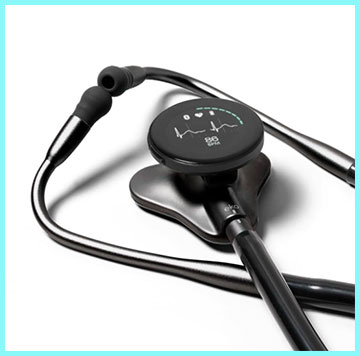
I decided to upgrade to the Eko Core 500 after a particularly frustrating shift in a noisy urgent care center.
Between the crying toddlers in the waiting room and the constant hum of the HVAC system, I found myself second-guessing a faint murmur on an elderly patient.
I had used a standard Littmann Cardiology IV for years, but my ears—and my patience—were starting to feel the strain of trying to filter out the background chaos manually.
When the Eko Core 500 arrived, the unboxing experience felt more like opening a new smartphone than a medical device.
The chest piece is substantial, heavier and thicker than a standard bell, with a glossy black finish and a bright, hidden screen that comes to life when you touch it. Putting it on, the first thing I noticed was the “TrueSound” technology. Unlike older electronic stethoscopes that sounded robotic or tinny, the audio here was rich and deep.
I tested it first on a patient with known A-fib. Placing the device on their chest, the experience was jarring in the best way possible. Not only could I hear the irregular rhythm with crystal clarity—amplified to a level that made it impossible to miss—but I could also see it. The small screen on the chest piece displayed a green waveform tracing in real-time. It was a “lightbulb moment” where two senses confirmed the diagnosis instantly.
However, the transition wasn’t entirely seamless. I quickly learned that “digital” means sensitive. The friction of the chest piece rubbing against a patient’s gown sounded like a thunderstorm until I learned to handle it with a lighter, more stable grip. You cannot just jam this into a patient’s ribs like an analog scope; it requires a bit of finesse.
Connecting it to the app was straightforward, and recording the heart sounds to play back for a colleague was a feature I didn’t know I needed until I had it. Being able to say, “Listen to this,” and actually showing them the phonocardiogram on my phone changed the consultation dynamic completely.
The battery life has been impressive. I was worried about having another device to charge, but a single charge easily lasts me through a week of heavy shifts. The auto-shutoff feature saves me from my own forgetfulness. That said, the fear of the battery dying mid-shift and leaving me with no sound (since it doesn’t have an analog backup mode) is a new anxiety I never had with my old acoustic scope.
Overall, it has brought a level of confidence to my exams that I didn’t realize I was missing. It hasn’t made me a better doctor, but it has certainly made me a more efficient and precise observer.
Read More: My Thoughts On Alimtox Ion Cell Cleanse
Pros Of Eko Core 500
When evaluating a piece of medical technology at this price point, you need to know exactly what you are paying for. The Eko Core 500 offers a suite of features that genuinely separates it from both traditional analog scopes and earlier digital hybrids.
- Unmatched Audio Clarity and Amplification: The most immediate benefit is the sheer power of the audio. With up to 40x amplification, you can hear heart tones that are virtually inaudible on a standard acoustic scope, especially in obese patients or those with faint pathology. The active noise cancellation is a game-changer for anyone working in a non-sterile, noisy environment like an ambulance, ER, or busy ward. It actively filters out the ambient hum of machines and chatter, isolating the S1 and S2 sounds so they pop against a background of silence. This reduction in cognitive load—trying to “hear past” the noise—leaves you less fatigued at the end of the day.
- Integrated Visual ECG Display: This is the flagship feature that truly sets the Core 500 apart from competitors like the Littmann Core. The chest piece features a full-color display that shows a 1-lead ECG tracing and heart rate in real-time as you auscultate. This provides immediate visual confirmation of what you are hearing, helping to distinguish between a regular rhythm and an arrhythmia instantly. You do not need to pull out your phone or look at an app; the data is right there in your hand, in your line of sight. For patient education, showing them their own heartbeat on the device creates a powerful moment of engagement and trust.
- Three-Lead ECG Capability: Beyond the screen, the device effectively acts as a 3-lead ECG when used with the mobile app. By placing the electrodes (the metal rim of the chest piece) on the patient’s skin, you can capture a more comprehensive electrical picture of the heart. This allows for the detection of more complex arrhythmias that a simple 1-lead screening might miss. It bridges the gap between a physical exam and a 12-lead ECG, allowing for better triage decisions on whether to order more expensive testing. The ability to save these strips to a PDF and upload them to an EMR is invaluable for documentation.
- Ergonomic and Durable Design: Despite being a piece of high-tech electronics, it feels built for the rigors of clinical practice. The device is IP44 water-resistant and can be cleaned with standard alcohol wipes without fear of damaging the screen or sensors. The tubing is thick and resists the cracking that often plagues lesser stethoscopes. The headset is designed with a specific angle and comfortable ear tips that provide a good acoustic seal, which is critical for the noise cancellation to work effectively. It feels like a premium tool that can survive being dropped or tossed into a work bag.
Cons Of Eko Core 500
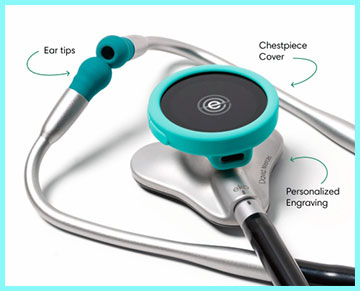
No medical device is perfect, and the Eko Core 500 introduces some new frustrations that you simply don’t have to deal with when using a traditional analog stethoscope. It is important to weigh these downsides against the technological gains.
- Complete Reliance on Battery Power: The biggest structural flaw for many traditionalists is the lack of an analog backup mode. Unlike the Littmann Core, which can be toggled to a standard analog mode if the battery dies, the Eko Core 500 is purely digital. If the battery hits 0%, you hear absolutely nothing—it becomes a dead weight around your neck. This requires a change in habits; you must remember to charge it regularly, just like your phone. For a clinician in a disaster zone or a low-resource setting with unreliable power, this dependency could be a critical point of failure.
- Steep Price and Subscription Model: The upfront cost is significantly higher than almost any other stethoscope on the market. On top of the purchase price, many of the advanced AI features—such as automated murmur detection and AFib flagging—are locked behind the “Eko+” paid subscription. While the basic features work fine without it, it feels frustrating to buy a premium device and then be asked to pay a monthly fee to unlock its full potential. For students or residents on a tight budget, this recurring cost can be hard to justify.
- Learning Curve for Handling Artifacts: The microphone is incredibly sensitive, which is a double-edged sword. It picks up heart sounds beautifully, but it also picks up handling noise, hair friction, and muscle tremors with equal enthusiasm. New users often struggle with “artifact noise” that sounds like crackling or rumbling, leading to confusion. You have to relearn how to hold the chest piece—using a “c-grip” around the rim rather than pressing down on the center—to minimize this noise. It takes practice to distinguish between the digital artifact and actual lung crackles, which can be disorienting for the first few weeks.
- Bulky Chest Piece Profile: The chest piece houses a battery, a screen, a computer chip, and ECG electrodes, making it significantly larger and thicker than a standard bell. This bulk can make it difficult to slide under a tight blood pressure cuff or maneuver into the smaller intercostal spaces of a pediatric or cachectic patient. It can feel top-heavy and cumbersome, sometimes flipping over when hanging around the neck if not balanced correctly. For pediatricians or vets working with small animals, the surface area of the sensor might be too large for precise localization.
Maintenance Tips For Eko Core 500
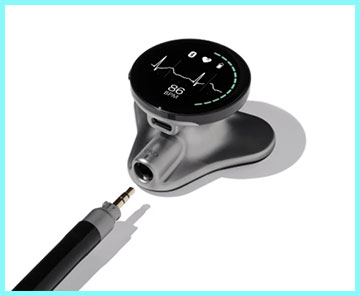
Protecting your investment is critical when your stethoscope costs as much as an iPad. Unlike a cast-iron skillet, this is a precision instrument that requires specific care to keep the sensors accurate and the screen clear.
- Proper Cleaning of Sensors and Screen: The chest piece contains both the microphone diaphragm and the gold-plated ECG electrodes. You should clean these contact points with a 70% isopropyl alcohol wipe after every patient to maintain hygiene and signal quality. However, you must be gentle with the LCD screen; avoid using abrasive paper towels that could scratch the display. Do not use hand sanitizer or bleach-based wipes on the screen, as these can cloud the plastic over time. Ensuring the electrodes are free of skin oils and lotion is vital for getting a clean, static-free ECG tracing.
- Battery Management Habits: To maximize the lifespan of the lithium-ion battery, try to keep it charged between 20% and 80%. Avoid letting it drain completely to 0% often, as this stresses the battery chemistry. Since it uses a USB-C port, it is easy to charge, but you should use the provided cable or a high-quality certified charger to prevent voltage spikes. If you are storing the device for a long period (like during a vacation), charge it to about 50% first. The device has an auto-off feature to save power, but manually turning it off between patients is a good habit to extend your shift life.
- Protecting the Eartips and Tubing: The tubing is made of a durable polymer, but it is still susceptible to skin oils which can cause hardening over time. If you wear the stethoscope around your bare neck, wipe the tubing down with alcohol or mild soap weekly to remove the oils. Check the eartips regularly to ensure they are screwed on tightly; loose eartips compromise the acoustic seal and ruin the noise cancellation effect. If the eartips become cracked or brittle, replace them immediately to maintain audio fidelity and comfort.
- Software Updates: Unlike an analog scope, this device runs on firmware that needs occasional updating. Connect the stethoscope to the Eko app on your phone at least once a month to check for updates. These updates often include improvements to the noise cancellation algorithms, bug fixes for the Bluetooth connectivity, and refinements to the ECG visualization. Keeping the software current ensures you are getting the best possible performance and prevents “glitches” that could interfere with a patient exam.
Comparison with Other Brands
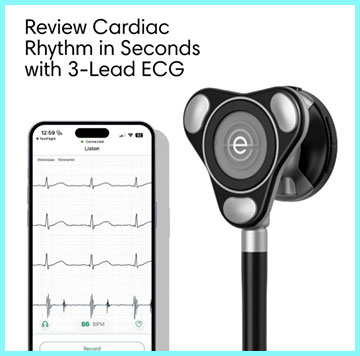
The market for digital stethoscopes is small but competitive. To see if the Eko Core 500 is the right choice for you, we need to stack it up against the other heavyweights in the industry.
- 3M Littmann CORE Digital Stethoscope: This is the most direct competitor and arguably the most popular alternative. Comparison details: The Littmann CORE is essentially a high-end analog Cardiology IV stethoscope with a digital amplifier attachment on the tube. The biggest advantage of the Littmann is flexibility; it has a toggle switch that lets you use it as a purely analog (non-electric) stethoscope if the battery dies. However, it lacks the built-in screen and the integrated 3-lead ECG electrodes on the chest piece found on the Eko Core 500. To see waveforms with the Littmann, you must look at your phone app. If you want the safety net of analog backup and a traditional feel, choose the Littmann. If you want the all-in-one screen and ECG, the Eko Core 500 is superior.
- Thinklabs One: A unique, tube-free digital stethoscope that looks like a small hockey puck. Comparison details: The Thinklabs One is much smaller and uses headphones instead of binaural tubes, making it extremely portable. It offers incredibly high amplification (up to 100x), which is technically louder than the Eko. However, the lack of tubes means you are tethered to headphones, which some clinicians find awkward or isolating in patient interactions. It also lacks the integrated screen and seamless ECG workflow of the Eko Core 500. Thinklabs is often preferred by audiophiles or those with hearing aids who need direct audio input, while Eko is better for the generalist clinician who wants a familiar form factor.
- MDF Instruments ProCardial (Analog): A high-end traditional option for comparison. Comparison details: The MDF ProCardial is a premium acoustic stethoscope that costs significantly less than the Eko. It has zero electronics, meaning no batteries, no charging, and no modes to switch. It offers excellent acoustic clarity for an analog device but cannot compete with the active noise cancellation or amplification of the Eko. In a quiet room, the MDF is fantastic; in a loud helicopter or trauma bay, it struggles where the Eko thrives. If you work in quiet environments and hate charging devices, the MDF is a reliable workhorse. If you need to hear a Grade 1 murmur in a chaotic ER, the Eko wins every time.
Also Read: My Thoughts On Nooro Hand Massager
Frequently Asked Questions (FAQ)
For most nursing students, the Eko Core 500 is likely overkill unless you have a specific hearing impairment. The high cost and advanced features like ECG interpretation might be unnecessary for basic assessments. However, if you struggle to hear manual blood pressures or faint lung sounds, the amplification can be a career-saving tool. Many students opt for the Littmann Core as a middle ground, but the Eko Core 500 is a luxury investment that will last into your professional career.
Yes, the Eko Core 500 is designed to be highly compatible with hearing aids. It can transmit sound wirelessly via Bluetooth to the Eko app, which can then stream the audio directly to compatible “Made for iPhone” hearing aids or cochlear implants. You can also use the device without the tubing by connecting Bluetooth headphones, allowing for a comfortable fit over hearing devices.
No, you cannot. Unlike the Littmann Core, the Eko Core 500 does not have an analog bypass mode. It uses in-ear speakers to produce sound, which require power to function. If the battery is depleted, no sound will pass through the device. It is critical to maintain a charging routine to ensure it is always ready for patient care.
No, the automated detection of murmurs, AFib, and other arrhythmias requires a paid subscription to “Eko+”. The device comes with basic visualization and amplification out of the box. You can still hear and see the rhythm without the subscription, but the software will not “flag” or interpret the pathology for you without the paid add-on.
Conclusion
The Eko Core 500 represents a massive leap forward in bedside diagnostics, effectively combining a high-fidelity stethoscope with a portable ECG machine. Its ability to visualize heart rhythms in real-time and filter out the chaos of a busy hospital environment makes it an invaluable tool for acute care providers, cardiologists, and anyone dealing with complex patients. While the price is high and the lack of an analog backup is a scary shift for traditionalists, the sheer clarity and diagnostic confidence it provides are arguably priceless.
If you are a clinician who works in noisy environments or wants to catch pathology earlier, this device is a worthy investment in your practice. It forces you to change your habits—charging your scope like your phone—but in return, it gives you superpowers that standard tubes just can’t match.