
I’ve always loved experimenting with my hair, but finding the right tool that delivers great results without turning my strands into straw has been a real journey. This article shares my personal take on the Dyson Airwrap versus GHD tools (focusing mainly on popular ones like the Duet series and classic stylers that often get compared), breaking down which one might suit you better based on real use, features, and everyday performance. Whether you’re after versatile curls, quick blowouts, or sleek straight looks, I cover the key points to help you decide.
A Brief Comparison Table Dyson Airwrap Vs GHD Tools
| Feature | Dyson Airwrap | GHD Tools (e.g., Duet Series & Stylers) |
| Primary Technology | Coanda airflow with intelligent heat control | Ceramic plates with airflow (in Duet) or predictive heat |
| Versatility | High – multiple attachments for curl, wave, smooth, volumize | Medium – focused on straight/smooth or specific styles |
| Heat Damage Protection | Excellent – stays under 302°F, measures temp frequently | Good – consistent temp, sensors in premium models |
| Best For | Curling, waves, multi-styles on various hair types | Sleek straight looks, quick blow-dry & smooth |
| Ease Of Use | Takes practice with attachments | Simple, one-step for many |
| Drying Capability | Wet-to-dry with pre-styling | Wet-to-dry in Duet models |
| Price Range | Premium (around $500+) | Mid-to-premium (often $200–$400) |
| Hair Finish | Natural, bouncy, voluminous | Polished, shiny, salon-sleek |
My Experience With Dyson Airwrap
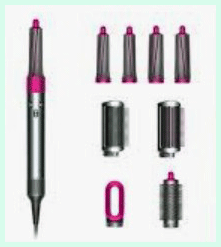
The first time I unboxed the Dyson Airwrap, I felt like I was holding something from the future.
The design is sleek, the motor sits in the handle for balanced weight, and those attachments click in smoothly.
I started with damp hair after washing, using the Coanda smoothing dryer to get about 70% dry without any extreme heat blasting my scalp.
Then I switched to the curling barrels – the 1.2-inch for tighter waves and the 1.6-inch for looser ones.
The Coanda effect pulls the hair toward the barrel automatically, which is a game-changer because I don’t have to wrap sections manually like with traditional curlers.
The curls come out bouncy and natural-looking, holding for days with a light hairspray. On days I want straight hair, the firm smoothing brush tames frizz beautifully and adds shine.
I love how quiet it is compared to regular dryers, and the intelligent heat control means my hair feels healthier after styling – less breakage, more softness. For someone who changes styles often, the versatility keeps things exciting.
That said, it took me a couple of weeks to get the technique right. Longer hair can tangle on the barrels if not sectioned properly, but once I mastered it, styling time dropped to 20-30 minutes.
The app connectivity in newer models adds fun personalization, but I mostly use the basics. Overall, it transformed my routine from frustrating to enjoyable.
Pros Of Dyson Airwrap
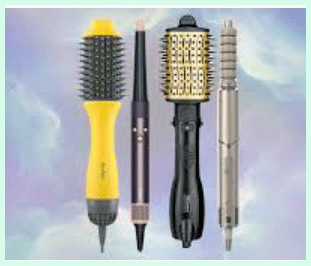
- Versatile Attachments : Comes with multiple options like curling barrels, smoothing brushes, and a dryer head, letting you curl, wave, smooth, or volumize without needing extra tools.
- Minimal Heat Damage : Intelligent sensors measure temperature over 40 times a second and keep it under 302°F, so hair stays healthier and shinier long-term.
- Coanda Airflow Technology : Uses air to attract and wrap hair automatically, making curls effortless even for beginners after practice.
- Wet-To-Dry Styling : Starts on damp hair, saving time by combining drying and styling in one session.
- Natural, Bouncy Results : Delivers soft, voluminous waves or curls that look effortless and hold well without feeling crunchy.
- Quiet Operation : Much less noisy than traditional dryers, which makes morning routines more pleasant.
- Lightweight And Balanced : The motor in the handle reduces arm fatigue during longer sessions.
- Long-Lasting Curls : With the cold shot feature, styles set better and last for days.
- Suitable For Various Hair Types : Works on fine, thick, straight, or wavy hair with the right attachment.
- Innovative Design : Feels premium and modern, with easy-to-clean parts and a storage case included.
Also read: Comparison of Nourishmax And City Lips
Cons Of Dyson Airwrap
- High Price Point : It’s a significant investment, often over $500, which feels steep if you only use a few attachments.
- Learning Curve : Takes time to master the attachments and technique to avoid tangles or uneven results.
- Attachment Swapping : Switching pieces mid-session can interrupt flow, especially if you’re in a rush.
- Not Ideal For Very Thick Hair : Drying longer, thicker hair fully might require extra patience or passes.
- Limited Straightening Power : While smoothing brushes work, it doesn’t deliver the ultra-sleek poker-straight finish some prefer.
- Bulkier Storage : Multiple attachments need space, unlike simpler single-tool designs.
- Occasional Tangling : Long hair can wrap around itself on barrels if sections aren’t precise.
- No Extreme Heat Option : Great for protection, but some users miss higher temps for faster styling on stubborn hair.
Maintenance Tips For Dyson Airwrap
- Clean Attachments Regularly : Wipe barrels and brushes with a damp cloth after each use to remove product buildup.
- Filter Cleaning : Rinse the filter under water every few weeks to keep airflow strong and prevent motor strain.
- Store Properly : Use the included case or a dedicated drawer to avoid losing small parts.
- Avoid Overloading : Don’t overload sections of hair; smaller pieces style better and reduce tangles.
- Use Heat Protectant : Even with low heat, apply a spray for extra shine and protection.
- Detangle Hair First : Brush out knots before starting to prevent pulling during styling.
- Cool Down Period : Let attachments cool before storing to maintain shape.
- Check For Wear : Inspect brushes for bristle damage and replace if needed for best results.
My Experience With GHD
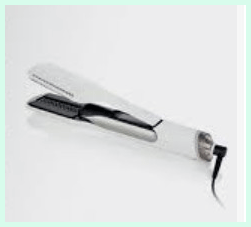
GHD tools, especially the Duet series and classic stylers, feel like reliable friends.
The Duet combines airflow with heated plates for wet-to-dry straightening, which I love on busy mornings.
It glides through my hair smoothly, leaving it sleek and shiny without flyaways.
The consistent temperature (around 365°F in some models) delivers that polished salon look every time, and the shine is incredible – almost mirror-like.
For classic straighteners, they heat up fast and hold heat evenly, making quick touch-ups easy. I appreciate the simplicity: no attachments to swap, just plug in and go.
My hair feels smooth and healthy after use, with less frizz than other irons. It’s perfect when I want straight, glossy hair that lasts.
Pros Of GHD Tools
- Salon-Quality Shine : Leaves hair incredibly glossy and polished with minimal effort.
- Fast Heat-Up : Ready in seconds, ideal for quick morning routines.
- Consistent Temperature : Sensors maintain even heat for uniform results without hot spots.
- Wet-To-Dry In Duet : Dries and straightens simultaneously, saving major time.
- Durable Build : Tools last years with proper care, feeling sturdy and professional.
- Frizz Control : Excels at taming frizz for sleek, smooth finishes.
- Simple Design : No complicated attachments; easy to use right away.
- Great For Thick Hair : Handles dense or coarse textures effectively.
- Less Damage : Optimized heat protects color and reduces breakage.
- Versatile Straightening : Works for pin-straight or soft bends.
Read more: Comparison of La Roche-Posay And Avène Thermal Water
Cons Of GHD Tools
- Less Versatile : Focused mainly on straightening or smoothing, not multi-styles like curls.
- Higher Heat : Can feel hotter than airflow tools, requiring protectant.
- Bulkier In Duet : Some models feel heavier during extended use.
- No Curling Options : Lacks built-in ways to create waves or curls.
- Price Still Premium : Not cheap, though often less than full Airwrap sets.
- Limited Attachments : Fewer add-ons compared to multi-stylers.
- Not As Quiet : Airflow models produce more noise.
- Style Hold Varies : Curls (if added manually) may not last as long.
Maintenance Tips For GHD Tools
- Wipe Plates After Use : Clean with a soft cloth to remove residue.
- Store Flat : Keep closed and cool to protect plates.
- Avoid Water Contact : Don’t submerge; use dry cleaning methods.
- Use On Dry Or Damp : Follow guidelines for wet-to-dry to prevent damage.
- Apply Protectant : Always use spray before heating.
- Check Cord : Inspect for wear to avoid electrical issues.
- Cool Completely : Let cool before storing in pouch.
- Professional Servicing : If issues arise, send for check-up.
Comparison With Other Brands
- Shark FlexStyle : Offers similar multi-styler function at a lower price with good attachments, but less refined airflow than Dyson.
- Revlon Volumiser : Budget-friendly for blow-dry brushes, great for volume, but lacks premium heat control.
- Drybar Double Shot : Excellent for quick blowouts with shine, simpler than GHD Duet but no wet-to-dry.
- T3 Aire Styler : Versatile multi-styler with strong performance, often praised as close to Dyson in results.
- Babyliss Hot Tools : Affordable options for curls and straight, but more heat damage risk.
- Zuvi Or Other Airflow : Focus on low-heat drying, good for health but fewer style options.
Frequently Asked Questions (FAQ)
It depends – GHD Duet excels at quick, shiny straight looks, while Dyson offers more styles.
Dyson wins for versatility and curls; GHD for sleek straight and polish.
Some prefer Shark or T3 for value, but Dyson leads in innovation.
Airwrap for multi-styles; straightener for dedicated sleekness.
Conclusion: For Both Products
I’ve come to appreciate both the Dyson Airwrap and GHD tools for what they bring to my routine. If you love switching up curls, waves, and volume with minimal damage, go for the Dyson Airwrap – it feels innovative and fun. But if sleek, shiny straight hair is your goal, GHD delivers that effortless polish every time. You really can’t go wrong with either; it comes down to your hair type and preferred styles. Whichever you choose, your hair will thank you for the upgrade. What do you think – ready to pick one?