
If you have ever found yourself scrolling through social media late at night, you have likely paused on that mesmerizing video of a geometric red disc swarmed by dozens of hummingbirds. That is the Dotmalls Hummingbird Feeder—or at least, the viral sensation they market.
It promises to be the ultimate solution to leaky bottles and bee invasions, claiming to turn your backyard into a nectar oasis. If you are wondering whether to snag one for your garden, this review breaks down the reality behind the hype. You can typically purchase these feeders directly from the Dotmalls website, though similar designs are often found on general marketplaces like Amazon if you prefer faster shipping.
My Experience With Dotmalls Hummingbird Feeder
I admit it: I am a sucker for garden gadgets. I have gone through the classic glass bottles, the inverted tubes, and even those little handheld buttons, but I was still dealing with the same old problems. My feeders would drip sugary syrup all over my patio, attracting an army of ants, or the yellow flower guards would fall off, inviting wasps to a free buffet. When I saw the advertisement for the Dotmalls feeder, it looked different. It was flat, hexagonal, and boasted something like 30 feeding ports. The video showed birds lined up shoulder-to-shoulder (or wing-to-wing) feeding peacefully. It looked like a hummingbird parking lot, in the best way possible.

When the package arrived, my initial impression was mixed. The box was incredibly light—almost suspiciously so.
Pulling the feeder out, I realized why. The entire unit is made of lightweight plastic.
It didn’t have the heft of my glass Perky-Pet feeders, and I worried a strong wind might turn it into a frisbee.
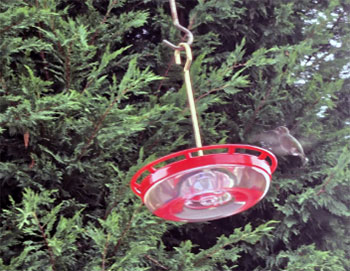
However, the design was intriguing. It consists of a red lid and a clear bottom tray that snaps together.
The concept is that the nectar sits in the bottom like a bowl, and the birds dip their tongues in through the holes in the lid.
No gravity pressure means no leaks, theoretically.
I whipped up my standard batch of nectar—one part sugar, four parts water, no red dye—and filled the tray.
One thing I immediately loved was the wide mouth. Pouring the syrup in was effortless compared to the funnel-balancing act I usually perform with bottle feeders. I snapped the lid on, hung it from the shepherd’s hook near my kitchen window, and waited.
It took about three days for the regulars to notice the change. Hummingbirds are creatures of habit, and they seemed confused by the lack of yellow “flowers” to guide them. But once the brave scout—a feisty Rufous male—figured it out, the others followed. The “30 ports” claim is technically true, but realistically, I never saw more than four or five birds at once. They are territorial little fighter pilots, after all. However, the sheer number of holes meant that even if one bird was guarding a side, another could sneak in from the back.
The biggest win for me was the leak-proof claim. Because the liquid just sits there, it doesn’t drip when the temperature rises and expands the air inside, which is a massive flaw in vacuum-seal bottle feeders. My patio stayed dry, and the ant moat in the center (a little well you fill with water) actually worked to keep the crawling insects at bay. However, it wasn’t all perfect. I noticed that because the feeder is flat and has a large surface area, the nectar evaporates much faster than in a bottle. In the heat of July, I had to top it off every two days, not because they drank it all, but because the water level dropped below the reach of their tongues.
Cleaning was another journey. While the ad said “easy clean,” the hexagonal corners are perfect little traps for black mold if you aren’t diligent. I found myself scrubbing the sharp angles with a toothbrush more often than I’d like. It’s a decent feeder that solves specific problems like leaking, but it introduces new ones like evaporation and material flimsiness. It’s not the “last feeder you’ll ever buy,” but for the price, it brought a lot of activity to my yard.
Read More: My Thoughts On Sherem Hummingbird Feeder
Pros Of Dotmalls Hummingbird Feeder
- Exceptional Leak-Proof Design: The most significant advantage of this feeder is simply physics. Unlike inverted bottle feeders that rely on a vacuum seal to hold the liquid up, this is essentially a covered dish. Gravity cannot force the liquid out because it is already at the bottom. This means you will never walk out to find a sticky puddle of sugar water on your deck or porch railing. For anyone who has battled the sticky mess of traditional feeders during hot weather when the air inside expands and pushes nectar out, this design is a game-changer.
- High Port Capacity: The feeder features a multitude of feeding holes—often up to 30—arranged around the hexagonal or circular lid. While you might not get 30 birds at once due to their territorial nature, having this many access points reduces the “guarding” behavior where one aggressive bird blocks the only two or three flowers available. It allows multiple birds to approach from different angles, increasing the likelihood of seeing a “group feed” during migration season when they are less territorial and more hungry.
- Built-In Ant Moat: The center of the feeder usually features a depression or a small cup designed to be filled with water. This acts as a physical barrier for ants. Ants cannot swim, so if you keep this moat filled, they cannot cross from the hanging hook to the nectar. It eliminates the need to buy a separate accessory ant guard, saving you money and keeping the aesthetic profile of the feeder streamlined and simple.
- Better Visibility for Bird Watching: Because the feeder is flat and the nectar is stored in a clear tray at the bottom, your view of the birds is never obstructed by a large glass bottle in the middle. You can see the birds from all angles, and more importantly, you can look up through the clear bottom if you hang it high enough. This allows you to check the cleanliness of the nectar at a glance without having to take the feeder down, ensuring you know exactly when it’s time to clean.
- Lightweight Construction: While some might see plastic as a downside, the lightweight nature of this feeder makes it incredibly easy to hang. You do not need a heavy-duty iron bracket or a reinforced pole to support it. It can hang from a simple suction cup hook on a window (if the hook is decent quality) or a small branch without weighing it down. This makes it very accessible for elderly bird watchers or those who struggle with lifting heavy glass feeders full of liquid.
- Bee and Wasp Resistance: The feeding ports are typically just small holes drilled into the plastic, without the yellow flower accents that attract insects. Furthermore, the distance from the lid to the nectar is designed to be just right for a hummingbird’s long tongue but too far for a bee’s short tongue. This natural “distance deterrent” is far more effective than bee guards that often get clogged or lost.
Cons Of Dotmalls Hummingbird Feeder

- Frequent Refilling Needed Due to Evaporation: The design that makes it leak-proof—the wide, shallow dish—is also its Achilles’ heel regarding evaporation. A large surface area of the liquid is exposed to the air inside the disc. In warm climates or during heat waves, the water in the nectar evaporates rapidly, leaving behind a thick, syrupy sludge that can be dangerous for birds. You will find yourself refilling this feeder much more often than a bottle feeder, even if the birds haven’t drunk the nectar, simply to keep the consistency safe.
- Plastic Durability Concerns: The feeder is made of rigid plastic, which can be prone to cracking if dropped or exposed to intense UV rays for multiple seasons. Unlike high-quality borosilicate glass that lasts a lifetime, this plastic can become brittle over a year or two. Additionally, the red color of the lid may fade to a pale pink in strong sunlight, which makes it less attractive to hummingbirds over time, as they are primarily visual hunters drawn to vibrant red.
- Difficult to Clean Corners: Despite marketing claims of being easy to clean, the hexagonal shape creates six sharp corners in the tray. Mold loves these corners. If you do not have a bottle brush or an old toothbrush, it is very difficult to scrub the residue out of these tight angles. A round saucer feeder is much easier to wipe out, but the geometric design of the Dotmalls feeder traps gunk that requires precise scrubbing to remove completely.
- Hanging Instability: Because the feeder is so light, it relies heavily on the nectar weight to keep it stable. When it is low on nectar or empty, a gust of wind can swing it violently, potentially unhooking it or spilling the remaining nectar out of the top holes. It lacks the aerodynamic weight of a glass bottle feeder, making it less suitable for open, windy gardens unless you rig up a secondary tether or weigh it down.
- Lack of Perches: Many versions of this viral feeder design do not include perches (places for the birds to sit). While hummingbirds feed while hovering, they prefer to rest while they drink if they can, especially during long migration feeds. Without a rim or perch, the birds must expend energy hovering the entire time they feed. This might shorten their visits compared to feeders where they can sit and conserve energy.
- Confusing for Some Birds: Hummingbirds are smart, but they look for visual cues. They are conditioned to look for flower shapes. The Dotmalls feeder often just has simple holes in red plastic. In my experience, it takes birds longer to recognize this as a food source compared to traditional feeders with bright yellow or white flower ports. You may need to put it up next to an old feeder first to “train” them to use it.
Maintenance Tips For Dotmalls Hummingbird Feeder
- Master the Toothbrush Technique: The hexagonal corners of the nectar tray are the number one spot for black mold and fermentation buildup. A standard kitchen sponge will not reach these crevices effectively. Dedicate a soft-bristled toothbrush specifically for this feeder. Every time you refill, take thirty seconds to scrub those six corners with warm soapy water. This mechanical action is better than just soaking, which often leaves a bio-film behind in the sharp angles.
- Use the Shade to Your Advantage: Because this feeder is a flat disc, the sun hits the nectar directly across a large surface area, heating it up much faster than it would in a vertical bottle. Hot nectar ferments in hours, turning into alcohol that creates toxic liver problems for hummingbirds. You must hang this specific feeder in a spot that gets shade, particularly in the afternoon. Under the eaves of a house or deep inside the canopy of a tree is ideal. If it sits in direct noon sun, you will need to change the nectar daily.
- The Proper Nectar Recipe: Do not buy the red store-bought nectar; it is unnecessary and often contains preservatives. For this feeder, mix 1 part plain white granulated sugar with 4 parts hot water. Stir until dissolved and let it cool. Because the Dotmalls feeder has a red lid, the color of the liquid is irrelevant. The birds are attracted to the red plastic, so clear nectar works perfectly and allows you to easily spot if the liquid is getting cloudy (a sign of spoilage).
- Check the Ant Moat Daily: The small well in the center is great for stopping ants, but it is small. In hot weather, that water evaporates even faster than the nectar. If the moat dries out, the ants will bridge the gap in minutes. Make it a habit to pour a little splash of water into the center cup every time you walk by with a watering can or a glass of water. A dry moat renders the feature useless.
- Deep Clean with Vinegar: Once a month, your soap and water routine needs a boost. Plastic is porous and can hold onto bacteria. Soak the bottom tray and the lid in a bucket with a solution of one part white vinegar to two parts water for an hour. This kills invisible mold spores and breaks down mineral deposits from hard water that might clog the small feeding ports. Rinse it thoroughly—hummingbirds have sensitive taste buds and will reject the feeder if it smells like a salad dressing.
- Leveling is Critical: Unlike bottle feeders that can hang slightly askew without issues, a saucer feeder like this must be perfectly level. If it tilts, the nectar pools on one side, making it unreachable on the high side and potentially spilling out of the low side ports. When you hang it, step back and eye it. If it’s tilting, adjust the string or the hook. You might need to rotate the S-hook to find the center of gravity to ensure all ports have equal access to the nectar.
Comparison With Other Brands

- Dotmalls vs. Aspects HummZinger: The Aspects HummZinger is widely considered the “gold standard” of saucer-style feeders. While the Dotmalls feeder is often a cheaper, imported clone of this concept, the Aspects version is made in the USA from unbeatably durable polycarbonate that is guaranteed for life. The HummZinger typically has fewer ports (around 3 to 12), but it includes a built-in perch ring, which the Dotmalls feeder often lacks. If you want a feeder that you buy once and keep for twenty years, Aspects is the winner. If you want a budget-friendly option to test if you like saucer feeders, Dotmalls is the low-risk entry point.
- Dotmalls vs. Perky-Pet Glass Feeders: Perky-Pet is the classic brand most of us grew up seeing. Their feeders are usually inverted glass bottles with a metal or plastic base. The comparison here is between materials and mechanism. The Perky-Pet glass is heavier, easier to sterilize (you can boil it), and looks more traditional. However, they are notorious for dripping when the temperature changes. The Dotmalls feeder wins on the “no-drip” front and is easier to fill since you don’t have to flip it over. However, Perky-Pet wins on longevity and hygiene, as glass doesn’t scratch or harbor bacteria like the plastic of the Dotmalls feeder.
- Dotmalls vs. First Nature: First Nature makes a very popular, affordable plastic feeder that is a hybrid—it has a jar but a wide flat base. First Nature feeders are famous for having a massive capacity (16 to 32 oz) and being very easy to clean thanks to a wide mouth jar. Compared to Dotmalls, First Nature is better for people with huge hummingbird populations who need to provide gallons of nectar. The Dotmalls feeder has a much smaller capacity (usually 8-12 oz), making it better for casual birders who don’t want to waste sugar water. First Nature feeders also have perches, giving them a slight functional edge for the birds’ comfort.
- Dotmalls vs. Jewel Box Window Feeders: There are small feeders designed to stick directly to the glass of your window. Dotmalls sometimes markets these, but comparing their hanging hexagon feeder to a window feeder is apples to oranges. The hanging Dotmalls feeder is for the yard and handles multiple birds. A window feeder brings them inches from your face but usually only holds 2-3 birds at a time. If you want close-up intimacy, skip the hexagon feeder and get a window mount. If you want to support a flock, the hanging Dotmalls feeder is the superior choice.
Also Read: My Thoughts On Aivituvin Chicken Coop
Frequently Asked Questions (FAQ)
While viral products like the Dotmalls feeder get a lot of attention, the most consistently top-rated feeder by ornithologists and serious birders is the Aspects HummZinger HighView. It uses a similar saucer design to the Dotmalls but is made of high-impact polycarbonate that resists UV damage and includes a raised perch that allows birds to rest and allows you to view them unobstructed. It is virtually indestructible and easy to clean, making it the industry favorite.
Glass is generally considered better for hygiene and longevity. It does not scratch, meaning bacteria cannot hide in microscopic crevices, and it can be boiled to sterilize it completely. It also does not degrade or leech chemicals in the sun. However, plastic (like the Dotmalls feeder) has the advantage of being lightweight and typically cheaper. If you choose plastic, you must be more diligent about scrubbing it to prevent mold buildup in scratches.
People often wrap strips of aluminum foil around the hanger or parts of the feeder to deter bees and wasps. The logic is that the flashing light and the unnatural texture confuse or scare the insects. However, a more effective method for the Dotmalls feeder is simply ensuring the nectar level is low enough that bees (with their short tongues) cannot reach it, while hummingbirds (with long tongues) can still feed easily.
Yes, absolutely. There is a myth that leaving feeders up keeps hummingbirds from migrating. This is false. Hummingbirds migrate based on daylight length (photoperiod), not food availability. Feeding them in October provides a critical fueling station for stragglers or birds migrating down from further north. You should keep your feeder up and fresh until you have not seen a bird for at least two weeks to ensure every traveler has passed through safely.
Conclusion
The Dotmalls Hummingbird Feeder is a classic example of a “good enough” solution that solves a specific annoyance—leaking—at a very accessible price point. It isn’t the heirloom quality of a heavy glass feeder, and the cleaning process requires a bit of patience with the corners. However, if you are tired of sticky patios and ant infestations, this feeder’s design is a legitimate upgrade. It offers a fantastic view of the birds and holds up well against the wind. For the casual bird watcher looking to add a splash of red and a buzz of activity to the garden without breaking the bank, it is a purchase you likely won’t regret.