
I’ve spent countless hours flying drones, capturing everything from serene sunsets over Sylhet’s tea gardens to dynamic cityscapes, and the choice between the DJI Mini 3 Pro and DJI Mini 4 Pro has been one of the toughest decisions I’ve faced as a real user. In this article, I share my honest, hands-on comparison to help you decide which one truly stands out as the better option for most people in 2026. My main intent is to break down their key features, strengths, and limitations through a practical lens, so you can pick the drone that fits your flying style without regrets.
A Brief Comparison Table DJI Mini 3 Pro Vs DJI Mini 4 Pro
| Feature | DJI Mini 3 Pro | DJI Mini 4 Pro |
| Weight | Under 249 g | Under 249 g |
| Camera Sensor | 1/1.3-inch CMOS, 48MP | 1/1.3-inch CMOS, 48MP (improved processing) |
| Video | 4K/60fps HDR | 4K/60fps HDR, 4K/100fps slow-mo, 10-bit D-Log M/HLG |
| Obstacle Sensing | Tri-directional (forward, backward, downward) | Omnidirectional (full 360°) |
| Transmission | O3, up to 12km | O4, up to 20km |
| Flight Time (Standard Battery) | Up to 34 minutes | Up to 34 minutes |
| Flight Time (Plus Battery) | Up to 47 minutes | Up to 45 minutes |
| Intelligent Features | ActiveTrack, QuickShots | ActiveTrack 360°, Waypoint Flight, enhanced tracking |
| Vertical Shooting | True vertical | True vertical |
My Experience With DJI Mini 4 Pro
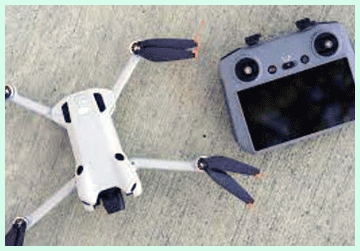
I switched to the DJI Mini 4 Pro after using the Mini 3 Pro for over a year, and the difference hits immediately in tougher spots.
The omnidirectional sensing lets me weave through trees confidently, where before I hovered cautiously.
ActiveTrack 360° transformed how I film moving subjects — like friends walking paths — it circles smoothly without manual tweaks.
The O4 transmission holds strong over long distances, no more signal drops during hikes. Slow-mo at 4K/100fps captures dramatic moments beautifully, and color grading in 10-bit feels professional.
Battery life holds up well for full sessions, and the compact size means I always bring it along. Minor gripes like the price aside, this drone feels like the sweet spot for portable, capable flying.
Pros Of DJI Mini 4 Pro
- Full omnidirectional obstacle sensing keeps flights safer: I fly in tight spots like forests or urban areas, and the 360° sensors detect obstacles from all directions, automatically braking or rerouting — this has saved me from crashes multiple times where the Mini 3 Pro’s tri-directional system would have missed side or top threats.
- Superior video transmission with O4 system reaches farther: The 20km range (in ideal conditions) means I get rock-solid live feeds even when exploring distant landscapes, with less interference and clearer 1080p/60fps video compared to the O3 on the older model.
- Enhanced slow-motion and color options boost creative work: Shooting 4K at 100fps delivers buttery smooth slow-mo for action scenes, and 10-bit D-Log M/HLG profiles give me way more flexibility in post-production for grading footage to look cinematic.
- ActiveTrack 360° follows subjects dynamically from any angle: Whether circling a moving person or pulling away dramatically, this upgraded tracking feels more intuitive and professional than the standard ActiveTrack on the Mini 3 Pro.
- Improved image processing reduces noise in low light: Even with the same sensor, the newer processing platform produces cleaner shots at higher ISOs, making evening flights more usable without grainy results.
- Better stability in wind thanks to refined design: The slight tweaks in frame and props help it hold position more steadily in gusty conditions, which I notice during windy days in hilly areas.
- Waypoint Flight adds precise repeatable paths: I can program custom routes for time-lapses or consistent shots over time, perfect for content creators needing identical angles.
- Cruise Control and Advanced RTH enhance ease: Hands-free cruising lets me focus on framing, and the smarter return-to-home navigates obstacles on the way back reliably.
- Future-proofing with ongoing firmware support: As the newer model, it gets priority updates, keeping features fresh longer.
Also read: Comparison of Pipette And Tubby Todd
Cons Of DJI Mini 4 Pro
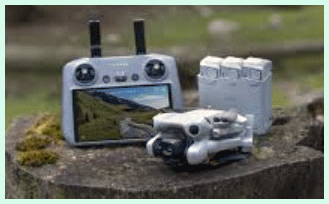
- Higher price point compared to the older model: It costs noticeably more upfront, which can feel steep if you’re on a budget and don’t need the extra sensors or transmission range.
- Slightly bulkier unfolded dimensions: At 298×373×101 mm with props, it takes up a bit more space in my bag than the more compact Mini 3 Pro design.
- Plus battery offers marginally less max time than the predecessor: The 45-minute option is great, but the Mini 3 Pro’s Plus battery pushes 47 minutes, a small but noticeable difference for long sessions.
- No major sensor size upgrade: It sticks with the same 1/1.3-inch CMOS, so if you’re expecting a huge jump in low-light performance or dynamic range, you might feel underwhelmed.
- Compatibility quirks with older batteries: While Mini 3 Pro batteries work, they add weight (pushing over 249g) and reduce performance, limiting seamless swaps.
- Learning the new features takes a short adjustment: ActiveTrack 360° and Waypoints are powerful, but customizing them requires some practice if you’re coming from simpler modes.
- Potential overkill for casual flyers: If you just want basic 4K footage without advanced tracking or long-range needs, the extras might go unused.
Pros Of DJI Mini 3 Pro
- Excellent value with frequent discounts: It often goes on sale, making it more affordable while still delivering pro-level 4K/60fps HDR and 48MP photos.
- Proven reliability from years of real-world use: I’ve logged hundreds of flights with it, and its tri-directional sensors work well in most open scenarios without surprises.
- Longer max flight time with Plus battery: Up to 47 minutes gives me extra breathing room during extended shoots compared to the 4 Pro’s 45.
- True vertical shooting simplifies social media content: The rotatable gimbal captures full-frame vertical videos without cropping, ideal for quick Reels or TikToks.
- Compact and lightweight for ultimate portability: It fits easily in pockets or small bags, perfect for spontaneous travel adventures.
- Solid intelligent modes cover essentials: QuickShots, ActiveTrack, and MasterShots deliver fun, polished results with minimal effort.
- Mature ecosystem with plenty of accessories: Third-party options and community support are abundant due to its popularity.
- Great low-light performance for its class: The sensor handles dusk shots well, producing vibrant results with good detail.
Cons Of DJI Mini 3 Pro
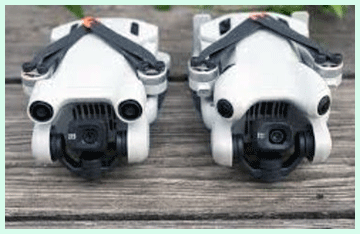
- Limited obstacle sensing misses side and top threats: In complex environments, I’ve had close calls because it only covers front, back, and down.
- Shorter transmission range with O3: Drops occur more often at distances beyond 10km, especially with interference.
- No advanced slow-mo like 4K/100fps: Slow-motion tops at 1080p/120fps, which feels dated next to the newer options.
- Fewer color profiles for grading: Lacks 10-bit D-Log M/HLG, limiting post-production flexibility.
- Older tracking lacks 360° freedom: ActiveTrack is directional, not as versatile for creative follows.
- Potential for fewer future updates: As the older model, support might taper off sooner.
Maintenance Tips For DJI Mini 4 Pro
- Clean propellers and sensors regularly after flights: Wipe away dust or debris from the omnidirectional sensors with a soft cloth to ensure accurate obstacle detection.
- Store batteries at 50-60% charge in cool places: Avoid full charges for long-term storage to prevent degradation and extend lifespan.
- Calibrate the compass and IMU before important shoots: Do this in open areas away from metal to maintain stable hovering and accurate flight paths.
- Update firmware through the DJI Fly app promptly: New versions often fix bugs and add features like better tracking.
- Use genuine propellers and check for wear: Replace any nicked or unbalanced ones to avoid vibrations affecting camera quality.
- Keep the gimbal protected during transport: Use the included guard or case to prevent misalignment from bumps.
- Monitor battery cycles and health in the app: Replace when cycles exceed 200 or health drops below 80% for consistent performance.
- Fly in moderate conditions first after maintenance: Test in calm weather to verify everything functions smoothly.
Read more: Comparison of Pampers Pure And Swaddlers
Comparison With Other Brands
- Autel Evo Nano+ offers similar lightweight design but lacks DJI’s polished app ecosystem: It has good obstacle avoidance, yet transmission and intelligent modes feel less refined.
- Potensic Atom provides budget-friendly 4K but misses advanced tracking and full obstacle sensing: It’s great for beginners, though build quality and reliability trail behind DJI.
- HoverAir X1 focuses on self-flying selfies without a controller: Convenient for hands-free shots, but no manual control or pro camera features like the Mini series.
- DJI’s own Air 3S delivers dual cameras and stronger wind resistance: Superior for versatility, but heavier and requires registration in many places.
- Ryze Tello remains ultra-cheap for indoor fun: Educational and affordable, yet no 4K or long-range capabilities.
- Fimi X8 SE adds longer range at low cost: Solid alternative, but app stability and camera quality don’t match DJI’s polish.
- Parrot Anafi USA emphasizes privacy with no cloud reliance: Good for specific uses, though flight time and features lag.
- Skydio 2+ excels in autonomous tracking: Impressive avoidance, but bulkier and pricier without the sub-250g advantage.
Frequently Asked Questions (FAQ)
The Mini 4 Pro adds omnidirectional obstacle sensing, O4 transmission for longer range, 4K/100fps slow-mo, 10-bit color profiles, and ActiveTrack 360°.
Yes, the Mini 3 has a larger sensor, better low-light performance, true vertical shooting, and longer flight time compared to the basic Mini 4K.
Mini 4 Pro batteries are slightly lighter with optimized efficiency; older Mini 3 batteries work but add weight and reduce performance on the 4 Pro.
The Air 3S offers dual cameras (wide + tele), stronger wind resistance, and more robust build, but it’s heavier (requires registration) versus the Mini 4 Pro’s sub-250g portability and true vertical shooting.
Conclusion: For Both Products
I’ve flown both extensively, and if you’re after the absolute best in safety, range, and creative tools, go with the DJI Mini 4 Pro — it delivers that extra edge without sacrificing portability. But if budget is tight and you don’t need full obstacle avoidance, the DJI Mini 3 Pro still performs brilliantly. Whichever you choose, you’ll get stunning aerial shots that make every adventure more memorable. What matters most is getting out there and flying — so pick the one that excites you and start capturing!