
I found myself in exactly that position—loving the calorie burn of my Cubii but hating the stiffness in my spine that followed. It felt counterproductive to exercise my legs while wrecking my posture. The Cubii Lumbar Cushion is marketed as the essential companion to their elliptical machines, designed to support your natural curve and prevent the dreaded “slouch” during active sitting.
I decided to buy one to see if a branded piece of foam could really make that much of a difference compared to a standard throw pillow. You should buy this product if you own a Cubii (or any under-desk cycle) and find yourself sliding backward or experiencing lower back fatigue while pedaling. However, if you are looking for a soft, plush pillow to sink into, or if you have a chair with an exceptionally deep seat pan, you might want to save your money and look for softer, generic alternatives.
My Experience With Cubii Lumbar Cushion
When I first purchased my Cubii, I was envisioned myself pedaling away happily for hours while typing emails, getting fit without leaving my desk.
The reality was slightly different.
Within twenty minutes of pedaling, I noticed a specific physical phenomenon: the force of pushing the pedals forward was pushing my body backward.
To compensate, I would subconsciously tuck my tailbone and round my lower back, essentially curling into a “C” shape.
By the end of the workday, my legs felt active, but my lumbar spine felt like it had been compressed in a vice.
I tried using a regular couch cushion behind me, but it was too soft; it just squashed flat under the pressure of my pedaling.
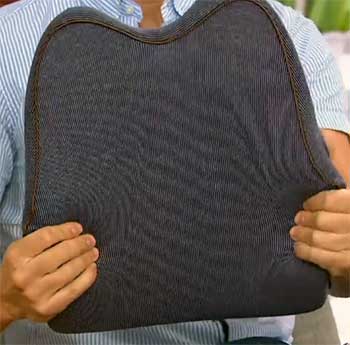
I ordered the official Cubii Lumbar Cushion hoping that “purpose-built” wasn’t just marketing jargon. When it arrived, the first thing I noticed was the density. This is not a fluffy pillow. It is a firm, contoured block of high-density memory foam. It feels substantial in your hands, not light and airy. I strapped it onto my Herman Miller office chair using the adjustable buckle. The strap is robust, which is a detail I appreciated immediately because my previous cheap lumbar support used to slide down the chair back every time I stood up.
Sitting down against it felt invasive at first. Because it is so firm, it forcefully pushes your pelvis forward. It felt like a corrective brace rather than a comfort item. However, once I started pedaling, the design made perfect sense. As I pushed against the pedals, the cushion pushed back against my spine, locking me into a neutral, upright posture. The “scooting” sensation stopped. The friction and the contour of the cushion kept my butt planted firmly in the seat.
Over the last three months, my relationship with the cushion has gone from “this is annoying” to “I can’t pedal without it.” It corrected the pelvic tilt that was causing my pain. I also found that the mesh cover breathes surprisingly well. I tend to run hot, especially when pedaling on a higher resistance setting, but my back hasn’t turned into a swamp. It isn’t a magical cure for all back woes—if I sit for eight hours straight, I still get stiff—but it has completely removed the specific strain caused by the elliptical motion. It turned my active sitting setup from a painful experiment into a sustainable routine.
Also read: My Thoughts on Andersen Ranch Hitch Adapter
Pros Of Cubii Lumbar Cushion
- Engineered Specifically For Active Sitting: The most significant advantage of this cushion is that it was designed with the biomechanics of pedaling in mind. Most lumbar pillows are designed for static sitting—just resting against the back of a chair. When you use a Cubii, you are generating force. This cushion provides the necessary resistance to counter that force. It prevents your hips from rolling backward (posterior pelvic tilt) every time you push the pedal, which is the primary cause of back pain associated with under-desk ellipticals. It acts as a stabilizer for your core, allowing you to transfer power to the pedals more efficiently without straining your vertebrae.
- High-Density Memory Foam Retains Shape: Cheap lumbar supports often suffer from “bottoming out.” After an hour of leaning against them, the foam warms up and collapses, leaving you leaning against the hard plastic of your chair frame. The Cubii cushion uses a very dense, high-quality memory foam that resists this collapse. Even after months of daily use and thousands of pedal strokes pressing my weight against it, the cushion returns to its original contoured shape the moment I stand up. This durability ensures consistent support throughout the entire workday, not just the first twenty minutes.
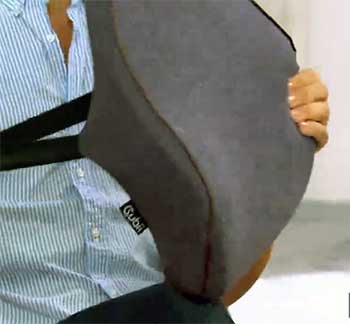
- Secure Adjustable Strap System: One of the most annoying aspects of adding accessories to an office chair is constantly having to readjust them. The Cubii cushion features a heavy-duty, adjustable strap with a buckle that wraps around the back of most standard office chairs. Because you move a lot when using a Cubii, a cushion without a strap would constantly fall over or shift out of the “sweet spot.” This strap locks the cushion at the exact height of your lumbar curve (L4/L5 vertebrae), ensuring that the support is always right where you need it, regardless of how much you wiggle while exercising.
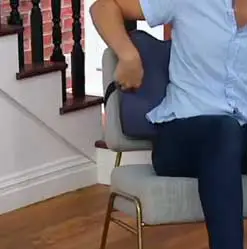
- Promotes Proper spinal Curvature: The shape of the cushion is not just a wedge; it is molded to mimic the natural lordotic curve of the human spine. By filling the gap between your lower back and the chair, it forces your spine into a neutral alignment. This opens up the chest and drops the shoulders. I noticed that not only did my back hurt less, but my typing posture improved because I wasn’t slumping over the keyboard. It essentially forces you to sit with the “perfect posture” that your mother always told you to have, but without you having to consciously hold your muscles tight to maintain it.
- Breathable 3D Mesh Cover: Since the Cubii is exercise equipment, the manufacturers anticipated that users might sweat. Placing a block of foam against your back can act as an insulator, trapping body heat. To combat this, the cushion is wrapped in a 3D mesh fabric that promotes airflow. It allows heat to escape rather than building up between your shirt and the chair. While you might still get warm during a vigorous session, the cover prevents that sticky, clammy feeling that occurs with velvet or solid polyester covers found on other pillows.
Cons Of Cubii Lumbar Cushion
- Reduces Seat Depth Significantly: This is a physical trade-off that affects all lumbar cushions, but it is particularly noticeable here due to the cushion’s thickness. By placing this block behind you, you are effectively shortening the seat of your chair by about 3 to 4 inches. If you are a tall person with long femurs, this can be a major problem. It pushes your body forward, meaning less of your thigh is supported by the chair seat. This can lead to a feeling of “perching” on the edge of the chair rather than sitting in it, which might cause pressure points on your hamstrings or knees over time.
- Firmness Can Be Uncomfortable For Some: As mentioned in my experience, this is not a soft, cuddly pillow. It is firm. If you have a sensitive back or if you are dealing with an acute injury (like a bruise or severe inflammation), the pressure exerted by this cushion might feel too aggressive. It doesn’t yield much. Some users find that it feels like a hard fist pushing into their back rather than a supportive cloud. If you prefer a “plush” feeling, this high-density foam will likely feel too hard for your taste.
- Strap May Not Fit All Chairs: While the strap is adjustable, it has its limits. If you have a modern, wide-backed executive chair or a “gaming” chair with thick side bolsters, the strap might not be long enough to wrap around. Additionally, if your chair has a unique shape (like a mesh back with a plastic frame), the strap might slide up and down the plastic rails because it cannot get a grip. In these cases, the strap becomes useless, and you are forced to manually reposition the pillow every time you sit down, which negates one of its main pros.
- Price Is High For A Foam Cushion: The Cubii Lumbar Cushion typically retails between $60 and $80. When you compare this to generic memory foam lumbar supports on Amazon, which can be found for $20 to $30, the price markup is significant. You are undeniably paying a “brand tax” for the Cubii logo and the assurance that it pairs with the machine. For budget-conscious shoppers, it can be hard to justify spending nearly $100 on a piece of foam, especially after already spending hundreds on the elliptical itself.
- Visual Aesthetics Are Utilitarian: The cushion only comes in one color (black/grey) with the bright blue Cubii logo tag. It looks like medical equipment or gym gear. If you have a carefully curated home office with a stylish velvet chair or a mid-century modern aesthetic, this bulky black blob will stick out like a sore thumb. It disrupts the look of a nice office chair. Unlike other brands that offer beige, grey, or velvet covers to blend in with home decor, Cubii offers a strictly functional, industrial look.
Read more: My Thoughts on VEVOR Vinyl Cutter
Maintenance Tips For Cubii Lumbar Cushion
- Wash The Cover Regularly: Since you are likely using this cushion while exercising, it absorbs sweat, dead skin cells, and oils from your back. The cover is removable via a zipper on the back. You should unzip it and wash it in cold water on a gentle cycle at least once every two weeks (or more if you sweat heavily). Do not use hot water, as it can shrink the mesh fabric, making it impossible to put back onto the foam core. Air dry the cover or tumble dry on the absolute lowest heat setting to prevent the zipper from warping.
- Never Wash The Memory Foam Core: This is the golden rule of memory foam maintenance. Do not put the foam insert in the washing machine. Water destroys the cellular structure of memory foam, causing it to crumble and lose its rebound properties. If the foam itself gets dirty or smells, spot clean it gently with a damp cloth and a mild detergent. Dab the area; do not soak it. Let it air dry completely in a well-ventilated area before putting the cover back on. If you soak the foam, it may take days to dry and can develop mold in the center.
- Check The Strap Elasticity: Over time, the elastic in the strap can begin to degrade, especially if you have it stretched to its maximum limit around a wide chair. Periodically check the tension. If you notice the strap becoming wavy or loose (“bacon neck”), it is losing its grip. To prolong the life of the elastic, try not to stretch it unnecessarily. If you move the cushion to a different chair, unbuckle it rather than sliding it off under tension, which puts stress on the connection points where the strap meets the fabric.
- Deodorize With Baking Soda: If you notice a lingering smell even after washing the cover, the odor has likely penetrated the foam. Since you can’t wash the foam, use baking soda. Remove the cover and sprinkle a generous amount of baking soda all over the foam cushion. Let it sit for 24 hours to absorb the moisture and odors. Then, take it outside or use a vacuum cleaner with an upholstery attachment to gently suck up the powder. This will freshen the foam without damaging it with water.
- Store Flat, Do Not Crush: If you need to pack the cushion away or travel with it, try to avoid compressing it under heavy objects for long periods. While memory foam is designed to bounce back, keeping it crushed in a tight suitcase or under a heavy box for weeks can permanently alter its shape or leave deep creases that affect the comfort. Store it in a cool, dry place where it can maintain its natural contours. Avoid direct sunlight, as UV rays can cause the foam to turn yellow and become brittle and powdery over time.
Comparison with Other Brands
Comparison with Everlasting Comfort
Everlasting Comfort is the Amazon bestseller. It is significantly cheaper than the Cubii cushion and comes with a lifetime replacement policy. However, Everlasting Comfort is softer. The foam used in the generic brand is less dense, designed more for comfort than active resistance. Cubii is better for pedaling. Because the Cubii cushion is firmer, it provides a better backstop for the motion of your legs. If you just want to sit and type, Everlasting Comfort feels nicer. If you are sweating and pedaling, the Everlasting Comfort cushion tends to squash too much, failing to prevent the backward slide.
Comparison with Purple Back Cushion
Purple uses a hyper-elastic polymer grid. Instead of foam, it uses a heavy, squishy gel grid. Purple is much cooler. The airflow in the Purple cushion is superior to any foam product, meaning zero heat retention. Purple is heavy and slippery. The cushion itself weighs several pounds and tends to slide down chairs because the strap system isn’t as robust as Cubii’s. Cubii offers better structural support. The Purple cushion is bouncy and jiggles, which can feel weird when you are rhythmically pedaling. Cubii provides a solid, stable wall to push against.
Comparison with Samsonite Lumbar Support
Samsonite focuses on travel. Their cushions are often smaller and contoured for airplane seats or cars. Samsonite is too small for desk work. While great for the lower lumbar curve, they often lack the height to support the mid-back. Cubii covers a larger surface area. The Cubii cushion is taller, offering support that extends slightly higher up the spine. This is important when using an elliptical because the movement engages the entire pelvic region. Samsonite is great for your commute, but for a workout, it feels insufficient and can shift out of place too easily.
Comparison with Original Chair Lumbar
Your office chair might already have lumbar support. High-end chairs like Herman Miller or Steelcase have built-in adjustable lumbar. Built-in support is often subtle. It is designed for static ergonomics. Cubii needs aggressive support. Because active pedaling changes your center of gravity and exerts backward pressure, the subtle plastic curve of an Aeron chair usually isn’t enough to keep your hips aligned. Adding the Cubii cushion overrides the chair’s subtle support with a dedicated, thick block that locks you in. You are essentially modifying the chair for exercise mode.
Frequently Asked Questions (FAQ)
Yes, absolutely. While it is engineered to support the body during the pedaling motion, it functions perfectly well as a standard ergonomic back support. Many users keep it on their chair even when they aren’t using the elliptical because they prefer the firm posture correction it provides for typing and general desk work.
Indirectly, yes. One of the main reasons chairs roll backward while using a Cubii is because the user pushes away from the pedals. By filling the gap between your back and the chair with a firm cushion, you are pushed forward slightly, changing your leverage. However, the cushion alone won’t lock your wheels. You generally still need wheel stoppers (which often come with the Cubii) for the chair casters if you are on a hard floor.
Only the outer cover is washable. The mesh cover can be unzipped, removed, and washed in a machine with cold water. The inner memory foam cannot be washed or submerged in water, as this will ruin the material. You should only spot clean the foam if absolutely necessary.
It depends on the specific gaming chair. Gaming chairs often have “wings” or bolsters on the sides of the backrest that make the chair very wide. The strap on the Cubii cushion may not be long enough to wrap around the entire width of a bulky gaming chair. Additionally, the bucket-seat shape of gaming chairs can sometimes push the cushion forward too much, making it uncomfortable.
Conclusion
The Cubii Lumbar Cushion is an expensive but highly effective accessory that solves a very specific problem. You should buy this product if you are a dedicated Cubii user who struggles with lower back pain or posture issues while pedaling. It transforms the experience from an awkward, slouchy struggle into a comfortable, supported workout. While the price is steep for a block of foam, the density and stability it offers are unmatched by generic, squishy pillows. If you want to protect your spine while you burn calories, it is a worthy investment in your long-term health.