
If you have ever owned a rug in a high-traffic area like a kitchen, entryway, or mudroom, you know the struggle. Fabric rugs get stained by spaghetti sauce; jute rugs shed and rot; and cheap rubber mats look, well, cheap. Enter Chilewich.
Known primarily for their high-end placemats found in upscale restaurants, Chilewich applies the same “woven vinyl” technology to floor mats. They promise a product that looks like a designer textile but acts like a heavy-duty shield. But with prices often exceeding $200 for a runner, is it just a fancy plastic mat, or is it a “buy it for life” investment? I tested the Chilewich Basketweave Floor Mat to find out.
My Experience With The Chilewich Floor Mat
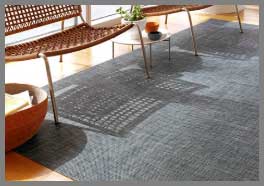
I needed a runner for my kitchen—the “danger zone” between the sink and the stove.
I had previously used a cotton rug that required constant machine washing (and eventually curled at the corners) and a foam anti-fatigue mat that was ugly and tripped everyone who walked by.
I decided to try a Chilewich Basketweave runner in the “Bark” color to hide crumbs.
The first thing you notice is the texture. This is not a soft, fuzzy rug. It feels architectural. It is made of TerraStrand (extruded vinyl yarns) woven together and bonded to a latex backing. When I unrolled it, it lay perfectly flat almost immediately—no curled corners like you get with cheaper rugs. It has a significant weight to it, which prevents it from sliding around as I hustle around the kitchen.
The “magic” moment happened two days in, when I inevitably dropped a glob of tomato sauce on it. On a normal rug, this is a panic moment. On the Chilewich, the sauce just sat on top of the vinyl weave. I took a damp sponge, wiped it up, and… that was it. No stain, no scrubbing, no throwing it in the washing machine. Because the yarns are non-porous, liquids don’t soak in; they sit in the interstices of the weave until you wipe them away.
However, I did encounter the one major “warning” I had read about online: the hardwood floor issue. The backing is a heavy latex. After leaving it in the same spot for three weeks, I lifted it up to sweep and noticed the backing felt slightly “tacky” against the wood finish. It hadn’t caused damage yet, but I realized that moisture can get trapped underneath. Now, I make sure to lift the rug once a week to let the floor breathe, a maintenance step that is annoying but necessary to protect my flooring.
Also read: My Thoughts On Pergo EverCraft Flooring
Pros Of Chilewich Rugs
- Indestructible Durability:These rugs are tanks. Users report having the same Chilewich mat in a high-traffic entryway for 5 to 10 years with zero fraying or fading. They are resistant to mold, mildew, and chlorine, making them excellent for pool houses or muddy entryways. The edges are “self-bound” (melted) rather than stitched, so there are no threads to come loose.
- The “Wipe-Down” Factor:Unlike “washable” rugs (like Ruggable) that require you to peel off the cover and run a laundry cycle, Chilewich rugs are cleaned in situ. You vacuum them or mop them right along with your floor. If you have a massive spill, you can take it outside and hose it down. This is a huge time-saver for kitchen messes.
- Ultra-Low Profile:The mats are very thin (about 0.14 inches). If you have a door with low clearance that always gets stuck on normal rugs, a Chilewich mat will likely clear it. This makes them the gold standard for entryways where door swing is an issue.
- Modern, Architectural Aesthetic:They look expensive. The bi-color weave creates a depth that mimics natural fibers like sisal or seagrass, but without the shedding or scratching. They elevate a space immediately, giving it a clean, minimalist, and “finished” look that fits well in modern or transitional homes.
- Pet Friendly:Cat owners love these because cats generally do not like to claw at the vinyl texture (it doesn’t offer the “grip” of wool or jute). Furthermore, if a pet has an accident, the urine doesn’t soak into the fibers instantly, making cleanup much easier and preventing lingering odors.
Cons Of Chilewich Rugs
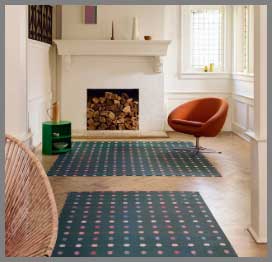
- The Hardwood Floor Risk:This is the most critical con. The latex backing can react with certain floor finishes (especially polyurethane on hardwood) over time, potentially leaving a sticky residue or a discoloration pattern if moisture gets trapped underneath. You cannot “set it and forget it.” You must air it out occasionally.
- Comfort (or Lack Thereof):Do not buy this if you want something soft to sit on. It is woven plastic. It feels hard and textured under bare feet—somewhat like a very smooth outdoor patio mat. It provides zero cushioning. If you stand at the sink for hours, you might still want an anti-fatigue mat underneath it or slippers on your feet.
- High Price Tag:A standard doormat size can cost $50-$70, and a large area rug can easily run $500 to $1,000. For a synthetic product, this feels steep to many buyers. You are paying for the brand, the design, and the longevity, not the raw material cost.
- Slippery When Wet:While the rug itself doesn’t slide on the floor, the surface of the vinyl can be slippery if you step on it with wet socks or smooth-soled shoes. It’s not like cotton which absorbs the water; the water sits on top, creating a slip hazard until it dries.
Maintenance Tips For Chilewich Rugs
- Vacuum Frequently:Dirt and crumbs can fall through the weave and get trapped between the rug and the backing. Vacuuming the top usually sucks this dirt out, but occasionally you should flip the rug and sweep the floor underneath to prevent grit from scratching your floor.
- The “Air Out” Routine:If you mop your floors, ensure they are 100% bone dry before laying the rug back down. Trapping moisture under the latex backing is the #1 cause of floor damage. Once a week (or at least twice a month), lift the rug or drape it over a chair for an hour to let the backing and the floor ventilate.
- Scrubbing Stubborn Stains:If dried food gets stuck in the weave, use a soft-bristle brush (like a toothbrush or vegetable brush) with warm soapy water to gently scrub the grain. Do not use harsh abrasives or iron the rug, as heat will melt the vinyl.
- Outdoor Cleaning:For larger rugs, the best cleaning method is to take them outside to the driveway. Wet them with a garden hose, scrub with a little dish soap, rinse thoroughly, and let them dry in the sun (draped over a railing). They dry very quickly.
Comparison With Other Brands
- Chilewich vs. Ruggable:The battle of the “easy clean” rugs. Ruggable is soft (fabric feel) and machine washable. Chilewich is hard (vinyl feel) and scrubbable.
- Choose Ruggable if: You want a cozy rug for a living room or bedroom that you can toss in the wash if a dog vomits on it.
- Choose Chilewich if: You want a rug for a kitchen, mudroom, or dining room where you want to wipe up spills instantly without doing laundry. Chilewich is also more durable; Ruggable edges tend to curl after a few washes.
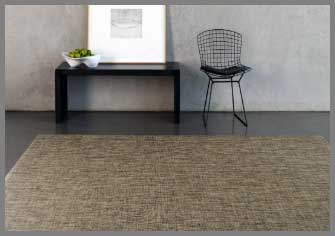
- Chilewich vs. Natural Fiber (Jute/Sisal):Jute rugs look beautiful but are a nightmare to clean (they absorb liquids and rot) and they shed dust constantly. Chilewich mimics the look of jute but with none of the maintenance. It is the synthetic, sanitary evolution of the natural fiber rug.
- Chilewich vs. GelPro / Anti-Fatigue Mats:GelPro mats are for comfort; they are thick, squishy foam. They are ugly but save your back. Chilewich is for aesthetics and floor protection; it offers no cushioning. Some people place a small GelPro mat under a large Chilewich runner to get the best of both worlds, though this can look bulky.
Read more: My Experience With Proximity Mills Flooring
Frequently Asked Questions (FAQ)
Yes, most collections (like the Basketweave and Shag) are rated for indoor/outdoor use. They are resistant to fading and mildew. However, if left in direct, intense sun for years, they may eventually fade slightly. They are excellent for patios and pool decks.
Generally, no. The latex backing provides substantial grip and weight, so they rarely slip on hard floors. However, some people use a thin felt rug pad not for grip, but to create a barrier between the latex backing and delicate hardwood floors to prevent the “sticking” issue mentioned earlier.
Yes, they are generally safer for LVP than for hardwood because LVP is less porous. However, caution is still advised with any rubber/latex backed rug on vinyl flooring, as chemical reactions (plasticizer migration) can sometimes cause yellowing over many years. Regular airing out prevents this.
No. The edges are heat-sealed. If you cut it with scissors, the weave will unravel, and the structural integrity of the mat will be destroyed. You must order the correct size or explore their custom size program.
Conclusion
To summarize, Chilewich rugs are the ultimate “utility meets luxury” product. They are not designed to be cozy; they are designed to be bulletproof. If you are tired of throwing kitchen rugs in the washing machine or watching jute rugs disintegrate under your dining table, Chilewich is the upgrade you need. The upfront cost is high, but given that they can easily last a decade with a simple hose-down, the value proposition is undeniable for busy households.