
Choosing between the Chicco Bravo and the Chicco Corso feels like deciding between a reliable sedan and a sporty crossover. I have spent significant time with both travel systems, pushing them through grocery store aisles, folding them into trunks, and navigating uneven sidewalks.
If you prioritize a “one-hand, quick-fold” miracle that gets the job done with zero fuss, the Bravo is your best friend. However, if you want that modern, modular ability to face your baby toward you and don’t mind a slightly more involved fold, the Corso is the superior upgrade.
A Brief Comparison Table
| Feature | Chicco Bravo | Chicco Corso (Modular) |
| Stroller Type | Traditional Quick-Fold | Modular (Reversible Seat) |
| Fold Mechanism | One-hand smart fold (under seat) | One-hand fold (seat must be forward) |
| Seat Direction | Forward-facing only | Parent-facing & Forward-facing |
| Weight | ~24.9 lbs | ~23.4 lbs (varies by model) |
| Car Seat Compatible | Yes (KeyFit/Fit2) | Yes (KeyFit/Fit2) |
| Suspension | All-wheel suspension | Adjustable rear suspension |
| Included Accessories | Parent tray with cup holders | Infant seat insert (usually) |
| Child Tray | Included | Sold separately (bumper bar included) |
| Price Point | Mid-range | Mid-to-High range |
| Footrest | Fixed | Adjustable |
My Experience With Chicco Bravo
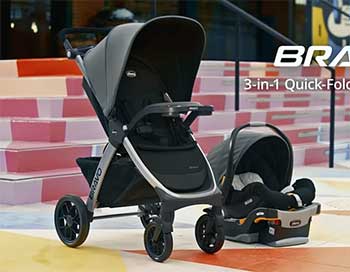
I remember the first time I pulled the Chicco Bravo out of the box.
It felt substantial—not heavy in a burdensome way, but sturdy, like it could handle a few years of toddler abuse.
The immediate standout feature for me was the fold.
You see, most parents underestimate how many times they will fold and unfold a stroller in a single day.
Between the park, the pediatrician, and the grocery store, you might do it ten times.
The Bravo’s “smart fold” handle hidden under the seat cushion is genius. I simply grabbed it, lifted, and the wheels automatically swiveled inward to make the footprint compact. It stands up on its own, which saved my lower back from having to bend down to pick it up off dirty parking lot pavement.
However, using it daily revealed its personality. It is a workhorse. It doesn’t have the fancy reversible seat found on luxury strollers, meaning my toddler could only face the world. This wasn’t an issue once they were older and curious, but in the early months (after transitioning out of the car seat), I missed that eye contact.
The ride is smooth enough for suburban sidewalks, though I found the plastic wheels could get a bit noisy on rougher asphalt after a year of use. It’s the Honda Accord of strollers: reliable, practical, and it holds its value, but it won’t turn heads at the park like a luxury model might.
Pros Of Chicco Bravo
- The One-Hand Smart Fold is a Game Changer: The absolute biggest selling point of the Chicco Bravo is its folding mechanism.1 Most strollers claim to be “one-hand fold,” but the Bravo actually delivers on this promise without caveats. Located underneath the seat cushion is a handle that also serves as the carrying handle.2 You simply reach under, grab, and lift. Gravity does the rest. As you lift, the front wheels automatically swivel inward to ensure they don’t get caught or increase the folded size.3 This mechanism is incredibly intuitive and requires zero practice. For parents who are often holding a baby in one arm and trying to wrangle gear with the other, this feature alone often seals the deal. It eliminates the frustration of fighting with latches or levers while rain is pouring down in a parking lot.
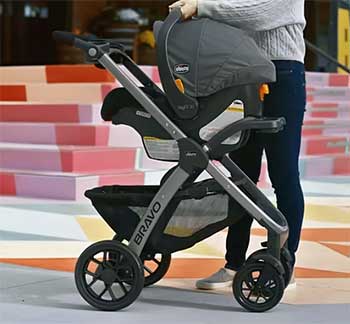
- Massive Storage Basket Access: Storage is often an afterthought in stroller design, but not here. The Bravo features a large storage basket that is accessible from both the rear and the front.4 Many strollers have a bar crossing the back that blocks you from shoving a large diaper bag inside, but the Bravo’s open design allows for easy loading. I found I could fit a fully stuffed diaper bag, a couple of jackets, and even a small grocery haul underneath without issue. This high weight capacity and volume mean you don’t have to hang heavy bags on the handle, which is a tipping hazard.
- Parent Tray Comes Standard: In an era where stroller companies nickel-and-dime you for every accessory, the Bravo includes a parent tray with two cup holders and a zippered storage compartment right out of the box.5 This seems like a small detail until you buy a more expensive stroller and realize you have to pay an extra $30 just to have a place to put your iced coffee. The cup holders are deep enough to hold standard water bottles securely, and the zippered pouch is perfect for keys and a phone, keeping them hidden and safe from bouncing out during a walk.6
- Excellent Car Seat Integration: As a travel system, the Bravo excels. If you have a Chicco KeyFit 30 or KeyFit 35 (which are top-rated car seats), they click into the Bravo frame with a reassuring audible “click.” You don’t need to buy extra strap adapters or complicated bars; the connection points are built-in. Furthermore, you can strip the stroller down to a “frame carrier” by removing the toddler seat fabric entirely.7 This leaves you with a lightweight skeleton that the car seat snaps into, making it much lighter to lift in and out of the trunk during those first six months when you are only using the infant carrier.
Also read: Comparison Of Diaper Genie Select And. Platinum
Cons Of Chicco Bravo
- Forward-Facing Seat Only limits interaction: The most significant drawback of the Bravo compared to modern modular strollers is that the toddler seat is fixed in a forward-facing position. Once your baby outgrows the infant car seat (usually around 6-9 months), they must face the world in the stroller seat. While this is great for curious toddlers, many parents (myself included) prefer to have their 6-month-old facing them to monitor for spit-up, naps, or just to bond. If having your child face you past the infant stage is a non-negotiable for you, the Bravo will not meet your needs, and you will likely regret not upgrading to a modular option like the Corso.
- Plastic Wheels Struggle on Rough Terrain: The Bravo uses EVA foam-filled plastic wheels.8 While these are puncture-proof and maintenance-free (no pumping air), they lack the shock absorption of air-filled or high-quality rubber tires. On smooth mall floors or paved suburban sidewalks, they are perfectly fine. However, if you venture onto cobblestones, cracked pavement, or packed dirt trails, the ride gets bumpy quickly. Over time, these plastic wheels can accumulate small dents and scratches from gravel, which can make the stroller sound a bit rattly as it ages. It is definitely designed for the “urban/suburban jungle” rather than actual off-road trails.
- Fixed Footrest Can Be Uncomfortable for Naps: The footrest on the Bravo is part of the molded plastic frame and cannot be adjusted. On many other strollers, you can lift the footrest up to create a flat sleeping surface for a napping child. On the Bravo, your child’s legs will always dangle down. While the backrest reclines deeply for naps, the lack of leg support means older toddlers might find their legs falling asleep or dangling uncomfortably during long naps. It creates a slight “slide down” effect where the child might slouch more than they would in a seat with an adjustable calf support.
- Bulky Fold Profile in Small Trunks: Although the fold is easy and it stands on its own, the folded package is somewhat thick. Because the tray and the wheels fold inward together, it creates a “sandwich” that can be bulky. If you have a compact sedan or a car with a very shallow trunk, you might find the Bravo takes up 70% of your cargo space. It fits in almost all vehicles, but it doesn’t fold as flat as some of the more premium, newer designs that allow the seat to detach or telescope inward. You may have to remove the front wheels (which is easy, but annoying to do every time) to fit it into very tight spaces.
Maintenance Tips For Chicco Bravo
- Wheel Axle Lubrication is Key: The most common issue with the Bravo after a year of use is squeaky wheels. This happens because dust and hair get trapped in the axle housing. To maintain a smooth push, you should pop the rear wheels off (usually a simple push-button release) once a month. Wipe down the metal axle pin with a clean paper towel to remove black grit. Then, apply a silicone-based lubricant spray. Do not use standard WD-40, as it attracts dirt and can gum up the mechanism over time.9 Silicone spray dries clean and keeps the plastic-on-metal friction low. This simple 5-minute task prevents that annoying “shopping cart squeak” that plagues neglected strollers.
- Fabric Care and Spot Cleaning: The fabrics on the Bravo are durable, but they are not the easiest to remove for a full machine wash compared to some other brands. The best approach is aggressive spot cleaning. I recommend using a mixture of warm water and a mild baby-safe detergent (like Dreft) with a soft-bristle brush. Scrub stains immediately when they happen. If you must do a deep clean, the seat pad can be removed, but pay close attention to how the straps thread through the backboard; take a photo before you disassemble it so you know how to put it back together. Always air dry the fabrics; putting them in the dryer can warp the plastic stiffeners inside the seat or shrink the material, making it impossible to snap back onto the frame.
- Protecting the Locking Mechanism: The folding handle under the seat relies on a cable mechanism hidden inside the frame. Over time, crumbs, sand, and spilled sticky liquids can work their way into the crevices near the fold joint. If you frequent the beach or use the stroller in muddy conditions, use a can of compressed air (like you use for computer keyboards) to blow out debris from the side hubs where the frame hinges. If you feel resistance when pulling the “smart fold” handle, do not force it. Check for obstructions. Forcing it can stretch the internal cable, leading to a stroller that won’t lock in the open position securely.
- Check the Brake Teeth: The Bravo uses a linked braking system where stepping on one pedal locks both rear wheels.10 The locking mechanism involves a plastic tab engaging with “teeth” on the wheel hub. Periodically inspect these teeth. If you frequently stomp on the brake while the stroller is still moving rolling, you can shear off or round down these plastic teeth, making the brake slip. Always bring the stroller to a complete stop before engaging the brake. If you notice the brake isn’t holding firmly on an incline, contact Chicco customer service immediately for replacement wheels, as this is a critical safety failure.
My Experience With Chicco Corso
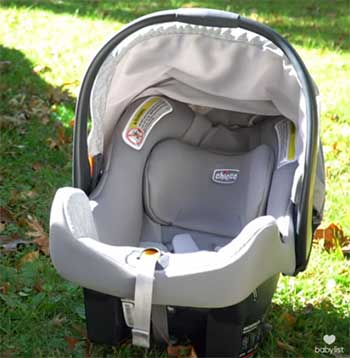
Switching to the Chicco Corso felt like upgrading from economy to business class. It is undeniably sleeker.
The first thing I noticed was the fabric quality—it features leatherette details on the handle and bumper bar that make it feel much more expensive than it is.
The Corso addresses the biggest complaint about the Bravo: the seat direction.
I loved being able to click the seat in facing me.
It made walks more interactive; I could talk to my baby, point things out, and fix their hat without stopping and walking around to the front.
The fold is different, though. It’s still one-handed, but it requires the seat to be folded forward first (or removed) to get the most compact shape. It wasn’t as “grab-and-go” instantaneous as the Bravo, but the trade-off was worth it for the modularity. The rear suspension is also adjustable, which I found fascinating. Flipping the little switch on the rear axle actually made a perceptible difference when I took the stroller across a grass field at the park. It didn’t bounce my child around nearly as much. The Corso feels like Chicco looked at the Uppababy Vista and said, “Let’s do that, but make it affordable.”
Pros Of Chicco Corso
- Modular Seat Versatility (Parent-Facing Option): The defining feature of the Corso is its modularity. The toddler seat can be removed and flipped to face either the parent or the world. This is a feature typically reserved for strollers in the $800+ price range. Being able to face your child is fantastic for their emotional development and your peace of mind. Additionally, you can remove the seat entirely and just click the car seat into the frame, creating a lightweight “frame stroller” that looks much cleaner and less cluttered than the Bravo does in the same mode. The frame-only mode is incredibly agile and looks very high-end.
- Adjustable Footrest for Superior Comfort: Unlike the Bravo, the Corso includes an adjustable footrest (calf support).11 This may seem minor, but for a sleeping toddler, it is major. You can lift the footrest to a horizontal position, which, combined with the reclining backrest, creates a near-flat bassinette-like environment. This prevents the “dangling leg” issue and allows for longer, more comfortable naps on the go. As the child grows, you can drop it down. This adjustability ensures the stroller adapts to the child’s physical needs from 6 months all the way up to toddlerhood.
- Adjustable Rear Suspension System: The Corso features a unique adjustable rear suspension.12 There is a small lever near the rear wheels that allows you to toggle between a “firm” setting for smooth pavement and a “soft” setting for rougher terrain.13 While it won’t replace a jogging stroller with air-filled tires, the soft setting genuinely helps absorb the chatter of cobblestones or cracked sidewalks. This attention to ride quality makes the push feel lighter and more responsive than the Bravo, which relies solely on the natural flex of the wheels and frame.
- Premium Aesthetics and Build Quality: Chicco stepped up their design language with the Corso. The use of “leatherette” (synthetic leather) on the push handle and the child bumper bar adds a tactile luxury that is missing from the foam handles of the Bravo. The fabrics often have a heathered, woven texture that hides stains well and looks sophisticated. The frame design is cleaner, with fewer visible rivets and plastic joints. If you are a parent who cares about the “look” of your gear and wants something that feels modern and stylish, the Corso wins easily. It looks like it belongs in a boutique, not just a big-box store aisle.
Cons Of Chicco Corso
- More Complex Folding Process: While the Corso fold is technically “one-hand,” it is more involved than the Bravo. To fold it compactly, the seat must be facing forward. If you have the seat facing you (which you likely will for a young baby), you have to detach the seat and flip it around before you can fold the stroller, or remove the seat entirely and fold the frame separately. This adds a step. If you are rushing to get into an Uber or onto a bus, that extra step can be stressful. It lacks the “pull and drop” simplicity that defines the Bravo line.
- No Child Tray or Parent Tray Included: To achieve that sleek, modern look, Chicco stripped away the bulky plastic trays. The Corso comes with a bumper bar for the child, but no snack tray.14 If you want a place for your child’s Cheerios and sippy cup, you have to buy a universal organizer or a specific tray attachment separately (if available/compatible). Similarly, it often lacks the robust parent console found on the Bravo, usually offering just a cup holder or a simpler pouch. For parents who live out of their stroller and need immediate access to snacks, drinks, and keys, the lack of built-in storage trays is a noticeable downgrade in convenience.
- Heavier Lifting Weight in Some Configurations: While the frame itself is light, when you have the full toddler seat attached, the Corso can feel slightly more cumbersome to lift into a trunk than the Bravo because of how the weight is distributed. The Bravo folds into a dense, balanced square. The Corso, depending on how you fold it, can be a bit longer or have the seat fabric flopping slightly if not latched perfectly. It requires a bit more “management” when handling it folded.
- Shallower Storage Basket: Although the basket on the Corso is decent, the design of the rear axle and the modular seat mechanism slightly impedes access compared to the Bravo’s wide-open mouth. Large diaper bags might need to be squished a bit to fit in from the back. The basket sides are also lower in some areas to accommodate the frame design, meaning if you pile loose items (like blankets or toys) high, they have a higher chance of tumbling out the side than they would in the deep, walled basket of the Bravo.
Also read: Comparison Of Cuties Diapers And Huggies
Maintenance Tips For Chicco Corso
- Caring for the Leatherette Handles: The Corso’s premium touchpoints need specific care. The leatherette handle and bumper bar can degrade if exposed to hand sanitizer or harsh cleaning chemicals (like Clorox wipes) frequently. The alcohol in sanitizers can dry out the synthetic material, causing it to crack or peel over time. Always clean these handles with water and a tiny drop of mild dish soap, wiping them dry immediately. If you use hand sanitizer, ensure your hands are completely dry before grabbing the stroller handle. This small habit will keep the stroller looking new for years.
- Lubricating the Seat Hubs: Because the Corso is modular, the connection points where the seat clicks into the frame (the hubs) are high-wear areas. These plastic-on-plastic connections can get stiff with dust, making it hard to reverse the seat. Every few months, take the seat off and inspect the connection ports on the frame. Use a vacuum hose to suck out any sand or crumbs. A very light spritz of dry silicone spray into the mechanism can keep the “click” action smooth and effortless. Avoid grease, which will just attract more dirt to these sensitive locking points.
- Suspension Lever Maintenance: The adjustable suspension lever on the rear axle is low to the ground and exposed to mud and water. If you walk in wet conditions, this lever can seize up if mud dries inside it. After a messy walk, hose down the wheels and the suspension area (avoiding the seat fabric) to wash away grit. Toggle the switch back and forth a few times while washing to ensure it doesn’t get stuck in one position. If it does feel stiff, do not force it with your foot; clean it first, then lubricate it.
- Checking the Canopy Structure: The Corso often features a large, multi-panel canopy.15 The ribs of the canopy are flexible but can get bent if the stroller is thrown into a trunk with heavy groceries on top of it. Periodically check the shape of the canopy. If the fabric looks wrinkled or saggy, you can use a steamer (on a low setting, held at a distance) to relax the fabric and reshape it. Do not iron it. Also, check the zipper connection if your model has an extendable canopy; zippers are often the first thing to fail if pulled too hard when the fabric is taut.
Comparison with other brands
- Chicco Bravo vs. Graco Modes Nest: The Graco Modes line is the most direct competitor to Chicco in the mid-range market. The Graco Modes Nest also offers a height-adjustable seat (slide-to-you feature) which neither Chicco really does. However, having tested both, the Chicco Bravo feels significantly sturdier. Graco strollers often have a “rattle” and more flex in the handle, feeling a bit more plastic-heavy. The Chicco Bravo’s wheels and frame rigidity are superior. While Graco offers more features for a lower price, the Chicco Bravo will generally outlast it in terms of durability and resale value. The fabrics on the Chicco also tend to be easier to wipe clean and less prone to pilling than Graco’s materials.
- Chicco Corso vs. UPPAbaby Cruz V2: The Corso is often called a “dupe” for the UPPAbaby Cruz. The Cruz is nearly double the price. Is it double the stroller? The Cruz has far superior suspension and “true” rubber wheels that handle terrain much better than the Corso. The Cruz also has a higher weight limit and a taller seat back for older kids. However, for the average suburban parent, the Corso gets you 85% of the Cruz experience for 50% of the price. You get the reversible seat, the leather details, and the large canopy. If you are budget-conscious but want the “luxury look,” the Corso is the smart buy. If you walk 5 miles a day on bad sidewalks, the UPPAbaby Cruz’s superior engineering is worth the extra investment.
- Chicco Bravo vs. Baby Jogger City Mini GT2: This is a common cross-shop. The City Mini GT2 is a 3-wheel stroller with much better wheels (rubber tires) than the Bravo. It pushes like a dream on grass and gravel. However, the City Mini GT2 has a very shallow basket that is hard to access, and the seat does not sit fully upright, which annoys some toddlers. The Bravo wins on storage and the upright seating position, plus the ease of the KeyFit car seat integration (Chicco car seats need an adapter for Baby Jogger). If your priority is storage and ease of use, pick Bravo. If your priority is push performance and terrain handling, pick the City Mini GT2.
- Chicco Corso vs. Mockingbird Single-to-Double: The Mockingbird is another popular modular stroller. The main difference is that the Mockingbird can convert to a double stroller (adding a second seat), whereas the standard Corso cannot (only the Corso Flex can). The Mockingbird is heavier and wider. The Corso feels more agile and compact as a single stroller. If you are “one and done” or have a large age gap, the Corso is the better handling stroller. If you plan to have two kids close in age, the Mockingbird (or upgrading to the Corso Flex) is necessary. The Corso’s build quality feels slightly tighter and less wobbly than the Mockingbird, which has had some frame stability critiques in the past.
Frequently Asked Questions (FAQ)
Reddit users generally agree that the Bravo is better for parents who want the easiest possible fold and maximum storage for errands, often calling it the “Toyota Camry” of strollers. The Corso is preferred by parents who prioritize aesthetics and the ability to have the baby face them (reversible seat), with many Redditors calling it a great budget alternative to the UPPAbaby Vista.
Yes, Chicco is widely considered one of the best mid-range baby gear brands. They are renowned for safety (especially their car seats), durability, and excellent customer service. The Bravo specifically is one of their best-selling and highest-rated products due to its longevity and resale value.
No stroller (including the Corso) is “FAA approved” for use during flight; strollers must be gate-checked. However, the KeyFit 30 or KeyFit 35 car seat that comes with the Corso travel system is FAA approved for use on an aircraft seat.16 You would gate-check the Corso stroller frame and take the car seat on board.
The standard Chicco Corso Modular stroller is a single stroller only and cannot expand to two seats. However, Chicco sells a specific model called the Chicco Corso Flex, which is designed specifically to convert from a single to a double stroller.17 If you need a double, you must buy the Corso Flex, not the standard Corso.
Conclusion
In conclusion, if I were choosing for a family that is constantly on the go, running errands, and loading the car five times a day, I would recommend the Chicco Bravo. Its one-hand smart fold is simply unbeatable for convenience, and the huge basket makes it the perfect shopping companion. It is a tool that makes parenting easier.
However, if you want a stroller that feels more special, offers better comfort for a napping child through the adjustable footrest, and allows you to bond with your baby by having them face you, the Chicco Corso is worth the extra investment. It offers a “luxury” parenting experience without the luxury price tag. Assess your daily terrain and your storage needs, and you will know exactly which co-pilot belongs in your trunk.