
If you have ever burned your forearms trying to lower a wet dough into a scorching hot Dutch oven, you should buy this product immediately. The Challenger Bread Pan is not just another kitchen pot; it is a specialized piece of engineering designed to solve the specific frustrations of home sourdough bakers.
It is heavy, expensive, and requires care, but if you are chasing that elusive “ear” and a blistered, crackling crust, this pan is the cheat code. It turns a standard home oven into a professional steam injection deck oven.
My Experience With Challenger Bread Pan
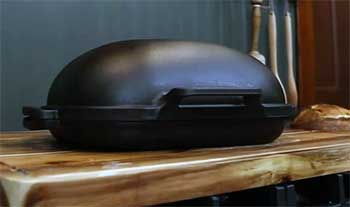
When the box arrived, I legitimately thought they had shipped me a bag of bricks.
The Challenger Bread Pan is heavy—heavier than you expect, even if you are used to cast iron.
Pulling it out of the packaging, the first thing that struck me was the sheer ruggedness of it.
It feels like a tool you would find in a blacksmith’s shop, not a Williams Sonoma. It comes pre-seasoned, black and matte, with a texture that promises non-stick capabilities if you treat it right.
My first bake was a high-hydration sourdough batard, the kind that usually spreads out like a pancake if it doesn’t get enough heat immediately. I preheated the pan for an hour at 500°F. Opening the oven and removing the lid was the first test of the handle design. The top handle is massive—easy to grab with a thick oven mitt without fearing it will slip. But the real revelation was the base.
Unlike my old Dutch oven, the Challenger base is shallow. I didn’t have to perform the “drop and pray” maneuver. I simply tipped my banneton onto the base, scored the dough comfortably without fighting high walls, and placed the heavy lid back on. The fit was tight. I could practically feel the seal locking in.
Twenty minutes later, I removed the lid to finish the bake. The “oven spring” (the rise of the bread) was shocking. The loaf stood tall, the score had opened up into a perfect ear, and the crust was already developing those tiny, bubbly blisters that scream “professional bakery.” The radiant heat from the thick cast iron had pushed the dough up before the crust set, exactly as promised.
However, moving it around is a workout. I have a standard home oven, and maneuvering 22 pounds of 500-degree iron requires focus. You cannot be casual with this pan. I also noticed that after the first few bakes, the seasoning looked a bit thirsty. It requires more active maintenance than my skillet. But the flavor and texture of the bread? Unbeatable. The bottom crust was crisp without being burnt, and the crumb was airy and light. It made me feel like a better baker than I actually am.
Also read: My Experience With Emile Henry Bread Box
Pros Of Challenger Bread Pan
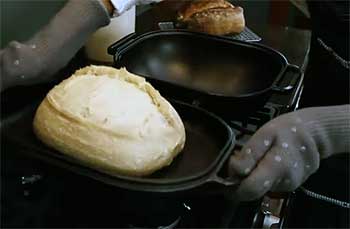
- Unmatched Steam Retention: The primary reason this pan outperforms a standard Dutch oven is the seal. The lid fits perfectly onto the base with enough weight to create a near-hermetic environment. This traps the moisture evaporating from the dough, creating a steam chamber that keeps the crust soft during the first stage of baking. This allows the bread to expand fully (maximum oven spring) before the crust hardens. You will notice a significant difference in the volume of your loaves compared to open baking or using looser lids.
- Ergonomic Handle Placement: Safety is a massive pro here. The handle on the lid is large, looped, and positioned on the very top, making it easy to lift vertically with one hand (if you are strong enough) or two hands safely. More importantly, the base has handles on the sides that are offset, allowing you to grip the pan securely even when wearing bulky silicone mitts. This design minimizes the risk of accidental burns, which is a common hazard when dealing with 500°F cast iron.
- Shallow Base for Easy Scoring: This is the feature that converts most bakers. The base is shallow, almost like a skillet. This means you have 360-degree access to your dough once it is loaded. You can score intricate designs or a simple expansion slash at the perfect angle without the walls of a pot blocking your hand or blade. It also eliminates the need for parchment paper “slings” to lower dough in, as you can gently turn the dough out directly onto the pan.
- Versatile Shape for All Loaves: Most Dutch ovens are round, forcing you to bake round boules or cramped batards. The Challenger is rectangular and spacious. It comfortably fits long batards, round boules, or even two small demi-baguettes side by side. This versatility allows you to experiment with different shaping techniques without needing to buy multiple pans. You can finally bake a loaf that yields uniform sandwich slices rather than just round center cuts.
- Superior Thermal Mass: The cast iron is incredibly thick, significantly thicker than budget cookware. This thermal mass absorbs and holds heat aggressively. When you load cold dough, the temperature of thinner pans drops rapidly. The Challenger maintains its heat, pushing energy into the dough immediately. This “kick” is what creates the dramatic rise and the open, airy crumb structure that sourdough bakers covet.
- Heirloom Durability: There are no moving parts, no enamel to chip, and no coatings to peel. It is a solid hunk of iron. If you rust it, you can fix it. If you drop it, you might break your floor, but you probably won’t break the pan. This is a product that you buy once and, with proper maintenance, pass down to your grandchildren. It is virtually indestructible in a normal kitchen environment.
Cons Of Challenger Bread Pan
- Extremely Heavy Weight: There is no getting around it—this pan weighs nearly 22 pounds (10 kg). For some users, this is a dealbreaker. Lifting it in and out of a low oven or reaching with extended arms to place it on a rack can be physically demanding and potentially dangerous if you have back issues or weak wrists. It requires a level of physical strength and coordination that lighter ceramic cloches do not.
- Premium Price Point: It is expensive. You are paying for the design and the specific manufacturing in the USA. For the price of one Challenger pan, you could buy four or five Lodge Combo Cookers. For a beginner baker who isn’t sure if they will stick with the hobby, the investment is steep. It is a luxury tool, not a necessity for edible bread, and the diminishing returns compared to a cheap pot are real if you aren’t obsessed with aesthetics.
- High Maintenance Requirements: Unlike enameled cookware (like Le Creuset), this is raw cast iron. It will rust if you look at it wrong. You cannot soak it in the sink, you cannot put it in the dishwasher, and you cannot leave it air dry. It requires a ritual of cleaning, oiling, and occasionally seasoning to keep it in top condition. If you live in a humid climate, you have to be even more vigilant about storage to prevent orange spots from forming.
- Large Storage Footprint: The pan is big and bulky. It doesn’t nest well with other pots and pans. Because of the handles and the rectangular shape, it takes up a significant amount of cabinet real estate. Many users end up storing it inside their oven, which becomes annoying when you need to use the oven for anything else and have to haul the heavy pan out first.
- Risk of Burning Bottom Crust: Because the cast iron base is so conductive and dark, it transfers heat to the bottom of the loaf very efficiently. Some bakers find that the bottom of their bread gets too dark or even burnt before the top is finished. This often requires placing a baking sheet on the rack below to deflect direct heat or learning to adjust oven positions, which adds a layer of learning curve to the process.
Also read: My Experience With Gevi Nugget Ice Maker
Maintenance Tips For Challenger Bread Pan
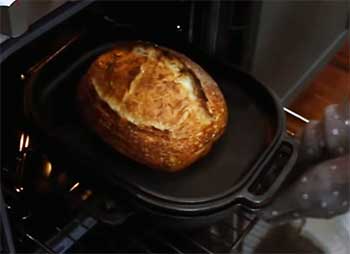
- The Immediate Dry Rule: Water is the enemy. After cleaning your pan—usually just with hot water and a stiff brush—you must dry it immediately. Do not use a towel and walk away. The best practice is to place the pan back into a still-warm oven for 10 minutes to ensure every microscopic molecule of water evaporates. If you skip this step, you will wake up to a layer of surface rust.
- Seasoning with the Right Oil: Not all oils are created equal for seasoning. You want an oil with a high smoke point that polymerizes well. Grapeseed oil is the gold standard recommended for the Challenger. Flaxseed oil can be brittle and flake off. Apply a microscopically thin layer—wipe it on, then try to wipe it all off—and bake the empty pan at 450°F for an hour. Doing this occasionally keeps the finish bulletproof and non-stick.
- The “No Soap” Philosophy: While modern dish soap is generally safe for seasoned cast iron, it is better to avoid it with the Challenger to preserve the oils. Most bread residue can be removed with hot water and a chainmail scrubber or a stiff bamboo brush. If you have stubborn burnt flour, coarse kosher salt and a paper towel work as an excellent abrasive scrub that won’t strip your seasoning.
- Storage Configuration: To prevent moisture from getting trapped and causing rust, do not store the lid clamped tightly down on the base for months at a time if you live in a humid area. Ideally, place a paper towel between the lid and base to allow airflow, or store the parts side-by-side if you have the space. Keeping it in a dry environment is key; do not store it under the sink where it might be exposed to leaking pipes or dampness.
- Dealing with Flash Rust: If you see orange spots, do not panic. The pan is not ruined. It is just surface oxidation. Scrub the rust away with steel wool until you see raw grey iron, wash it, dry it thoroughly, and then immediately re-season the area with oil and heat. Cast iron is resilient; you can almost always reset the surface with a bit of elbow grease.
Comparison with Other Brands
- Lodge Cast Iron Combo Cooker: This is the main competitor in terms of function vs. price. The Lodge is significantly cheaper, often costing under $60. It functions similarly—a shallow skillet lid and a deep pot base—allowing for the same “inverted” baking technique. However, the Lodge is round, meaning you cannot bake batards efficiently. The handles on the Lodge are small and harder to grip with heavy mitts. The Challenger wins on shape and ergonomics, but the Lodge wins hands-down on value. If you only bake round loaves, the Lodge is 90% of the performance for 20% of the price.
- Le Creuset Enameled Dutch Oven: Le Creuset is the aesthetic choice. It features an enamel coating that requires zero seasoning and is easy to clean. However, standard Dutch ovens are deep, making loading dough dangerous (burn risk). You also cannot bake inverted easily because the lids usually have plastic knobs (unless you upgrade to steel) and aren’t flat. The enamel can also crack (craze) if heated empty to 500°F repeatedly, which is standard for sourdough. The Challenger is a dedicated tool that withstands abuse better, whereas Le Creuset is a generalist pot that can bake bread but is fragile at extreme temperatures.
- Emile Henry Bread Cloche: This is a ceramic baker. It is much lighter than the Challenger, making it easier to handle for those with strength issues. It produces a great crust because ceramic mimics a brick oven environment. However, ceramic is fragile. If you drop the Emile Henry lid, it shatters. If you drop the Challenger, you break your toe. The Challenger also produces slightly better oven spring because cast iron conducts heat faster than ceramic. If weight is your main concern, choose Emile Henry. If performance and durability are key, choose Challenger.
- The Baking Steel: This is a completely different method. The Baking Steel is a heavy steel plate that you slide dough onto, covering it with a metal bowl to trap steam. This setup can produce great results and the steel is unbreakable. However, finding a bowl big enough to cover a batard is difficult. The Challenger is an “all-in-one” vessel. The Baking Steel is better for pizza, but the Challenger is the superior standalone solution for bread because of the integrated steam capture.
Frequently Asked Questions (FAQ)
Among professional and serious home bakers, the Challenger Bread Pan consistently holds the highest ratings for performance and specific sourdough features. For budget-conscious bakers, the Lodge Combo Cooker is the highest-rated value option.
Challenger Breadware is widely considered the best brand specifically for sourdough due to its shape and steam retention capabilities. However, Lodge is the best entry-level brand, and Le Creuset is the best premium brand for general purpose cooking that includes bread.
Cast iron (like the Challenger) and ceramic/clay (like Emile Henry) are considered the healthiest materials. They are natural, non-toxic, and free from synthetic non-stick coatings (like Teflon/PTFE) that can degrade at high baking temperatures.
Professional bakers who bake at home almost universally recommend cast iron vessels. They often endorse the Challenger Bread Pan for its ability to mimic the steam injection of a commercial deck oven. However, many also recommend a simple Dutch Oven as a perfectly adequate starting point for anyone not yet ready to invest heavily.
Conclusion
In conclusion, the Challenger Bread Pan is an investment in your baking craft. It is undeniably heavy and expensive, but it delivers professional-quality results that are hard to replicate with standard cookware. If you are committed to the art of sourdough and want the best possible oven spring and crust, this pan is the ultimate tool.