
We all know that feeling of desperation when your beloved dog turns their nose up at yet another expensive bowl of premium kibble. You find yourself standing in the pet food aisle, eyeing those familiar little trays of Cesar Dog Food, wondering if the convenience and rumored taste are too good to be true. It is a brand that has dominated the shelves for decades, promising gourmet experiences for our canine companions, specifically targeting the small breeds that rule our households.
In this comprehensive review, I am going to peel back the foil lid and take a hard look at what is really inside these popular meals. I will analyze the ingredient quality, the nutritional value, and whether the convenience justifies the cost and environmental impact. My goal is to help you decide if Cesar is a harmless indulgence for your picky eater or a dietary staple that requires a second thought.
My Experience With Cesar Dog Food
I first crossed paths with Cesar Dog Food when I adopted Barnaby, a rescue Chihuahua mix with an attitude much bigger than his five-pound frame. Barnaby was, to put it mildly, a culinary critic. I had spent a small fortune on high-end, freeze-dried raw diets and organic kibble, only to be met with a disdainful sniff and a hunger strike that would last for days. I was worried about his weight and energy levels, and my vet simply told me, “The best food is the one he will actually eat.”
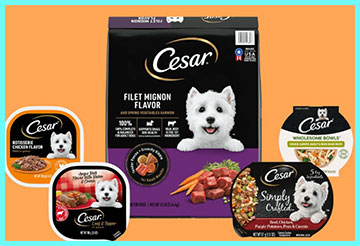
One evening, out of sheer exhaustion and a need to see him eat something, I picked up a variety pack of Cesar Classics at the local grocery store.
The packaging was distinct—those little square trays with the Westie on the front that everyone recognizes.
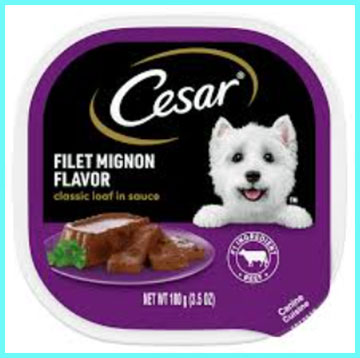
I peeled back the “Filet Mignon Flavor” lid, and the smell was immediate.
It wasn’t the overpowering, chemical smell I expected from a mass-market brand; it actually smelled savory, like a simplified version of human stew.
I scooped a small amount into his bowl, and for the first time in weeks, Barnaby didn’t hesitate. He dove in. The texture was a soft pâté (they call it a “loaf”), which seemed easy for his tiny teeth to manage. He licked the bowl clean and looked up at me with an expression that clearly said, “Finally, you get it.” It was a massive relief to see him eating with gusto, and his energy levels perked up almost immediately over the next few days.
However, as we settled into a routine, I started noticing the logistics of feeding a dog exclusively on trays. The cost started to add up surprisingly fast. While a single tray is cheap, Barnaby needed about three to four a day to maintain his weight, which made it more expensive than a bag of premium dry food. I also found myself taking out the recycling bin much more often, filled with stacks of empty plastic containers and foil lids.
Physically, Barnaby seemed fine, but I did notice his stool was softer and more fragrant than when he was on the dry kibble, likely due to the higher moisture and fat content. I eventually decided to use Cesar as a topper rather than a complete meal, mixing half a tray with high-quality kibble. This compromise kept him eating, saved me money, and hopefully balanced out the nutrition. It wasn’t the perfect “health food” solution I had originally envisioned, but it solved the immediate problem of a picky eater effectively.
Read More: My Thoughts on BIXBI Dog Food
Pros Of Cesar Dog Food
When evaluating Cesar against the vast landscape of dog food options, there are undeniable benefits that keep pet owners coming back year after year. Here are the specific advantages that make this brand a strong contender, especially for small dog owners.
- Exceptional Palatability For Picky Eaters: The single biggest selling point of Cesar is that dogs absolutely love the taste.The brand has mastered the art of flavoring, using animal liver and savory broths to create an aroma that triggers a dog’s appetite instantly.For owners of small breeds like Yorkies, Malteses, or Chihuahuas who are notorious for being fussy, this palatability is a lifesaver.It can be incredibly stressful when a small dog refuses to eat because they are prone to hypoglycemia (low blood sugar), so having a “sure thing” food that guarantees they will eat is a massive medical and psychological benefit.The high moisture content and strong scent mimic fresh meat more closely than dry kibble, making it irresistible even to senior dogs whose sense of smell might be fading.
- Convenient Portion Control For Small Breeds: The packaging is specifically designed with the metabolism of small dogs in mind.Each 3.5-ounce tray represents a manageable calorie count, usually between 80 to 100 calories, which makes calculating daily intake very simple.You do not need measuring cups or scales; you simply count the trays based on your dog’s weight.This eliminates the risk of overfeeding, which is a huge problem in small breeds where even half a pound of weight gain can stress their joints.The single-serve nature means you are opening a fresh meal every time, rather than letting a large can sit in the fridge and go stale, ensuring your dog gets the best taste and texture at every meal.
- Wide Variety Of Textures And Flavors: Cesar offers an impressive range of recipes that prevents mealtime boredom.You are not stuck with just “Chicken” or “Beef”; they have “Filet Mignon,” “Porterhouse Steak,” “Duck,” “Lamb,” and various vegetable blends.They also offer different textures, including the classic Loaf (pâté), Filets in Gravy, and the newer “Wholesome Bowls” which feature visible real veggies and shredded meat.This variety allows you to rotate flavors daily, keeping your dog interested in their food without having to switch brands and risk digestive upset.If your dog decides they hate chicken this week, you can easily switch to beef or turkey without leaving the Cesar ecosystem.
- High Moisture Content Promotes Hydration: Many small dogs do not drink enough water on their own, which can lead to urinary tract issues and kidney stress.Wet food like Cesar is approximately 78% to 82% water, providing a significant portion of your dog’s daily hydration needs through their food.This “hidden” water intake helps flush out the urinary system and keeps the kidneys functioning well.It is particularly beneficial for dogs who eat dry kibble as their main diet; adding a Cesar tray as a topper adds a necessary hydration boost.In hot climates or for active dogs, this extra moisture can be the difference between dehydration and a healthy, happy pup.
Cons Of Cesar Dog Food
While the dogs may vote “yes” with their tails, a critical look at the nutritional profile and economic factors reveals some significant downsides. You need to weigh these negatives carefully against the convenience.
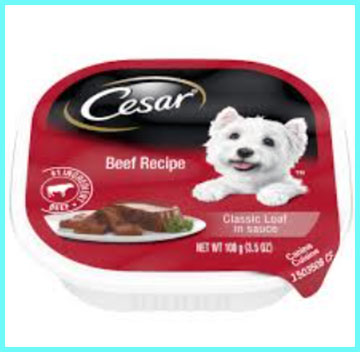
- Questionable Ingredient Quality In Some Lines: The primary criticism from nutritionists regarding Cesar is the use of non-specific meat ingredients.Many of their classic recipes list generic terms like “meat by-products,” “poultry by-products,” or “animal liver” rather than specifying the animal source.While by-products (organs) can be nutritious, the lack of transparency means you don’t always know exactly what animal your dog is eating, which is a nightmare for dogs with specific protein allergies.Furthermore, some recipes contain added colors and preservatives like sodium nitrite, which are used to make the food look pink and appetizing to humans but offer no nutritional value to the dog.High-quality brands typically avoid these artificial additives in favor of natural preservatives.
- High Cost Per Pound Compared To Kibble: When you break down the price, feeding a dog exclusively on Cesar trays is surprisingly expensive.While a single tray might cost roughly $1.00 to $1.50, you are paying mostly for water and packaging.If you have a 15-pound dog, you might need 3 to 4 trays a day, bringing your daily cost to $4.00 or more, which adds up to over $120 a month.Compare this to a premium bag of dry food that might cost $60 but lasts for two months.You are paying a premium for the convenience of the single-serve tray and the branding.For households with multiple dogs or larger breeds, this cost model is completely unsustainable.
- Significant Environmental Waste: The single-serve packaging model generates a tremendous amount of plastic and foil waste.Every single meal results in a plastic tray and a foil lid that need to be disposed of.While the trays are technically recyclable in some areas (usually #7 plastic), many curbside recycling programs do not accept them, meaning they end up in landfills.Over the course of a dog’s life, this accumulates to thousands of plastic containers.Compared to a large steel can that is easily recycled or a large kibble bag, the environmental footprint of Cesar is very high.Eco-conscious owners often find this aspect of the brand difficult to reconcile.
- Low Caloric Density Requires High Volume: Because the food is mostly water, it is not very energy-dense.You have to feed a relatively large volume of food to meet your dog’s caloric requirements.For a dog with a high metabolism or a larger small breed (like a Pug or Frenchie), eating 4 or 5 trays a day can be physically filling but might leave them hungry sooner as the water passes through their system.This can lead to more frequent bathroom trips and softer stools.It also means that if you are trying to put weight on a skinny dog, Cesar might not be the most efficient way to do it compared to a calorie-dense dry food or a high-performance wet food.
Maintenance Tips For Cesar Dog Food
Managing a wet food diet requires a bit more attention to detail than simply pouring kibble into a bowl. To ensure your dog stays healthy and you don’t waste money on spoiled food, follow these maintenance and handling tips.
- Strict Storage Of Opened Trays: Wet food spoils rapidly once the seal is broken and it is exposed to air and bacteria.If you do not use a full tray in one sitting, you must refrigerate the leftovers immediately.Do not leave the tray sitting out on the counter for more than 20 minutes, as bacteria can multiply quickly at room temperature.You should cover the open tray with a reusable silicone lid, plastic wrap, or transfer the food to a sealed glass container.Use the refrigerated leftovers within 2 to 3 days maximum; if it has been in the fridge longer than that, throw it out to risk digestive upset.
- Transitioning To Prevent Stomach Upset: Because Cesar is rich and savory, switching to it cold turkey can cause diarrhea or vomiting.You need to introduce this food slowly, especially if your dog has been eating dry kibble.Start by mixing just a spoonful of Cesar (about 25% of the meal) with their old food for the first two or three days.If their stool remains firm, increase the ratio to 50/50 for the next few days, and then gradually work your way up to a full meal.This slow transition allows their gut bacteria to adapt to the new fat and protein levels.Patience here saves you from cleaning up messy accidents on your carpet later.
- Dental Hygiene Awareness: One of the biggest downsides of an all-wet food diet is that it provides no abrasion to clean your dog’s teeth.The soft pâté can stick to the gumline and accelerate the buildup of tartar and plaque, leading to dental disease.If you feed Cesar exclusively, you must be hyper-vigilant about brushing your dog’s teeth daily or providing dental chews.Alternatively, mixing the wet food with some crunchy kibble can help provide some mechanical scraping action.Do not assume that just because they are eating “soft food” that their teeth are fine; in fact, they need more dental care than kibble-fed dogs.
- Checking For Batch Codes And Recalls: Although recalls are rare, they do happen with mass-produced food.You should get in the habit of keeping the outer cardboard sleeve of the multi-packs until you have finished all the trays.This sleeve usually contains the batch code and expiration date for the whole lot.If you throw this away and just keep the loose trays, it is harder to check if your specific food is affected in the event of a safety recall.You can also sign up for email alerts from the FDA or pet food watchdog sites to stay informed about any issues with the brand.
Comparison with Other Brands
Cesar occupies a specific niche—the “grocery store premium” wet food. To understand its true value, we need to compare it to its peers in the market. Here is how it stacks up against three major competitors.
- Pedigree Choice Cuts/Ground Dinner: This is arguably the closest direct competitor, often found right next to Cesar on the shelf and owned by the same parent company (Mars Petcare).Comparison: Pedigree is generally the budget option.It comes in larger cans (13.2 oz) or pouches, which makes it significantly cheaper per ounce than Cesar.However, the ingredient quality in Pedigree is often perceived as slightly lower, with more reliance on corn and fillers even in their wet food.Cesar is positioned as a “gourmet” option for small dogs, whereas Pedigree is the “everyday” food for all dogs.If you have a large dog, Pedigree is the economically viable choice.If you have a picky small dog who demands flavor, Cesar usually wins the taste test because of its specific formulation for palatability.Essentially, Cesar is the “steak dinner” to Pedigree’s “hamburger helper.”
- Blue Buffalo Divine Delights: Blue Buffalo targets the “natural” shopper who wants to avoid by-products but likes the tray format.Comparison: Blue Buffalo Divine Delights are packaged almost identically to Cesar trays (3.5 oz).The main difference is the ingredient list: Blue Buffalo strictly promises no chicken (or poultry) by-product meals, no corn, wheat, or soy, and no artificial flavors or preservatives.You are paying for this transparency; Blue Buffalo trays are typically 30% to 50% more expensive than Cesar.If your dog has a specific sensitivity to grain or you are morally opposed to by-products, Blue Buffalo is the superior choice.However, some owners find that Cesar is actually more palatable; if the dog won’t eat the healthy Blue Buffalo, the ingredients don’t matter.Cesar wins on taste and price; Blue Buffalo wins on ingredient safety and transparency.
- Freshpet Select (Refrigerated Rolls): Freshpet represents the new wave of “fresh” dog food found in the grocery store fridge aisle.Comparison: Freshpet is a pasteurized, fresh product that must be kept refrigerated at all times, even before opening.It is generally considered much healthier than shelf-stable trays because it is less processed and uses whole meats and veggies you can actually see.However, the convenience factor is lower; you have to slice and dice the roll yourself, and it has a very short shelf life (7 days) once opened.Cesar is shelf-stable, meaning you can store it in a pantry for months, making it far better for travel or emergency stashes.Freshpet is also more expensive per serving.If health is your top priority and you don’t mind the prep work, Freshpet is better.If you need “grab-and-go” convenience and long shelf life, Cesar is the clear winner.
Read More: My Thoughts on Health Extension Dog Food
Frequently Asked Questions (FAQ)
Yes, but you must choose the specific “Puppy” recipe.
Cesar makes a specific “Puppy Chicken & Beef” formula that is fortified with extra vitamins and DHA for brain development.
You should not feed the standard adult Cesar loaves to a puppy long-term because they may lack the higher protein and fat levels growing dogs need.
Always check the label to ensure it says “formulated for growth” or “all life stages.”
The general rule of thumb is approximately 1 tray for every 3 to 4 pounds of body weight per day, split into two meals.
For a 10-pound dog, this means roughly 3 trays a day.
However, this varies wildly based on your dog’s activity level and age.
It is best to start with the recommendation on the package and monitor your dog’s weight; if they start looking chunky, cut back by half a tray.
Absolutely, and this is actually the most recommended way to use the product.
Using Cesar as a “topper” encourages picky dogs to eat their kibble while keeping costs down and providing some dental benefits from the crunch of the dry food.
Just remember to reduce the amount of dry food you give them so you aren’t doubling their calories; think of it as a substitution, not an addition.
It can if introduced too quickly or if your dog is sensitive to rich foods.
Cesar is relatively high in fat and moisture, which can loosen the stool of a dog used to dry, fibrous kibble.
If diarrhea persists for more than two days after transitioning, stop feeding it and consult your vet, as your dog might have an intolerance to a specific ingredient like beef or chicken by-products.
Conclusion
Cesar Dog Food is a polarized product: dogs universally adore it, while nutrition purists often critique it. The reality lies somewhere in the middle. It is not a biologically appropriate raw diet or a high-end holistic feast, but it is a safe, complete, and balanced meal that has saved countless owners from the stress of a hunger-striking pet. Its value lies in its supreme palatability and convenience for small breed lifestyles.
If you have a healthy small dog who refuses to eat anything else, Cesar is a perfectly acceptable choice that will keep them fed and happy. However, if your budget allows, using it as a topper for a higher-quality kibble offers the best of both worlds: the flavor they crave with the nutrition they need. Ultimately, the “best” food is the one your dog eats with joy and that keeps them in good health, and for millions of dogs, that food is Cesar.