
There is a specific kind of panic that sets in when you turn your car key on a freezing morning and hear nothing but a pathetic, clicking silence. Your battery is dead, you are late for work, and you suddenly realize you are at the mercy of a tow truck or a neighbor with jumper cables. In that moment, a reliable battery charger isn’t just a tool; it is a lifeline. You have likely seen the Cen Tech battery charger sitting on the shelves at Harbor Freight or popping up in budget-friendly tool discussions online. The price tag is undeniably attractive compared to the big-name brands, but is it a reliable piece of equipment or just a cheap plastic box that will fail when you need it most?
In this review, I am going to walk you through the reality of owning a Cen Tech charger, specifically focusing on the popular 2/10/50 Amp 12V model that promises to not only charge your battery but jump-start your car. I will break down the build quality, the actual charging performance, and how it compares to the industry giants. For those looking to buy, you will primarily find this unit at Harbor Freight physical stores or their website, though you can sometimes find resellers on Amazon or eBay if you don’t have a store nearby. By the end of this article, you will know if this budget beast is a smart addition to your garage or a waste of space.
My Experience With Cen Tech Battery Charger
I bought my Cen Tech battery charger out of pure necessity during a particularly brutal winter cold snap. My truck had been sitting for three days, and the battery had completely surrendered to the frost. I didn’t want to wait for AAA, and I didn’t want to spend $150 on a professional-grade Schumacher unit at the auto parts store. I drove to Harbor Freight, grabbed the Cen Tech 2/10/50 Amp charger, and hoped for the best.
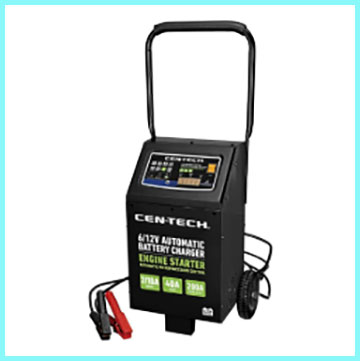
The unboxing experience was exactly what you expect from a budget tool brand.
The box was simple, and the unit itself felt surprisingly substantial—it wasn’t the heavy steel of the chargers my grandfather used, but it had a decent heft to it.
The cables, however, were the first thing that gave me pause.
They felt a bit stiff and plasticky, likely due to the cold, but the copper-plated clamps had a strong spring action that inspired some confidence.
I hooked it up to my truck, connecting the red clamp to the positive terminal and the black to the chassis ground.
The interface on this charger is refreshingly old-school; there are no touchscreens or complex menus to navigate. You simply have a switch to select your amperage—2 amps for a slow trickle, 10 amps for a fast charge, or 50 amps for an immediate engine start assist. I set it to the 10-amp setting first to get some surface charge into the battery.
The first thing you will notice when you flip the power switch is the sound. This thing is not whisper-quiet. The cooling fan kicked on immediately with a distinct hum that let me know it was working, but it was definitely audible over the wind. I watched the analog gauge needle swing up, indicating that current was flowing. There is something satisfying about a physical needle moving rather than just a digital number blinking; it gives you a visual representation of the work being done.
After about twenty minutes of charging at 10 amps, I decided to test the “Engine Start” feature. I switched the mode to 50 amps, which is designed to deliver a high-current jolt to help the starter motor turn over. I hopped in the driver’s seat, turned the key, and the truck roared to life almost instantly. It didn’t struggle or hesitate. The charger delivered exactly what it promised: enough raw power to overcome the cold and the dead cells.
However, the experience wasn’t entirely perfect. I noticed that the cables are quite short, roughly six feet, which meant I had to run an extension cord to the charger itself to get it close enough to the engine bay. Additionally, the unit got quite warm during the process. While it never overheated to the point of shutting down, the thermal protection is something you have to be mindful of. It’s a tool that gets the job done with zero frills, and for the price I paid, I felt like I had gotten away with a steal. It has since lived in my garage for two years, reviving lawn mower batteries and neighbors’ sedans with the same consistent, loud, effective performance.
Read More: My Thoughts On Powerextra Hero 11 Battery Charger
Pros Of Cen Tech Battery Charger
When you are shopping in the budget aisle, you are usually looking for value above all else. The Cen Tech charger delivers this in spades, but it also has a few functional benefits that make it a legitimate competitor to more expensive units. Here are the specific advantages that make this charger a smart buy.
- Unbeatable Price-to-Performance Ratio: The most significant advantage of the Cen Tech line is simply the cost. You can typically pick up this charger for significantly less than a comparable unit from a major brand like DieHard or Schumacher. For the price of a basic trickle charger elsewhere, Cen Tech gives you a multi-mode unit with 50-amp starting capability. This makes it accessible for the average homeowner who might only need a charger once or twice a year and doesn’t want to tie up hundreds of dollars in a tool that gathers dust. The return on investment is immediate the first time you save yourself a towing fee.
- Versatile Three-Stage Functionality: Despite being a budget unit, it offers three distinct amperage settings that cover almost every automotive need. The 2-Amp setting is perfect for slow, deep cycle charging or maintaining a battery on a motorcycle or lawn tractor over the winter without boiling the electrolyte. The 10-Amp setting is your standard “fast charge” for a car battery that has been drained by leaving the headlights on, getting you back to full charge in a few hours. The 50-Amp Engine Start is the emergency feature that bridges the gap between a charger and a jump starter, giving you immediate cranking power when you don’t have time to wait.
- Simple, Idiot-Proof Interface: In an age of smart devices that require firmware updates and Bluetooth pairing, the Cen Tech charger is refreshing in its simplicity. It utilizes physical rocker switches and a clear analog meter (or simple LED lights on newer models) to communicate what it is doing. You don’t need to read a 50-page manual to figure out how to turn it on; you connect the clamps and flip the switch. This simplicity reduces the failure points; there are fewer complicated circuit boards to fry or software glitches to encounter. For someone who isn’t tech-savvy, this “plug and play” nature is a massive pro.
- Safety Features Included: Even though it is cheap, it doesn’t completely skimp on safety protections. The unit comes with built-in Reverse Polarity Protection, meaning if you accidentally hook the red clamp to the negative terminal, the machine will alert you (usually with a light) and won’t send power, preventing sparks or battery explosion. It also includes thermal overload protection, which shuts the unit down if it gets too hot during a high-amperage start cycle. These features provide peace of mind, especially for novice users who might be nervous about working with vehicle electricity.
Cons Of Cen Tech Battery Charger
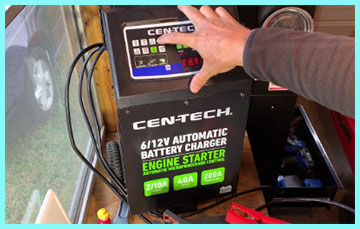
While the value is high, you are definitely making sacrifices in build quality and refinement to get that low price. It is important to know the limitations so you aren’t disappointed when you open the box. Here are the drawbacks that might make you reconsider.
- Short and Stiff Cables: The most common complaint from almost every user, including myself, is the length and quality of the cables. The DC cables that connect to the battery and the AC power cord are frustratingly short, often totaling only about six feet of reach. This means you almost always need an extension cord to reach your vehicle unless you park directly next to a wall outlet. Furthermore, the insulation on the cables is plastic-heavy rather than rubber, which means in freezing temperatures—exactly when you need a charger most—they become stiff and difficult to uncoil or maneuver.
- Loud Cooling Fan Operation: This is not a silent device that you can leave running unnoticed in a corner. The internal cooling fan kicks on the moment the charger is under load, and it is loud enough to be heard through a closed garage door. While the fan is necessary to keep the cheap transformer cool, the noise can be grating if you are working in the garage while the battery charges. It creates a perception of “cheapness” compared to higher-end units that use passive cooling or silent, high-quality fans.
- Analog Meter Accuracy Issues: If you buy the model with the analog needle gauge, do not expect laboratory-grade precision. The gauge gives you a general idea of the charge rate (e.g., “it is charging” or “it is done”), but it can be difficult to read the exact amperage or voltage. The needle often bounces or sticks, requiring a tap on the plastic lens to settle. For users who need to know the exact state of health of their battery down to the decimal point, this lack of precision is frustrating and forces you to use a separate multimeter.
- Durability of the Plastic Casing: Unlike the old steel-box chargers of the 1980s, the modern Cen Tech units are encased in hard plastic. While this makes them lighter and resistant to rust, it also makes them vulnerable to impact damage. If you drop this charger on a concrete garage floor, there is a high chance the casing will crack or the internal mounts for the heavy transformer will snap. The handle, often molded into the plastic, can feel flimsy when carrying the unit, making it feel less like a “forever tool” and more like a disposable appliance.
Maintenance Tips For Cen Tech Battery Charger
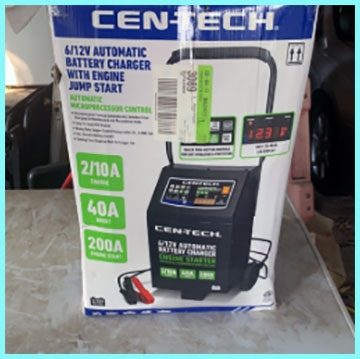
Since this is a budget tool, it doesn’t have the rugged over-engineering of professional gear, which means you need to take care of it to keep it running. Here are the essential maintenance steps to ensure your Cen Tech charger lasts more than one season.
- Clean the Clamps Regularly: The copper plating on the clamps is the critical contact point for transferring electricity, and it is prone to corrosion. After every use, especially if you have been charging an older, leaky battery, wipe down the clamps with a mixture of baking soda and water to neutralize any acid. Use a wire brush to scrub off any white or green oxidation buildup on the teeth of the clamps. Corroded clamps increase resistance, which causes heat buildup and prevents the charger from delivering its full amperage to the battery. Dry them thoroughly before storage to prevent rust.
- Inspect and Clear Air Vents: The internal transformer generates a significant amount of heat, and the cooling fan is the only thing preventing meltdown. You must inspect the air vents on the side and back of the casing regularly to ensure they aren’t blocked by dust, spiderwebs, or garage debris. If you use the charger in a dusty environment like a woodshop, use compressed air to blow out the internals through the vents occasionally. If the fan gets clogged and stops spinning, the thermal protection will trip constantly, rendering the charger useless until it cools down.
- Proper Cable Storage: Because the cables are stiff and the plastic insulation is prone to cracking, how you store them matters. Do not wrap the cables tightly around the body of the charger, as this creates stress points where the wire enters the housing, leading to internal breaks. Instead, loop them loosely and use a velcro strap to keep them organized. Avoid stepping on the cables or rolling the charger wheels over them, as this can crush the internal copper strands and create a fire hazard or a “dead” charger.
- Check the Internal Fuse: If your charger suddenly stops working and the lights won’t turn on, it might just be a blown fuse rather than a dead unit. Some Cen Tech models have an accessible external fuse, while others might require opening the case (which voids the warranty, so be careful). Always check the manual for the location of the fuse and keep a spare of the correct amperage rating on hand. Often, a surge from a bad battery or a reverse connection can pop this fuse to save the machine; replacing it is a $0.50 fix for a “broken” charger.
Comparison with Other Brands
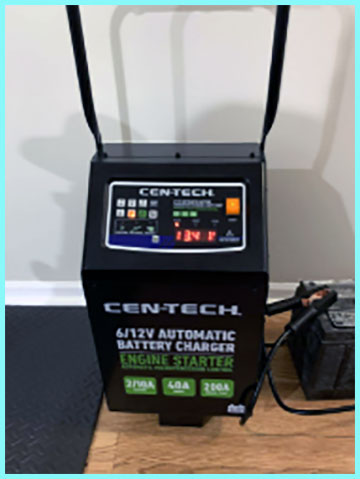
To understand if Cen Tech is the right choice, you have to look at what you are giving up compared to the more established brands. Here is how it stacks up against the competition.
- Schumacher SC1280: Schumacher is the household name in battery charging, often found at Walmart or auto parts stores. Comparison: The Schumacher SC1280 is a “smart” charger with a fully digital display that tells you voltage, charge percentage, and more. Schumacher units typically feature a desulfation mode, which pulses electricity to clean the battery plates, a feature most basic Cen Techs lack. However, the Schumacher is often 2x the price of the Cen Tech. The build quality on the Schumacher is slightly better with more flexible cables, but if you just need raw amperage for cheap, Cen Tech wins on value. Schumacher is better for the user who wants “set it and forget it” confidence with advanced diagnostics.
- NOCO Genius (GENIUS10): NOCO represents the modern evolution of chargers: compact, lightweight, and incredibly safe. Comparison: The NOCO Genius is a fraction of the size of the bulky Cen Tech; you can hold it in the palm of your hand. NOCO uses advanced software to monitor the battery and adjust the charge curve perfectly, making it much safer for sensitive AGM or Lithium batteries. However, the standard NOCO Genius chargers (like the Genius 5 or 10) do not have an “Engine Start” feature; they are purely for charging and maintenance. If you have a dead battery right now and need to leave in 5 minutes, the Cen Tech’s 50A start mode is superior. If you want a safe maintainer to leave plugged in for months, NOCO is vastly superior to Cen Tech.
- Battery Tender Plus: This brand is synonymous with “maintenance” rather than “charging.” Comparison: The Battery Tender Plus is designed specifically to be left on a vehicle for long periods (classic cars, motorcycles) without overcharging. It charges at a very low amperage (usually 1.25A) and is extremely gentle on the battery. Cen Tech is a brute force tool compared to the Battery Tender’s finesse. You would never buy a Battery Tender to jump-start a car; it would take days to recharge a dead battery. Conversely, you might hesitate to leave a cheap Cen Tech plugged into a vintage Ferrari for the winter due to trust issues. Buy Cen Tech for emergencies; buy Battery Tender for storage.
Also Read: My Thoughts On Mighty Mount Wireless Car Charger
Frequently Asked Questions (FAQ)
If you are using the analog model, the needle on the ammeter will gradually drop toward zero as the battery charges. When the needle is resting in the green area or near zero, the battery is fully charged. On the automatic or digital models, a solid green LED light usually illuminates to indicate the charge cycle is complete and it has entered maintenance mode.
A flashing red light typically indicates a connection error or a battery fault. The most common cause is “Reverse Polarity,” meaning you have connected the red clamp to the negative post and the black clamp to the positive post. It can also indicate that the battery is too deeply discharged (below a certain voltage) for the charger to recognize, or that the battery has bad cells and cannot accept a charge.
Yes, most modern Cen-Tech 12V chargers are compatible with AGM (Absorbed Glass Mat) and standard flooded lead-acid batteries. However, you should avoid using the high-amperage “Engine Start” mode repeatedly on AGM batteries if possible, as they can be sensitive to heat. Always check the specific label on your charger unit; if it says “Do Not Use With Gel/AGM,” believe it, but the standard 2/10/50A model is generally safe for AGM.
The Engine Start feature is not instant; you cannot just hook it up and turn the key immediately. You should first charge the battery on the 10-amp setting for 10-15 minutes to put some surface charge into the battery. Then, switch the unit to the “50A Engine Start” mode, wait another minute or two, and then attempt to start the car. Crank the engine for no more than 5 seconds; if it doesn’t start, wait 3 minutes for the charger to cool down before trying again to prevent tripping the thermal breaker.
Conclusion
The Cen Tech Battery Charger is the definition of a “utilitarian hero.” It isn’t pretty, it isn’t quiet, and it certainly isn’t the most advanced piece of technology you can buy. However, for the price you pay at Harbor Freight, it offers an incredible amount of capability that can save you from a stranded vehicle in the middle of winter. The combination of trickle charging, fast charging, and the critical engine start function makes it a versatile all-in-one tool for the average car owner.
If you are a professional mechanic or a tech enthusiast who demands precise data and desulfation algorithms, you should look at brands like NOCO or Schumacher. But for the regular person who just wants a reliable, inexpensive box to keep in the garage for those “oh no” moments, the Cen Tech is absolutely worth the investment. It pays for itself the very first time you don’t have to call a tow truck.