
I’ve spent the last couple of winters battling dry air in my home, waking up with scratchy throats, flaky skin, and that constant static shock feeling. After trying a few different humidifiers, I landed on two standout options: the Canopy Bedside Humidifier and various models from Levoit, especially the popular LV600S hybrid ultrasonic one. My goal here is to help you figure out which might suit your needs better by sharing what I’ve learned through hands-on use and research.
A Brief Comparison Table Canopy Vs Levoit
| Feature | Canopy Bedside Humidifier | Levoit (e.g., LV600S) |
| Type | Evaporative (no visible mist) | Ultrasonic (visible mist, warm/cool options) |
| Room Size | Small to medium (up to 500 sq ft) | Medium to large (up to 753 sq ft) |
| Tank Capacity | 2.5L | 6L |
| Run Time | Up to 36 hours | Up to 50-60 hours |
| Noise Level | Fan noise (white noise-like, noticeable on high) | Very quiet |
| Maintenance | Dishwasher-safe parts, replace filter every 6 weeks | Weekly cleaning, no filter replacement needed often |
| Special Features | UV light anti-mold, aromatherapy puck, runs dry to prevent mold | Smart app control, auto mode, essential oil tray |
| Price Range | Higher (premium) | More affordable |
| Best For | Cleanliness-focused, bedrooms | Powerful humidification, larger spaces |
My Experience With Canopy
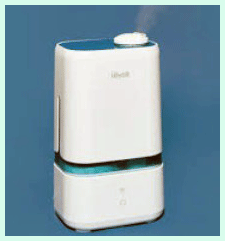
I first got the Canopy because I was tired of humidifiers that left wet spots on my nightstand or grew mold no matter how often I cleaned them.
From the moment I unboxed it, the design stood out—sleek, modern, and it actually looks good sitting out.
What surprised me most was how it works without any visible mist. It pulls air through a wet filter and blows out humidified air, so my floors and furniture stay dry.
That UV light treatment in the water path gave me peace of mind about bacteria, and running it dry automatically really does help prevent that stagnant water smell.
At night, the fan provides a gentle hum that I find soothing, like soft white noise. Adding drops to the aroma puck turns my bedroom into a relaxing space with subtle scents.
My skin felt noticeably less tight in the mornings, and I stopped waking up congested as often.
That said, it took a few nights to get used to the fan sound on higher settings, and I noticed it didn’t raise humidity as dramatically in my larger living room as I hoped. Overall, though, it’s become a staple on my bedside table.
Pros Of Canopy
- No mist output: I love that it disperses humidity invisibly, so no wet surfaces or white dust from minerals—perfect for wooden furniture or if you worry about over-humidifying.
- Anti-mold technology: The UV lights and run-dry feature mean I’ve never seen mold growth, even after months of daily use in winter.
- Easy cleaning: Most parts go straight into the dishwasher, and the wide openings make wiping simple—no tiny crevices to scrub.
- Aromatherapy built-in: The puck system is clean and effective; scents diffuse gently without overwhelming the room.
- Tap water friendly: No need for distilled water, as the filter catches impurities before evaporation.
- Stylish design: It blends into decor better than bulky plastic units.
- Healthier air feel: Evaporative style naturally limits output to avoid excessive humidity, which feels safer for long-term use.
Also read: Comparison of Merach And Yosuda Rowing Machine
Cons Of Canopy
- Limited power: It struggles in very dry or large spaces; my hygrometer sometimes showed only modest increases compared to other units.
- Fan noise: On medium or high, the blower is audible—not disruptive for me, but light sleepers might prefer total silence.
- Filter replacements: You need new ones every 4-6 weeks, adding ongoing cost through subscription or individual purchases.
- No smart controls: No app or remote; adjustments mean getting up to touch the unit.
- Higher upfront cost: It’s a splurge compared to budget options.
- Smaller tank: Refills are more frequent if running on high.
- No warm mist: Cool only, which is fine year-round but misses that cozy steam in deep winter.
Maintenance Tips For Canopy
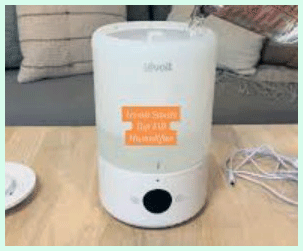
- Run it dry daily: Let the unit continue running after the tank empties—it dries the filter and prevents moisture buildup.
- Dishwasher weekly: Pop the tank, tray, and other water-touching parts in the top rack for effortless deep cleaning.
- Wipe sensors: Gently clean the metal water-level probes with a damp cloth if mineral buildup appears from hard tap water.
- Replace filter regularly: Check for stiffness or discoloration; swap every 5-7 weeks to maintain optimal output.
- Use canned air for fan: Occasionally blow out dust from the intake grill to keep airflow strong.
- Store properly offseason: Clean thoroughly and let air dry completely before packing away.
- Avoid direct sunlight: Prevents algae growth in the tank.
Comparison With Other Brands
- Versus Honeywell: Canopy’s evaporative style beats Honeywell’s in mold resistance and no-mist design, while Honeywell often feels more powerful but requires more scrubbing.
- Versus Vornado: Both evaporative, but Canopy wins on aesthetics and dishwasher convenience; Vornado edges out on larger room coverage and quieter operation.
- Versus Dreo: Dreo offers similar smart features to Levoit at lower prices, but Canopy stands out for hygiene-focused tech like UV treatment.
- Versus Carepod: Carepod emphasizes easy cleaning too, but Canopy adds aroma and runs-dry prevention without the higher price tag.
- Versus basic Amazon brands: Canopy justifies the premium with better build quality and fewer health risks compared to cheap ultrasonics that spread minerals.
- Versus AirCare console units: For whole-home needs, AirCare dominates, but Canopy excels as a portable, bedroom-specific option.
- Versus Honeywell Designer series: More stylish like Canopy, but often louder and less innovative in anti-microbial features.
My Experience With Levoit
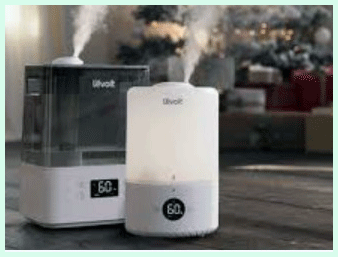
Switching to a Levoit LV600S felt like upgrading to a powerhouse.
The larger tank meant days without refilling, and the visible mist output quickly transformed my dry apartment.
I especially appreciated the warm mist option during cold snaps—it added a comforting steam that eased my sinuses better than cool mist alone.
The app control let me adjust from my phone, and auto mode kept humidity steady without guesswork.
It’s whisper-quiet, even on high, making it ideal for uninterrupted sleep. In larger rooms, it raised humidity faster and higher than the Canopy, and the essential oil tray scented the air nicely.
On the downside, cleaning took more effort to avoid pink mold in the base, and using tap water sometimes left faint white dust. Still, for sheer performance and value, it’s hard to beat.
Read more: Comparison of Force Of Select Midea And hOmeLabs Dehumidifier
Pros Of Levoit
- Powerful output: Quickly humidifies large areas with strong mist, ideal for whole rooms or open spaces.
- Warm and cool mist: Versatility for any season—warm for congestion relief, cool for summer comfort.
- Long run time: Big tank lasts 50+ hours on low, reducing refills.
- Smart features: App, voice control, schedules, and humidity sensor make it hands-off.
- Quiet operation: Near-silent, perfect for bedrooms or offices.
- Aromatherapy tray: Easy to add oils for scented mist.
- Auto shut-off and sensor: Maintains ideal levels without over-humidifying.
- Affordable pricing: Great features without breaking the bank.
Cons Of Levoit
- Visible mist: Can leave wet spots if aimed poorly or run too high near surfaces.
- Cleaning required: Weekly vinegar soaks needed to prevent mold, especially in the base.
- Potential white dust: With tap water, minerals disperse unless using distilled.
- No built-in UV: Relies on user diligence for cleanliness, unlike anti-mold tech in others.
- Bulkier design: Less aesthetically pleasing than premium options.
- Warm mist energy use: Higher power draw when using heat function.
- Occasional leaks reported: Some units need careful handling during fills.
Maintenance Tips For Levoit
- Weekly deep clean: Soak base in vinegar solution, rinse thoroughly, and air dry to prevent buildup.
- Use distilled water: Minimizes mineral dust and extends component life.
- Clean aroma pad: Rinse or replace if using oils to avoid clogs.
- Wipe tank daily: Empty leftover water and dry to discourage bacteria.
- Descale sensors: Gently clean humidity sensor with soft cloth for accurate readings.
- Top-fill ease: Pour directly, but avoid overfilling to prevent leaks.
- Store dry: Fully dry all parts before offseason storage.
Comparison With Other Brands
- Versus Honeywell: Levoit offers smarter controls and quieter run; Honeywell often better for evaporative no-dust needs.
- Versus Dreo: Similar features, but Levoit has stronger warm mist and app reliability.
- Versus Vornado: Levoit’s ultrasonic is faster; Vornado evaporative cleaner long-term.
- Versus Crane: Levoit far superior in capacity and smart tech; Crane simpler for kids’ rooms.
- Versus Pure Enrichment: Levoit wins on power and runtime; Pure more compact.
- Versus TaoTronics: Comparable, but Levoit edges in build quality and support.
- Versus Honeywell Designer: Levoit more functional; Honeywell sometimes prettier.
Frequently Asked Questions (FAQ)
It depends on needs—Levoit for powerful, affordable performance; Canopy for easy-clean, mold-resistant design. No single “best,” but both top many lists.
Yes, highly regarded for quiet operation, smart features, and value—millions sold with strong reviews.
Yes, evaporative cool mist (no visible mist, just humidified air).
Conclusion: For Canopy And Levoit
I’ve come to appreciate both Canopy and Levoit for different reasons, and I switch between them depending on the room and season. If you prioritize effortless cleanliness, healthier air without mist risks, and a beautiful bedside companion, go with Canopy—it’s transformed how I think about humidifiers.
But if you want robust humidification for bigger spaces, smart controls, and warm mist comfort at a better price, you’ll love Levoit. Whichever you choose, adding proper humidity will make your home feel so much better. What matters most to you—cleanliness or power? Let that guide your pick, and enjoy breathing easier.