
I’ve been using Brita pitchers for years to make tap water taste better and feel safer. In this article, I compare the Brita Standard and Elite filters head-to-head, sharing my real experiences to help you decide which one suits your needs—whether it’s basic taste improvement or stronger contaminant reduction.
A Brief Comparison Table
| Feature | Brita Elite | Brita Standard |
| Filter Lifespan | Up to 120 gallons or 6 months | Up to 40 gallons or 2 months |
| Key Contaminants Reduced | Chlorine (taste/odor), 99% lead, mercury, cadmium, asbestos, benzene, microplastics, PFAS | Chlorine (taste/odor), mercury, cadmium, copper, zinc |
| Presoak Required | No | Yes (sometimes) |
| Filtration Speed | Slightly slower due to advanced media | Faster |
| Cost per Filter (approx.) | Higher upfront, but better long-term value | Lower upfront |
| Best For | Households concerned about lead or more contaminants | Basic chlorine and taste improvement |
My Experience With Brita Standard
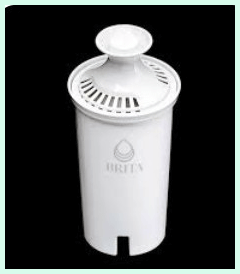
I started with the Brita Standard filter because it came with my first pitcher. It quickly became part of my daily routine.
At first, I noticed a huge difference in taste. My city tap water had that strong chlorine smell, especially in summer, but after running it through the Standard filter, it tasted much cleaner and fresher.
I used it for everything—drinking straight, making coffee, filling ice trays, even cooking pasta. The water felt lighter on the tongue, without that chemical aftertaste.
Installation was straightforward, though I remember having to soak the filter for 15 minutes the first time. That was a bit annoying, but once it was in, filtering was quick. A full pitcher took maybe 5-10 minutes, which fit easily into my morning routine.
Over time, though, I started changing filters every couple of months, and that added up. I’d forget sometimes, and the taste would slip back to “okay” rather than great.
It did a solid job on basic stuff like chlorine and some metals, but I later learned it doesn’t touch lead, which worried me when I read about older pipes in my building.
One thing I appreciated was how affordable the replacements were. Buying a multi-pack kept costs low, and it felt like an easy entry into filtered water without committing to something fancy.
Still, after a year or so, I wanted more peace of mind, especially hearing about contaminants like lead or forever chemicals in some water supplies. That’s when I switched to the Elite, but the Standard taught me how much better filtered water can be compared to straight tap.
It was reliable for everyday use, and I never had issues with flow slowing down dramatically unless I really pushed it past its lifespan. Overall, it made me a convert to pitcher filters.
Also read: Comparison of Purrugs And Muddy Mat
Pros Of Brita Standard
- Affordable replacements — Multi-packs keep the cost low, making it budget-friendly for everyday use.
- Quick filtration — Water flows through faster, so you get a full pitcher in less time compared to more advanced filters.
- Effective chlorine reduction — It excels at removing that pool-like taste and odor, transforming tap water into something refreshing.
- Simple setup — Easy to install in any compatible Brita pitcher, with minimal fuss.
- Good for basic needs — Reduces mercury, cadmium, copper, and zinc, improving taste without overcomplicating things.
- Widely available — You can find replacements almost anywhere, from grocery stores to online.
- Retains minerals — Water doesn’t taste stripped or flat; it keeps a natural feel.
- Recyclable — Through Brita’s program, you can send used filters back responsibly.
- Reliable for light use — Perfect if your water is already decent and you just want better flavor.
- No indicator needed — Some pitchers work fine without fancy lights, keeping things straightforward.
Cons Of Brita Standard
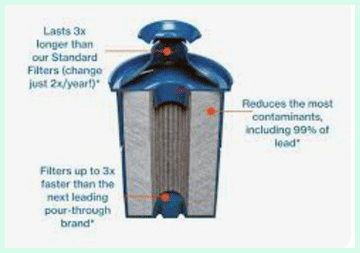
- Shorter lifespan → Only 40 gallons or about 2 months, meaning more frequent replacements.
- Limited contaminant reduction → Doesn’t remove lead, asbestos, benzene, or microplastics.
- Requires presoak sometimes → That initial 15-minute wait can be inconvenient.
- Taste improvement only basic → Great for chlorine, but not as crisp as advanced filters.
- Higher long-term cost → Buying six filters a year adds up compared to longer-lasting options.
- No advanced certifications → Lacks NSF standards for tougher contaminants like PFAS.
- Can clog faster → In areas with sediment, flow slows noticeably toward the end.
- Less peace of mind → If you’re worried about heavy metals beyond basics, it falls short.
- Black specks occasionally → Carbon dust in early pitchers, though harmless.
- Not ideal for high-use households → Frequent changes disrupt routine.
Maintenance Tips For Brita Standard
- Change on schedule — Replace every 40 gallons or 2 months to maintain taste and flow.
- Hand wash pitcher — Use mild soap and warm water weekly to prevent buildup.
- Rinse before first use — Soak if required, then discard first few pitchers.
- Store in fridge — Keeps water fresh and discourages bacteria growth.
- Avoid hot water — It can damage the filter and release trapped contaminants.
- Clean lid and reservoir — Wipe separately to avoid mold in crevices.
- Track usage — Mark calendar or use pitcher indicator if available.
- Dry thoroughly — After washing, air dry to prevent mildew.
- Recycle old filters — Use Brita’s TerraCycle program for eco-disposal.
- Check for black specks — Normal at first; rinse until clear.
My Experience With Brita Elite
Upgrading to the Brita Elite felt like a step up right away. The filter is blue instead of white, and there’s no presoak needed—just pop it in and go.
The first thing I noticed was the taste. It was noticeably crisper, almost like bottled water but without the plastic waste guilt.
Coffee brewed better, tea had clearer flavors, and even plain glasses of water went down easier.
I think it’s because it tackles more than just chlorine; knowing it reduces 99% of lead gave me real reassurance, especially since my home has older plumbing.
The longer lifespan was a game-changer. With the Standard, I was swapping filters constantly, but the Elite lasts up to six months.
That meant fewer trips to the store and less money spent over time. I tracked it with my pitcher’s indicator light, which blinked reliably when it was time.
Filtration takes a bit longer—sometimes 10-15 minutes for a full pitcher—but it’s worth it for the extra protection. It handles things like asbestos, benzene, and even microplastics, which the Standard doesn’t touch.
One surprise was how it performed in different seasons. During hot months when chlorine levels spike, it kept the water tasting neutral. I also appreciated that it retains healthy minerals, so the water doesn’t taste flat like some ultra-purified options.
There were a couple of times when flow slowed, usually if I hadn’t cleaned the pitcher well, but overall, it held up great. Switching to Elite made me feel more proactive about water quality without overhauling my kitchen.
If I had to pick one now, it’s the Elite hands down for the longer life and broader reduction capabilities.
Pros Of Brita Elite
- Longer lifespan — Up to 120 gallons or 6 months, reducing replacements and cost over time.
- Removes 99% of lead — Certified for serious contaminants, offering real health protection.
- Broader reduction — Handles asbestos, benzene, microplastics, PFAS, and more.
- No presoak needed — Ready to use right away, with easy pull-top cap.
- Better taste overall — Crisper, cleaner water that enhances drinks and cooking.
- Cost-effective long-term — Fewer filters mean savings despite higher upfront price.
- Advanced technology — Pleated media and proprietary agents for thorough filtration.
- Retains healthy minerals — Avoids that flat taste of over-purified water.
- Recyclable program — Same eco-friendly option as Standard.
- Indicator compatibility — Works great with pitcher lights for timely reminders.
Cons Of Brita Elite
- Higher upfront cost → Individual filters are pricier than Standard.
- Slower filtration → Takes longer to fill the pitcher due to denser media.
- Can clog in sediment-heavy water → Flow reduces faster in certain areas.
- Bulkier design → Slightly larger, though still fits most pitchers.
- Overkill for some → If your water is clean, the extras might not justify the price.
- Taste preference varies → Some users find it less “mineral-rich” initially.
- Availability issues → Occasionally harder to find in stores than Standard.
- Potential for slower end-of-life → Performance drops if pushed beyond 6 months.
- No TDS reduction → Doesn’t remove all dissolved solids like some competitors.
- Weight when full → Minor, but the pitcher feels heavier.
Read more: Comparison of Primula And Bialetti
Maintenance Tips For Brita Elite
- Replace every 6 months — Or 120 gallons; use indicator light for accuracy.
- No presoak needed — Just insert firmly and start filtering.
- Weekly pitcher cleaning — Mild soap, warm water; focus on reservoir.
- Discard initial pitchers — Flush system for best taste.
- Keep cool — Fridge storage extends freshness.
- Avoid dishwasher — Hand wash only to preserve plastic.
- Monitor flow — Slowdown signals need for change or cleaning.
- Wipe spout regularly — Prevents drips and buildup.
- Recycle responsibly — Same TerraCycle option.
- Reset indicator — After new filter, hold button for green blink.
Comparison With Other Brands
- Vs. ZeroWater — ZeroWater removes nearly all TDS for ultra-pure taste, but filters last shorter and cost more; Brita retains minerals for natural flavor.
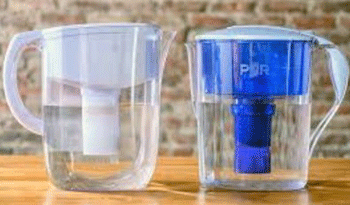
- Vs. PUR — PUR offers similar basic reduction, but Elite outperforms on lead and lifespan.
- Vs. LifeStraw — LifeStraw excels in sediment-heavy water without clogging; Brita better for chemical reduction.
- Vs. Clearly Filtered — Clearly removes far more contaminants, but at higher price; Brita more affordable daily.
- Vs. Berkey — Berkey handles pathogens and fluoride; Brita focuses on taste and common metals.
- Vs. Soma — Soma uses sustainable materials; Brita more certified reductions.
- Vs. Nakii — Nakii faster flow; Elite longer life.
- Vs. Aquagear — Aquagear lifetime warranty; Brita wider availability.
- Vs. Epic — Epic retains fluoride; Brita reduces broader range.
- Vs. Invigorated Water — Alkaline options; Brita neutral pH.
Frequently Asked Questions (FAQ)
Yes, if lead or broader contaminants concern you—longer life saves money long-term.
The Elite, for superior reduction and lifespan.
Yes, it’s certified to remove 99% of lead.
Elite for mineral retention and cost; ZeroWater for zero TDS purity.
Conclusion: For Brita Standard And Elite
You and I both want water that’s safe, tasty, and hassle-free. The Brita Standard serves well for basic improvements on a budget, but if you’re like me and value longer protection against tougher contaminants, go with the Elite. Whichever you choose, you’ll drink more and feel better—cheers to cleaner hydration.