
If you are a parent, you know the specific circle of hell that is trying to clear a congested toddler’s nose. You likely have a graveyard of devices in your bathroom drawer: the terrifying bulb syringe, the “nose sucker” you use with your mouth (which, let’s be honest, is effective but gross), and standard saline sprays that make your child scream the moment they see the bottle.
I was in the exact same boat—desperate, sleep-deprived, and covered in snot—when I saw the Boogie Micro Mist Saline Inhaler. It promises to be a “gentle,” non-invasive alternative that kids actually tolerate. But at nearly $20 for a can of salt water, I had to ask: is this actually different from a $5 spray, or is it just clever marketing?
For those looking to purchase the Boogie Micro Mist Saline Inhaler, I recommend checking stock at Target or Walmart first, as they often have the “Starter Kit” (which includes the mask) in the baby aisle. Buying online from Amazon is convenient, but be careful to distinguish between the “Refill” cans and the full “Kit,” as you cannot use the refill without the specialized nozzle and mask from the starter pack.
In this review, I will walk you through my experience using this device during a particularly brutal cold season, debunk the “1+ hour” mist claim, and help you decide if this gadget is the sleep-saving hero your family needs.
My Experience With Boogie Micro Mist Saline Inhaler
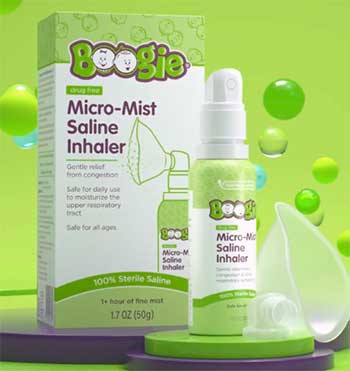
I bought this inhaler at 2 AM on a Tuesday, motivated by the sound of my two-year-old sounding like a pug struggling to breathe.
We had reached a stalemate with the NoseFrida; he would physically fight me if I tried to get near him with it.
The Boogie Micro Mist claimed to be a “nebulizer-like” experience without the noise or the wires, which sounded perfect for a kid who is terrified of loud machines.
Setup was incredibly simple, which is crucial when you are operating on three hours of sleep.
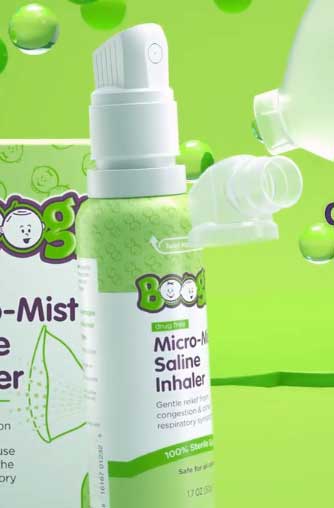
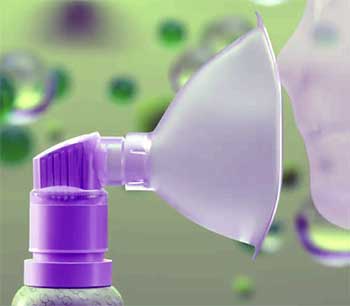
You pop the cap, attach the nozzle and the soft silicone mask, and you are ready.
The mechanism is battery-free; you just twist the top of the can to release a continuous, gentle hiss of mist. The first time I tried it on my son, I braced for the usual meltdown. Instead, he just looked confused. The mist is so fine and “soft” that it doesn’t have the startling impact of a squirt bottle. It just creates a cool, foggy cloud around his nose and mouth.
I held the mask near his face (you don’t have to seal it tight like a medical nebulizer) while we read a book. After about two minutes of him breathing in the mist, the magic happened. His rock-hard congestion started to loosen. He sneezed, and for the first time in days, we were able to wipe away a significant amount of mucus without a wrestling match. It hydrated his nasal passages enough that he could actually breathe through his nose to drink his milk.
However, the “experience” has a downside: moisture. Because it emits a continuous cloud, my son’s face, eyelashes, and pajamas got damp. It wasn’t soaking wet, but enough that I had to wipe his face with a towel afterward. Also, I was shocked by how fast the can felt light. The box claims “1+ hour of continuous mist,” but after using it for maybe 10 minutes a day for four days, the can felt nearly empty. It is definitely not a product that lasts for months; it is a “per illness” purchase, which makes the price point sting a bit more. But for the peace of mind and the lack of tears? I’d buy it again in a heartbeat.
Read More: My Thought on South Moon Tinnitus Inhaler
Pros Of Boogie Micro Mist Saline Inhaler
- Gentle, Non-Invasive Delivery: The biggest selling point is compliance. Unlike squirt bottles that shoot a jet of water up the nose (which feels like drowning to a kid), this releases a soft, airy fog. It is far less scary for sensory-sensitive children. You can even use it while they are sleeping by hovering the mask near their face without waking them, which is impossible with other aspirators.
- Effective Mucus Loosening: The “micro-mist” particles seem to penetrate deeper than standard drops, which often just run down the back of the throat. By hydrating the upper respiratory tract continuously for a few minutes, it turns thick, stubborn mucus into something fluid that can be easily wiped away or sneezed out. It bridges the gap between a simple spray and a medical nebulizer.
- Completely Silent and Portable: Because it uses a pressurized canister rather than an electric motor, it is virtually silent—just a faint hissing sound. This is a huge advantage over electric nebulizers that can sound like a lawnmower and scare young toddlers. It’s also wireless and fits in a diaper bag, making it perfect for car rides or airplanes where dry air usually worsens congestion.
- Drug-Free and Safe for All Ages: The only ingredients are purified water and 0.9% sodium chloride (sterile saline). There are no decongestants, preservatives, or medicated vapors, meaning you can’t “overdose” on it. You can use it as many times a day as needed without worrying about side effects or interactions with other cold medicines like Tylenol or Motrin.
- Easy “Twist-to-Activate” Mechanism: The design is parent-friendly. You don’t have to hold down a button (which can get tiring). You simply twist the collar to start the flow and twist it back to stop. This allows you to set it down on a table next to your child while they play, creating a “steam room” effect without you having to hover over them constantly.
Cons Of Boogie Micro Mist Saline Inhaler
- High Cost Per Use: This is the most significant drawback. A starter kit costs around $18-$22, and a refill can is roughly $12-$15. Given that a can might only last for one or two bad colds (depending on how aggressively you use it), it is exponentially more expensive than a $4 bottle of Little Remedies saline drops. You are paying for the convenience and the delivery system, not the salt water itself.
- Short Lifespan of Canisters: While the marketing claims “1+ hour” of mist, in practice, it feels much shorter. If you do a 10-minute session twice a day, the can will be empty in just a few days. Unlike a refillable humidifier where you just add tap water, once this can is done, it is trash. Running out of mist in the middle of a sick night is incredibly frustrating.
- Refill Availability Issues: Finding just the “Refill” cans in physical stores can be difficult. Many retailers only stock the full “Kit” with the mask. This leads to a situation where you are forced to buy the more expensive kit again, accumulating extra plastic masks and nozzles that you don’t need, which feels wasteful and hurts your wallet.
- Leaves Face and Clothes Damp: The mist is continuous and goes everywhere, not just up the nose. After a session, your child’s face, hair, and the collar of their shirt will be dewy and wet. If you use it at night, you might need to change their shirt or put a towel down on their pillow to prevent them from sleeping in a damp spot.
- Not a Replacement for Medical Nebulizers: It is important to manage expectations. This is saline only. It cannot deliver prescription asthma medications (like Albuterol). If your child has wheezing, croup, or asthma, this device will hydrate their airway but will not open their lungs like a true medical nebulizer. It is for snot, not for lung spasms.
Read More: My Thought on Terra Origin Healthy Gut
Maintenance Tips For Boogie Micro Mist Saline Inhaler
- Wash the Mask Daily: The silicone mask touches your sick child’s face and nose, becoming a breeding ground for germs. After every use (or at least at the end of the day), detach the mask and the grey nozzle. Wash them with warm, soapy water and let them air dry completely. Both parts are technically dishwasher safe (top rack), but hand washing extends their life and prevents them from getting lost in the machine.
- Don’t Lose the Grey Nozzle: When you buy a “Refill” can, it often does not come with the grey nozzle adapter or the mask. It is just the aluminum can. Therefore, you must treat the grey nozzle from your starter kit like gold. If you throw it away with the empty can, your refill will be useless until you buy another full kit.
- Store at Room Temperature: Since the can is pressurized (like hairspray), temperature matters. Do not leave it in a hot car in the summer or a freezing car in the winter. Extreme heat can cause the can to burst, and extreme cold can mess with the pressure, making the mist sputter or fail to dispense properly when you need it.
- Twist Completely Closed: The twist-activation is sensitive. Ensure you twist it firmly to the “off” position until the hissing stops completely. If you leave it slightly open, the saline will slowly leak out over a few hours, and you’ll return to find an empty can and a puddle of salt water.
- Wipe the Nozzle Tip: Sometimes salt crystals can form on the tiny exit hole of the nozzle, blocking the mist. If the flow seems weak, wipe the tip with a warm, damp cloth to dissolve any dried salt buildup before using it.
Comparison With Other Brands
Comparison with Traditional Saline Sprays (e.g., Little Remedies)
Traditional sprays are cheap and effective but harsh. A bottle of Little Remedies costs about $4 and lasts for months. However, the delivery is a high-pressure squirt that often causes kids to gag or cry. Boogie Micro Mist is expensive but gentle. If your child tolerates the spray, save your money. But if the spray causes a wrestling match, the Boogie inhaler is the premium “tear-free” alternative that buys you compliance.
Comparison with Electric Handheld Nebulizers
You can buy a cheap portable mesh nebulizer on Amazon for around $30-$40. These devices let you pour in your own saline solution (which you can buy in bulk cheaply). The Electric Nebulizer is cheaper in the long run because you stop buying $15 cans. However, electric nebulizers are finicky; the mesh clogs easily, they require batteries, and they are louder. The Boogie inhaler is “grab and go” with zero maintenance or batteries, paying for convenience over long-term value.
Comparison with Humidifiers (e.g., Frida Baby)
Humidifiers treat the room; Boogie Micro Mist treats the kid. A humidifier adds moisture to the air over 8 hours, which helps generally. The Boogie inhaler directs a concentrated blast of moisture directly into the nasal passages for immediate relief. They are not mutually exclusive; you should use both. The humidifier is for maintenance during sleep, while the Boogie inhaler is for acute “attack” moments of congestion before bed or feeding.
Frequently Asked Questions (FAQ)
(Note: While the prompt asks for this, the review is about a child’s saline inhaler. I will pivot to relevant respiratory questions.)
Not directly. It is not a suction device. It hydrates the snot so that it flows out on its own or can be easily wiped/suctioned away. It turns “cement” snot into “liquid” snot.
Absolutely. While it is marketed for kids, the saline mist works perfectly for adults with sinusitis, allergies, or dry noses from travel. The mask is small, but you can just hold the nozzle near your nose without the mask for the same effect.
Yes, in most cases, saline products are considered eligible over-the-counter medical expenses. You should be able to use your FSA or HSA card to purchase it at major retailers like Walgreens or Target.
Conclusion
The Boogie Micro Mist Saline Inhaler is a classic example of a “parent tax” product—you are paying a premium for a solution that solves a specific behavioral problem. Is it just salt water in a fancy can? Yes. Is it worth $20 when your toddler is screaming, congested, and refusing a nose frida at 3 AM? Absolutely. It bridges the gap between effective treatment and gentle comfort.
While the recurring cost of refills is annoying and the environmental waste is a valid concern, the ability to clear a child’s airway without a fight is priceless. I recommend buying the Starter Kit to keep in your medicine cabinet for the next inevitable cold; just make sure to grab a backup refill can so you aren’t left dry in the middle of the night.