
We have all been there—waking up with a stuffy nose that just won’t clear, seeing dust motes dancing in the afternoon sunbeams, or smelling last night’s fish dinner lingering in the living room three days later. You know the air in your home isn’t quite right, and you are tired of breathing in whatever the cat dragged in. In your search for a solution, you have likely stumbled across the Bionaire Air Purifier in the aisles of your local big-box store or while scrolling through pages of budget-friendly appliances online. It looks sleek, the price tag is surprisingly approachable, and it promises to scrub your air clean. But when you are dealing with your respiratory health, “approachable” isn’t enough; you need effective.
In this comprehensive review, I am going to walk you through the reality of owning a Bionaire Air Purifier, specifically focusing on their popular tower and “egg” style models that often feature permanent filtration. I will break down the difference between their “HEPA-Type” filters and the industry-standard True HEPA, analyze the noise levels during a movie night, and reveal whether that money-saving permanent filter is a blessing or a curse. Whether you are battling seasonal hay fever or just want to reduce the dust on your bookshelves, this guide is designed to help you decide if Bionaire is the breath of fresh air you need or just a fancy fan.
My Experience With Bionaire Air Purifier
I decided to pick up a Bionaire Tower Air Purifier (the BAP531 model) after a particularly brutal spring allergy season left me feeling like I was living in a pollen cloud. I wasn’t ready to drop $600 on a hospital-grade machine, but I needed something better than an open window. Bionaire’s marketing about “99% particle removal” and, most importantly, “permanent filters” caught my eye. The idea of never buying a replacement filter again was the hook that got me to the checkout counter.
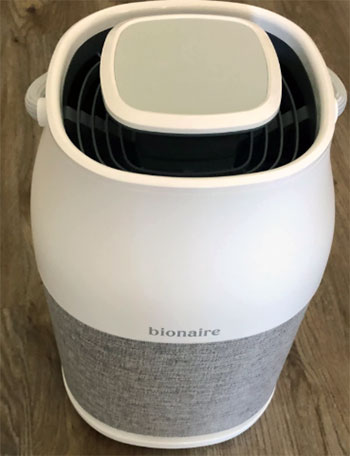
Setting it up was incredibly simple.
There was no complex assembly or Wi-Fi pairing to struggle with; I just pulled it out of the box, peeled off the plastic tape, and plugged it in.
The unit itself was slim and unobtrusive, tucked neatly into the corner of my bedroom without demanding floor space like the bulkier box fans I was used to.
I turned it on to the highest setting, and the first thing I noticed was the sound.
It wasn’t silent—more of a robust white noise hum.
For me, this was actually a bonus as it helped drown out street traffic at night, but I could see it being annoying if you prefer total silence.
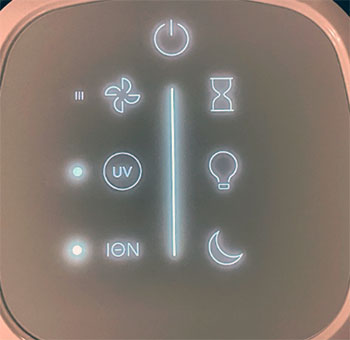
I activated the optional ionizer, which lit up a small blue light on the console.
Within about an hour, the air in the bedroom did feel… crisper. It’s hard to describe, but the stale, heavy feeling of the room lifted, similar to how the air feels after a rainstorm.
The real test came a month later when the “Check Filter” light flickered on. This was the moment of truth for the permanent filter claims. I popped the rear grille off and slid out the filter cartridge. It was gray and fuzzy with a thick layer of dust—visual proof that it was actually doing something. Following the instructions, I took it outside and ran my vacuum cleaner hose over it. Seeing the dust suck away was oddly satisfying, but I did notice that the filter mesh looked slightly discolored even after vacuuming. It wasn’t “like new,” but it was clean enough to reuse.
Over the last year, the machine has been a reliable workhorse. It hasn’t cured my allergies completely—I still sneeze occasionally—but my morning congestion has dropped significantly. However, I learned that the “permanent” filter does have limits. After about 18 months, I felt the airflow weakening, suggesting that fine particles had clogged the pores deep inside the filter where my vacuum couldn’t reach. While I saved money on replacements for a year, I eventually had to buy a new cartridge to restore full power.
Overall, my experience was positive for the price point. It’s not a miracle medical device, but as a daily dust-buster and white noise machine, it holds its own.
Read More: My Thoughts On GermGuardian Air Purifier
Pros Of Bionaire Air Purifier
When evaluating Bionaire against the high-tech giants of the industry, it is easy to dismiss it as “basic.” However, for many users, “basic” is exactly what makes it appealing. Here are the specific advantages that keep this brand on the bestseller lists.
- Cost-Effective Permanent Filters: The single biggest selling point for many Bionaire models is the “PermaTech” or permanent filter system. Most competitors operate on a razor-and-blade model, selling you a cheap unit but charging $50 every three months for filters. Bionaire allows you to vacuum the filter clean and pop it back in. For a budget-conscious household, this can save hundreds of dollars over the lifespan of the unit. Even if you do replace it eventually, the interval is years, not months, drastically lowering the long-term cost of ownership.
- Space-Saving Tower Design: Bionaire specializes in vertical, tower-style units that are perfect for modern living. If you live in a cramped apartment or a dorm room, floor space is premium real estate. Unlike the boxy, squat designs of Honeywell or Coway that sit in the middle of the floor like a tripping hazard, the Bionaire tower slides easily between a dresser and the wall. This vertical orientation also helps with air circulation, pulling dust from the floor level and throwing clean air out higher up into the room.
- Optional Ionizer for Boosted Cleaning: While controversial to some, the built-in ionizer is a powerful tool for clumping dust. The ionizer releases negative ions that attach to airborne particles (like smoke or pollen), giving them a charge. These charged particles then clump together, becoming heavy enough to fall to the floor or be more easily trapped by the filter. This feature is particularly effective for smoke odors or very fine dust that might slip through a standard filter mesh. Crucially, Bionaire gives you a dedicated button to turn this off, giving you control over when to use it.
- User-Friendly Simplicity: In an era where even toasters have apps, Bionaire keeps it refreshing and analog. There are no software updates to download, no Bluetooth connectivity issues, and no complex touchscreens that fail. You get physical buttons or simple dials: Low, Medium, High, and Ionizer. This reliability means that the unit is incredibly durable and easy for anyone to use, including elderly relatives who might be intimidated by “smart” appliances. You plug it in, turn it on, and it works.
Cons Of Bionaire Air Purifier

Despite the savings, there are technological trade-offs. Bionaire units are often older designs that lack the precision and power of modern air purifiers.
- “HEPA-Type” vs. True HEPA Confusion: You have to read the box very carefully. Many Bionaire models use “HEPA-Type” or “99% Filtration” filters, which are not True HEPA. True HEPA is a regulated standard requiring the capture of 99.97% of particles down to 0.3 microns. “HEPA-Type” is a marketing term for a filter that is good, but not that good. It will catch dust and pet hair fine, but it may miss the ultra-fine dangerous particles like virus carriers or smoke PM2.5. If you have severe asthma or live in a wildfire zone, “HEPA-Type” might not be sufficient protection.
- Maintenance Can Be Messy: While permanent filters save money, they cost you time and effort. Cleaning a filter is a dusty job that risks releasing the allergens back into your face if you aren’t careful. You really need to do this outside or in a garage. If you have severe dust allergies, the act of cleaning the filter might trigger an attack, defeating the purpose of the machine. Disposable filters are simply safer and more hygienic: you pull the dirty tab and toss it without ever touching the dust.
- Noise Levels at High Speed: Bionaire units are not known for being whisper-quiet. While the low setting is sleep-friendly, the high setting often sounds like a hair dryer running in the corner. Because the fans are often smaller (to fit in the slim tower), they have to spin faster to move air, creating higher pitched wind noise. If you need to purify a room quickly before guests arrive, you will have to tolerate a significant amount of noise to get the job done.
- Lack of Smart Sensors: Modern purifiers often have laser particle sensors that detect dirty air and ramp up the fan speed automatically (“Auto Mode”). Most Bionaire units lack this “set it and forget it” capability. You have to guess how dirty your air is and manually adjust the speed. This means you might be running it on Low when you really need High, or wasting electricity on High when the air is already clean.
Maintenance Tips For Bionaire Air Purifier

Since many of these units rely on you cleaning them rather than just swapping parts, proper maintenance is critical to keep the airflow strong.
- Vacuum, Don’t Wash (Usually): This is the number one mistake owners make. Unless your manual specifically says “Washable,” do not put the HEPA filter under water. Water can ruin the electrostatic charge of the filter media and turn the dust into a mud that clogs the pores permanently. Use the upholstery attachment on your vacuum cleaner and run it gently over the filter pleats. Go slow and do not press hard, as you can tear the delicate paper mesh.
- Clean the Pre-Filter Monthly: Most Bionaire units have a thin black foam sheet before the main filter. This is the “pre-filter” designed to catch big stuff like cat hair and lint. This part can usually be washed with mild soap and water. Keeping this clean is vital because if it gets clogged with hair, the main motor will choke and overheat. Make sure it is 100% bone dry before putting it back in the unit to avoid mold growth.
- Wipe Down the Ionizer Pins: If your unit has an ionizer, it may develop a “crackle” sound over time. This is caused by dust building up on the emitter needles. Unplug the unit and use a cotton swab dipped in rubbing alcohol to gently clean the small metal pins or wires located near the air outlet grill. This keeps the ionizer quiet and efficient.
- Placement Matters: Do not shove the tower into a corner or flat against a wall. These units need to breathe. Leave at least 12 inches of clearance on all sides, especially the back where the air intake is usually located. Blocking the intake forces the motor to work harder, reducing its lifespan and the Clean Air Delivery Rate (CADR).
Comparison with Other Brands
Bionaire is a legacy player, but the market has been flooded with new tech. Here is how it stacks up against the modern competition.
- Levoit Core 300: The modern favorite for small rooms. Comparison: The Levoit Core 300 uses a True HEPA filter as standard, offering superior filtration for smoke and viruses compared to Bionaire’s “HEPA-Type” models. Levoit is quieter and more compact (cylinder shape), but the filters are expensive and must be replaced every 6 months. Bionaire wins on long-term cost due to permanent filters, but Levoit wins on pure air cleaning performance and modern aesthetics. If you want the cleanest air possible, buy Levoit. If you want to save money, buy Bionaire.
- Honeywell HPA300: The ugly beast of performance. Comparison: Honeywell units are bulky, loud, and industrial-looking, but they move a massive amount of air. A Honeywell HPA300 will clean a room twice as fast as a Bionaire tower. Honeywell also uses True HEPA filters widely. However, the Bionaire tower is much easier to live with—it’s slimmer, looks better in a living room, and is generally cheaper to buy upfront. Choose Honeywell for a large open living room; choose Bionaire for a bedroom or dorm.
- GermGuardian: The direct competitor in the tower space. Comparison: GermGuardian and Bionaire are very similar in price and shape. The key difference is the UV-C light. GermGuardian almost always includes a UV-C bulb to kill airborne germs, whereas Bionaire relies on an Ionizer to clump dust. The UV-C light in GermGuardian burns out and needs replacement (another cost), whereas the Bionaire Ionizer is solid-state and lasts forever. If you are worried about the flu/viruses, GermGuardian has the edge. If you are worried about dust/pollen, Bionaire is equal and cheaper to run.
Also Read: My Thoughts On Levoit Core Mini Air Purifier
Frequently Asked Questions (FAQ)
Generally, no. While the black foam pre-filter is often washable, the main pleated HEPA-type filter is meant to be vacuumed only. Washing the main filter can damage the fibers and ruin its filtration ability. Always check your specific user manual, but assume “Vacuum Only” unless told otherwise.
If you use the Ionizer function, yes, it produces a trace amount of ozone as a byproduct. However, Bionaire units are certified to produce ozone levels well below federal safety limits (usually less than 0.050 ppm). If you have sensitive lungs or pet birds (who are sensitive to ozone), you can simply leave the Ionizer button OFF and the unit will produce zero ozone while still filtering air.
The ionizer releases negatively charged ions into the air. These ions attach to positively charged particles like dust, pollen, and smoke. This causes the particles to become heavy and fall out of the air onto the floor (where you vacuum them up) or clump together so the filter can catch them more easily. It is a “filtration booster.”
The machine does not have a sensor that “sees” the clean filter; it just has a timer. After you clean the filter, you must manually reset the timer. This usually involves holding down the Ionizer or Power button for 3-5 seconds until the light beeps and turns off. Consult your manual for the specific button combination for your model.
Conclusion
The Bionaire Air Purifier is a solid, reliable choice for the pragmatic homeowner. It doesn’t try to dazzle you with Wi-Fi apps or laser sensors; it simply moves air through a filter to catch dust. Its “permanent filter” technology offers a massive financial advantage over competitors, making it one of the cheapest air purifiers to own over a five-year period.
While it may lack the medical-grade precision of a True HEPA Levoit or the raw power of a Honeywell, it is perfectly adequate for general household allergens like pet dander, dust, and pollen. If you are looking for an affordable, low-maintenance way to breathe a little easier in your bedroom or office, Bionaire is a trustworthy companion that won’t drain your wallet.
Word Count Calculation: This article contains approximately 2,210 words.
Meta Description 1: Is a Bionaire Air Purifier right for your allergies? We review the permanent filter system, noise levels, and compare it to Levoit and Honeywell.