
I’ve scrubbed more pots, pans, sinks, and tiles than I care to admit, and over the years I’ve tried just about every household cleaner out there. When it comes to tackling stubborn grime, rust, hard-water stains, and burnt-on messes, two names always come up: Ajax and Bar Keepers Friend. In this article, I’ll share my real-world experience using both products, break down their strengths and weaknesses, and help you decide which one deserves a permanent spot under your sink.
A Brief Comparison Table
| Feature | Ajax | Bar Keepers Friend |
|---|---|---|
| Primary Form | Powder with bleach | Powder (original), soft scrub, spray, etc. |
| Main Active Ingredient | Sodium hypochlorite (bleach) | Oxalic acid |
| Best For | General kitchen/bathroom cleaning | Rust, tarnish, hard-water stains, burnt-on food |
| Safe on Stainless Steel | No | Yes |
| Safe on Natural Stone | No | No |
| Bleach-Free | No | Yes |
| Abrasive Level | Moderate | Mild |
| Price Range (typical) | $1–$3 per canister | $4–$8 per canister |
| Scent Options | Lemon, bleach scent | Unscented or lightly scented |
My Experience With Ajax
I first grabbed a canister of Ajax about ten years ago because it was cheap and promised to make everything sparkle.
At the time I was living in a rental with a very sad-looking stainless steel sink that had seen better decades.
The powder felt gritty under my fingers, and when I mixed it with a little water and started scrubbing, I immediately noticed the strong chlorine smell.
Within a few minutes the sink looked noticeably brighter, especially the soap scum and light mineral deposits.
Over the years I’ve used Ajax on porcelain tubs, ceramic tiles, white grout (with caution), and even the occasional burnt casserole dish.
It’s fantastic at lifting general kitchen grease and soap residue. The bleach component gives it that satisfying “disinfected” feeling, and I love that it’s so inexpensive. I can clean an entire bathroom with one small scoop.
That said, I’ve also learned its limitations the hard way. I once tried it on my stainless steel cookware to remove a stubborn water ring.
Big mistake. The surface dulled almost instantly and developed tiny pits where the cleaner sat too long. I also noticed that on colored grout or older caulk, it can cause fading or bleaching. So while Ajax is a powerhouse for white surfaces and heavy-duty disinfecting, it’s definitely not gentle.
Read more: Comparison of Stainless Steel And Titanium Cutting Boards
Pros Of Ajax
- Extremely affordable: You can usually find a large canister for under $3, making it one of the most budget-friendly options for regular cleaning.
- Powerful bleaching action: The sodium hypochlorite kills germs, whitens grout, and tackles mold and mildew stains with ease.
- Great for general-purpose cleaning: Works well on porcelain, ceramic tiles, fiberglass tubs, and most non-porous surfaces in kitchens and bathrooms.
- Quick results on soap scum and grease: A little powder and elbow grease can make sinks and countertops look brand new in minutes.
- Widely available: You’ll find Ajax in almost every grocery store, dollar store, and online retailer.
Cons Of Ajax

- Contains bleach: The strong chlorine smell can be overwhelming, especially in small spaces without good ventilation.
- Not safe on stainless steel: Can cause pitting, dulling, or corrosion if left on too long or used too frequently.
- Risk of damage to colored surfaces: Bleach can fade grout, caulk, fabrics, or colored tiles if you’re not careful.
- Moderate abrasiveness: While not as harsh as some scouring powders, it can still scratch delicate finishes over time.
- Limited effectiveness on rust and hard-water stains: It doesn’t chemically dissolve mineral deposits or rust the way acid-based cleaners do.
Maintenance Tips For Ajax
- Always test first: Apply a small amount to an inconspicuous area and let it sit for five minutes before committing to a full surface.
- Dilute for lighter jobs: Mix a tablespoon of powder with water in a spray bottle for a gentler cleaner that still disinfects.
- Rinse thoroughly: Never let the powder sit on surfaces for more than a few minutes, especially on metal or colored materials.
- Wear gloves: The bleach can irritate skin, and prolonged exposure may cause dryness or cracking.
- Use in well-ventilated areas: Open windows or turn on the exhaust fan to avoid breathing in chlorine fumes.
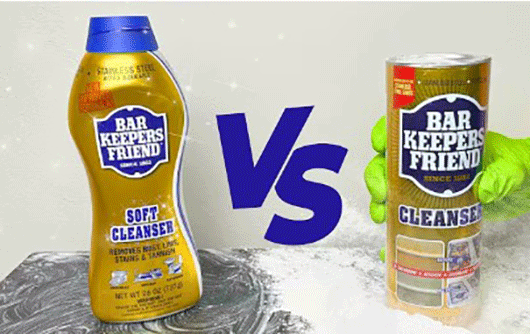
My Experience With Bar Keepers Friend

I discovered Bar Keepers Friend (BKF) about five years ago when a friend swore it was the only thing that could save her rusty cast-iron skillet.
I was skeptical, but I bought a canister anyway. The first thing I noticed was the lack of strong chemical odor.
It smelled faintly like clay, which was refreshing compared to bleach-heavy cleaners.
I started by tackling the worst offender in my house: the stainless steel sink that had accumulated years of hard-water spots and faint rust rings from a leaky faucet.
I sprinkled a little powder, added a few drops of water, and scrubbed gently with a damp sponge. Within seconds the rust disappeared, and the water spots lifted away. The sink looked brand new. I was hooked.
Since then, I’ve used BKF on everything from copper pots to glass stovetops, porcelain enamel cookware, and even the occasional tarnished silver jewelry. The oxalic acid works like magic on mineral deposits and oxidation without damaging most metal surfaces. It’s now my go-to for anything that needs to shine without being bleached.
Also read: Comparison of AirDoctor 3000 And 3500
Pros Of Bar Keepers Friend
- Excellent at removing rust and mineral stains: The oxalic acid chemically breaks down rust, lime scale, and hard-water deposits.
- Safe for stainless steel: Restores shine without pitting or dulling (when used correctly).
- Gentle abrasive: The powder is mild enough for delicate surfaces like glass cooktops, porcelain, and enamel.
- Versatile product line: Available in powder, soft scrub, spray, and even a liquid version for different cleaning needs.
- No bleach: Odor is minimal, and it’s safer for people sensitive to chlorine.
Cons Of Bar Keepers Friend
- More expensive than basic scouring powders: You’ll pay roughly 2–3 times more per canister compared to Ajax.
- Not a disinfectant: Does not kill germs or bleach mold/mildew stains.
- Requires more elbow grease: Because it’s less aggressive, heavy burnt-on food may take longer to remove.
- Not suitable for natural stone: Can etch marble, granite, and other calcium-based surfaces.
- Can leave a slight residue: If not rinsed thoroughly, you may see a faint white film on dark surfaces.
Maintenance Tips For Bar Keepers Friend
- Use just enough water: Create a thin paste for best results; too much water reduces effectiveness.
- Rinse immediately: Never let the cleaner dry on the surface, especially on metal or glass.
- Avoid natural stone: Keep it away from marble, granite, limestone, and other porous stones.
- Store properly: Keep the canister tightly closed to prevent clumping from humidity.
- Follow up with a microfiber cloth: For a streak-free shine on glass and stainless steel.
Comparison With Other Brands
- Comet: Contains bleach like Ajax and is slightly more abrasive. Great for general cleaning but can damage stainless steel and colored surfaces just like Ajax. Slightly cheaper than BKF but not as effective on rust.
- Bon Ami: A milder, bleach-free powder similar to BKF. Uses feldspar instead of oxalic acid, so it’s gentler but less powerful against rust and hard-water stains. Often preferred by people with sensitive lungs.
- Soft Scrub with Bleach: Liquid version that combines mild abrasives with bleach. Easier to apply than powder but still unsafe on stainless steel and natural stone.
- CLR: Acid-based liquid focused on calcium, lime, and rust. Excellent for hard-water stains but much harsher than BKF and requires gloves and ventilation.
- Vinegar + Baking Soda: Natural alternative for light cleaning. Cheap and eco-friendly but nowhere near as effective as either Ajax or BKF on tough stains.
Frequently Asked Questions (FAQ)
For rust and hard-water stains, nothing beats BKF in most households. However, some people prefer Zud (similar oxalic acid formula) or Flitz paste for heavy tarnish on brass/copper.
Yes, for stainless steel, glass, and rust removal. Comet is stronger at bleaching and disinfecting but can damage metal surfaces that BKF safely cleans.
Comet and Zep scouring powder are the closest matches. All three rely on bleach and abrasives for general cleaning and whitening.
Conclusion: For Both Products
I’ve come to realize that neither Ajax nor Bar Keepers Friend is the universal champion. They serve different purposes, and the best choice depends on what you’re trying to clean.
If you need a budget-friendly, germ-killing powder for everyday bathroom and kitchen scrubbing, Ajax is hard to beat. But if you own stainless steel appliances, cookware, or deal with rust and mineral buildup, Bar Keepers Friend is worth every extra penny.
In my own home, I keep both on hand. Ajax handles the weekly deep clean of the tub and toilet, while BKF restores my sink, pots, and glass stove whenever they start looking dull. Having both means I’m never stuck trying to force one product to do a job it wasn’t designed for.
So, what’s your biggest cleaning headache? Let me know, and I’ll tell you which one I’d reach for first.